

Review Article
Physicochemical Features of Micro and Nano Plastic Particles and Their Interactive Behaviour in Blood
- Y K Lahir *
Formerly Visiting Faculty] Department of Biophysics, University of Mumbai, Santa Cruz [east], Mumbai, India.
*Corresponding Author: Y K Lahir, Formerly Visiting Faculty] Department of Biophysics, University of Mumbai, Santa Cruz [east], Mumbai, India.
Citation: Y K Lahir. (2026). Physicochemical Features of Micro and Nano Plastic Particles and Their Interactive Behaviour in Blood, Journal of BioMed Research and Reports, BioRes Scientia Publishers. 10(2):1-20. DOI: 10.59657/2837-4681.brs.26.228
Copyright: © 2026 Y K Lahir, this is an open-access article distributed under the terms of the Creative Commons Attribution License, which permits unrestricted use, distribution, and reproduction in any medium, provided the original author and source are credited.
Received: January 02, 2026 | Accepted: January 16, 2026 | Published: January 23, 2026
Abstract
Plastics are the necessary evil that have infiltrated our lives. These insidious plastic particles readily enter biosystems. The affected fields are nanotechnology, aerospace, military, optics, semiconductors, clothing, developmental and investigational aspects. Dependence and multifaceted use of plastic goods in life have resulted in the unproportional production and waste that have been inferenced to examine and ensure preventive measures. These particles exhibit wide range of resistance, translocation, and ability of entering food chain. The microbial or enzymatic concept of biodegradation is under consideration involving chemical characteristics of the plastics. Micro and nano plastic particles show excellent ability to penetrate the cytological barriers of organisms and body fluids. These particles behave in accordance to the physiochemical and biophysical nature of the body fluids, like, blood, cerebrospinal fluid, lymph, interstitial and intraperitoneal fluids. The related studies help to understand the mechanism involved in their obscure behaviour. It is obvious that these particles inflict the physiopathological impacts like biophysical, rheological, immune homeostatic effects on the fluid and the biochemical components like proteins and the cells present in the immediate vicinity. Their common impacts include elevated inflammation, ROS production, oxidative stress, disturbed cell-cell lines mechanism and conformation of DNA. Their converged impacts on the phenomenon of senescence in humans other biosystems are obvious. It is very essential to save our ecosystem and the sustenance of planet The earth. This presentation is aimed to review the destructive plastic anthropogenic activities.
Keywords: melting points; non-Newtonian and shear thinning; micro plastic particles; nano plastic particle; thixotropy; viscoelastic nature; blood and formed elements
Introduction: Recapitulation
Plastics are the necessary evil in our life because these have become the part and parcel of our daily life. These are the synthetic polymers which are the derivatives of coal and/or petrochemicals. Such products are relatively cheaper to synthesize, long lasting, economically affordable and weather resistant. The waste from plastic goods undergoes either recycling, used as land fill or dumped as debris in open and in water bodies. The discarded waste plastics is the main sources of micro and nano plastic particles. These particles are formed either during their uses, destruction and as a result of solar radiations, atmospheric humidity, wind, waves actions or by weathering in environment. These particles are the products of polymers [reactive organic compounds called hydrocarbons]. The micro and nano plastic particles have high surface area to volume ratio and specific surface physiochemical features. Most of them remain in afloat and suspended state in areal and aquatic media because of their density. These plastic particles find and easy access to biosystem during feeding, respiration and contact. They appear to be harmless but readily enter blood stream from alimentary canal, respiratory and dermal system. The fields like, nanotechnology, aerospace, military, optics, semiconductors, clothing, developmental and investigational aspects get influenced [1]. In the current scenario, these are among the primary contaminants in areal, terrestrial and aquatic media. These micro and nano plastic particles induce inflammation, oxidative stress by forming ROS, apoptosis, genotoxic impacts, metabolic disorders which lead to diabetic, neurodegenerative and immunological dysfunctional conditions in an organism [2].
The micro and nano plastic particles are unique, in the sense, they have physicochemical and physiopathological impacts on the organisms, their internal and ambient media. These particles have specific shape, size, surface properties, buoyancy and low density. These remain suspended in their respective media and possibly perform Brownian movements. Because of these features, they cause disturbance or change in the behavior of their ambient environment. It is difficult to maintain totally filtered and dust free space, may it be for biomedical, biochemical or cell culture investigation and obtaining data. Their presence in air affects their genuineness and purity [1]. The specific physicochemical properties of plastics have ability to influence our day-to-day life. These particles withstand the harsh physical and environmental conditions. The vast variety of plastic materials have multiutility, hence, have high rate of manufacturing in comparison to other materials. The prime varieties are polyethylene, polypropylene, polyethylene terephthalate, polyvinyl chloride, polystyrene etc., [3]. Although, these plastics are useful but their micro and nano plastic remnants are harmful and impact all contents of environment derogatively. As a result, in the recent past, the need to control or eradicate these micro and nano plastic is one of the most desired ambitions. The exceptional high industrial production is seen because of their dependence and multifaceted utility in every sphere of life. This multifaceted preference has resulted in the formation and release of waste in environment. This practice has shaped in gigantic issue. According to EFSA panel on Contaminants in the food chain, a huge danger is lurking in present and future and if remains unattended the total health of human life, existence of biome of the environment is in great danger [4-8]. Survey of literature reveals that the micro and nano plastic particles have polluted food, marine food, biomes, non-living component, air and soil of our globe [9]. The members of biomes [plants, animals, microbes, fungi] all show the presence of micro and nano plastic particles in their systems and indicate their incorboration in the pathway of food chain [10]. The micro and nano plastic particles enter in animals during digestion, inhalation and via dermal contact and in due course of time spread with organs [11-14].
Micro and nano plastic particles affect all living being on earth, but the mechanism of these effects is not well understood. Whatever research is available, converges at some specific biochemical, cytological, embryological and pathophysiological result in elevation of oxidative stress, inflammation, dysfunction of immune response, alteration in biochemical and energy metabolic balance, impaired cellular proliferation, disturbed microbial metabolic pathways, defective organ development [defective organogenesis] and carcinogenicity. All these impacts are in relation to type of plastic particles, size, shape, concentration, duration of exposure, type of the organism, organs and body fluids. Some of the most common micro and nano plastic particles are from polyvinyl chloride, polyethylene, polyethylene chloride, polystyrene, polypropylene plastics. All the micro and nanoplastic particles are toxic and induce derogative impacts. These micro and nano plastic particles of polystyrene are least toxic. The micro and nano plastic particles from biodegradable plastics are relatively less toxic. Most of the reports are related to the polystyrene particles [15, 16].
Common physical features of micro and nano plastic particles
Some of the most common physical features of micro and nano particles are size, composition, sources, persistence, density, mobility and mode of detection. The understanding their functional aspects assist to address some of the issues related to issues concerning environmental and biosystems. The related study helps to modify research and develop techniques for investigating these particles and look for a solution. Plastic particles below 5 mm are grouped under micro plastic particles. The plastic particles less than 1µm are grouped as nano plastic particles. Their specific composition is based on the original and primary polymer compounds; this reflects on their utility and chemical reactive behaviour. The micro and nano plastic particles are the products of used, discarded, left-over and landfill plastics. Sometimes their reuse and recycling processes are also the sources of these particles. The plastic products are very durable and can withstand the harsh conditions of the environment and these take very long duration to degrade. These particles exhibit wide range of resistance, capacity to translocate but readily enter food chain of different trophic level and biosystems. Their detection is complicated as they have single, double or triple C- C bonds in their molecular structure and they come from varied types of parent polymer plastics. Other physical properties include molecular weight, crystallinity, cross-linked nature, density and stability. All these properties corelate with their mechanical properties and chemical functionalities. The microplastic particles originating from polymers with higher molecular weight show better degree of stability. Molecular weight of polymer is the main criteria with respect to their stability and interaction with biological system. One can expect that micro plastic particles from polymers with lower molecular weight should also exhibit some degree of similar features. Molecular weight of a chemical compound and the arrangement of various atoms/groups are not the only prime factors affecting the stability, degree of reactivity, chemical bonds, bond strength, polarity and presence of functional groups also add to the effectiveness to the stability and reactivity of these chemical compounds and the plastic particles. The reactivity of molecules may not be related to only its size but also on the intramolecular forces like covalent and ionic bonds and these maintain physical features of a compound. These features also facilitate their determination. These phenomena are better elucidated during the use of the techniques like gel-permeation chromatography, size exclusion chromatography, nuclear magnetic resonance technique etc., as these function on the intramolecular conformation of the compound being tested.
Quite often, the overall behavior of molecules exhibits extra ability to interact with various features of environment. This is due to the nature of the surface, size, shape and color attained due to the change is size or dimensions such as bulk, macro, micro or nano status. These aspects add to up-take process of most of organic, inorganic molecules in biomes. These addenda are bound to interfere with their molecular estimation. This calls for additional steps, may be called, pre-protocol cleaning and concentration steps. These steps remove the adsorbed matter prior to the actual molecular investigation [17]. Micro and nano plastic come under the group of polymeric chemical structures. In addition to their complex chemical structure, various chemicals alike plasticizers, flame retardants, antioxidants, and pigments [to impart color] and very specific chemicals are added to restore specific features of plastic for various applications. In all probabilities, these added chemicals interfere with their estimation in any given sample. The process of characterization of plastics needs careful preconcentration, pretreatment and delineation of impurities prior to their characterization.
Impacts of heating water sample containing plastic particles
Plastics are hydrophobic in nature and insoluble in water; these are also thermolabile under room-temperature range and this property depends on the type of plastics of their origin, for example:
Melting point of general plastics is around 200°C [392°F],
PVC range is 160°C TO 210°C [320°F to 410°F],
low density polyethylene 105° to 115°C [221°F to 240°F],
High density PE 120°C to 130°C [248°F to 266°F],
Polypropylene 130°C to 170°C [266°F to 345°F],
Polycarbonate 230°C to 260°C [446°F to 486°F].
Nylon6, 210°C to 220°C [410°F to 428°F]
Nylon 6,6: 240°C to 265°C [464°F to 509°F]
Polytetrafluoroethylene [PTFE]: 320°C to 330°C [608°F to 626°F]
Polyethylene Terephthalate [PET]: 245°C to 265°C [473°F to 509°F] [18].
Since, plastic polymers are made of long chains of repeating molecular constituents [units], the process of their transition of their solid form to liquid form is a gradual process. This is because the conformational chains disentangle in a gradual manner [19, 20, 21]. Although, the range of melting points of some of the common plastics is the bases of their utility but it can also reflect on their temperature tolerance limits [thermolabile nature] range. The aqueous medium containg plastics can be subjected to boiling (standard boiling point of water is 100°C). Moderately, it is a safe mode to isolate the plastics particles from the test sample and rendering water pure around 99.9%. One can expect that double distilled water is also devoid of plastics but small fraction of plastic particles remains in it. Rise in temperature on water containg plastic results in their aggregation. Generally, with rise in temperature the degree of aggregation increases (possibly change in their surface electrical charge cohesion ability increases). The aggregates of plastics cause physiological interference in the marine and fresh water organisms more specifically in of warmer waters (ocean current of warm water) [22].
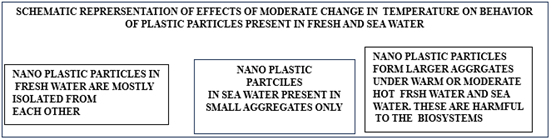
These aggregates may cause derogative impacts in marine and aquatic biosystems. When, one subjects plastic polymers to slow rise in temperature in humid conditions these plastics undergo fragmentation and degradation. This is a common process for the plastics discarded as waste in nature [withering effect]. This condition also converts plastics into micro and nano plastics [22]. Temperature is not the only parameter that affects plastic particles, it works along with its cofactors, like UV radiations, humidity [more effective when intense] and microbial [catalytic or enzyme] action facilitate the degradation and fragmentation of plastic particles. Photo-oxidation and the polymer identity also have their important roles along with temperature parameter. Temperature is also the factor affecting pyrolysis of plastic materials and also their behavior [23].
Effect of Electric Current on Micro and Nano Particles in Aqueous Medium
When electric current passes through aqueous medium containing micro and nano plastic particles, these particles undergo destabilization and flocculate. The process may be called electric coagulation or electric flocculation. Thus, use of electric current is useful technique to isolate plastic particles from its aqueous medium at least in research laboratory. The electrical properties of polymer are based on molecular configuration, crystallinity and morphology. Other factors like doping [adding or removing electrons], cross-linking, and the incorporation of conductive fillers affect the electrical behaviour of polymers. There are three categories of plastic polymers, namely, ‘insulators’, ‘semiconductors’ and ‘conductors. Insulators polymers like polyethylene and polypropylene exhibit low electric conductivity ranging between  to
to  S/cm range. Semiconductors polymers (polycarbonate, polypropylene, Teflon (PTEF), PVDF (Kynar-(registered), Acetal POM), show intermediate electrical conductivity, some of the semiconductors are used in organic light-emitting diodes [OLED], solar cells, and organic photovoltaics). Conductors’ polymers exhibit electric conductivity similar that of metals. These plastics are usefully applied for energy storage and conversion [24]. The waste as nano plastic has been discarded in the ocean The nano plastic has polluted oceanic basin in the region extending from transect crossing to the sub-tropic gyre to the shelf of northern European shelf. This reflects that even oceans are polluted to the extent that polyethylene terephthalate, polystyrene and polyvinyl chloride have been detected in the full water column and it forms the nanoplastic mass to the tune of 27 million tonnes [25].
Common methods to investigate micro and nano plastic particles
Production of plastic goods is being done to meet the market, domestic, social and industrial requirements. Consequently, there is enormous release of more plastic waste from all these sources and likely induces more of environmental stress. In accordance to this expectation, one needs to know some convenient and quick modes of identification, detection and analysis of the micro and nano plastic particles in air, aquatic and terrestrial zones of earth along with the biota. The potential techniques to identify and detect these plastic particles do have some advantages and also some limitations. The physical and the chemical examination of the test samples will guide one to estimate overall impacts of these anthropogenic materials. There are chances of developing some new more innovative technique for the same intentions.
For identification and estimation of the micro and nano plastic particles using microscopic techniques such as polarized fluorescence, scanning electron and atomic force microscopy are very appropriate. These microscopic techniques provide physical identification of plastic particles. The holographic and configuration images help to differentiate diatoms and plastic particles directly in unfiltered test samples of water. Each microscopic technique has its own advantages, limitations and specifications. Thus, it is essential to consider these factors and select a suitable type of microscopic method for the study. These provide information about sizes, shapes and types, The combinations of these techniques can help to distinguish micro and nano plastic particles [26, 27].
The ‘stereomicroscopy’ helps to investigate three-dimensional aspects of plastic particles. It involves the observations from two different angles and provides two images of the same object. Such observations are important for stereoscopic image and studies. Its limitation is size; it magnifies objects between 8 to 50 times and dimensions within hundreds of microns. It is useful to observe sea-samples and to study surface profile, dimensions, topology of plastic particles. It faces the interference because of the contaminations in the plastic particles sample either during their production or from ambient environment due to their surface properties which do not get resolved even during the chemical digestion. Thus, chances of identifications are not very distinct but provides basic and useful informations about micro plastic particles. It can help, to some extent about nano plastic particles too [26, 27]. The fluorescence microscopy associated with imaging process is also a suitable technique for investigations of white and transparent plastic particles. Different plastic particles are readily differentiated via application of quantification of fluorescent sphere with microscopy [28,29, 30, 31]. The most common fluorescence dye is ‘Nile Red’ which is useful to differentiate plastic matter from the tissues and organisms [32].
The application of ‘Scanning Electron microscopy’ is most suitable technique to investigate plastic particles. This technique helps to produce high-resolution images of the morphological surface [topographic] features. When this technique associates with ‘Energy Dispersive X-ray spectroscopy’ [EDS], it provides the chemical composition of the study samples. The EDS being non-destructive mode of recognizing and quantifying the elements present in the study samples. On bombarding electrons on the sample surface with electron beam atomic emission occurs, that causes characteristic X-rays after incidence. These deflected X-rays are detected and analysed to provide information about the elemental composition and distribution in the sample. The impression or graph obtained is considered as a ‘fingerprint’ of each element present in the sample. The beam of electron penetrates the sample and elastic and inelastic scattering of electron -takes place. This process forms and relate the signals after detection and provides the specific scattering image [33]. The pattern of secondary electrons emitted from sample is in accordance to the elements present in the sample and their distribution. The ‘back-scattered electrons’ after passing through the sample, produce an increasing intensity in accordance to the topography in contrast of the sample depending on the respective ‘atomic number [Z]. When the elements with higher atomic number [Z] are present in a sample, more of back-scattered electron are produced and these are lower than atomic number [Z] elements. This electronic incidence becomes the bases of differentiating the study samples [34]. Energy dispersive X-ray spectroscopy [EDS] is an ancillary componential device that helps to observe qualitative and quantitative informations related to the estimation of elements of sample. It has its own source of electron and beam is produced from electron microscope cathode. The primary X-ray beam initiates many interactions on sample surface when primary X-ray beam incidences on the sample. There is a change in the wave length of post incident X-ray and these corelate with nature and elements [also refer to as ‘characteristic/fingerprints’ pertaining to the sample in question [27,33, 34].
This technique is mostly used to characterize micro plastic particles and is considered to suffice the needs of environmental investigations related to micro plastic particles. Its application in the field of environmental investigations does not need nitrogen gas in SEM-chamber, sputtering gold and carbon on the surface of testing sample for the concerned study. This step also renders the study sample unworthy of further investigation using other techniques, like, FT-IR or energy dispersive X-ray spectroscopy [EDS].
Scanning electron microscopy is quite helpful to observe micro plastic particles in the samples from sewage sledge [35], mussels [36], sediments [37, 38] and sand [39]. Some of the researchers have followed other technique like ‘Field Emission Scanning electron microscopy instead of SEM-EDS. This technique does not need a special handling of study sample and its covering [there may be types of plastic particles]. Further, this technique/protocol works on low voltage and provides higher quality images of micro plastic particles with higher magnifications. Under this process, it is not essential to cover the test sample with either metal or carbon instead the material to be observed is kept under observation for energy dispersive X-ray spectroscopy [EDS] on a ‘carbon tape’ kept on the ‘aluminium stub’. Moreover, for light particles and non-conductors [for study] the moderate energy suffices for observing the sample while for other samples with higher is energy involves renders impact of charge on the sample. Further, repurposing plastic waste create technical issues because of the change in the properties of materials. These resultant plastic waste affect the quality of soil chemically and functionally in addition to pollutant adsorption efficacy. Such changes disrupt their investigations [40]. The ‘Scanning Electron microscopy’ is one of the most suitable devices to investigate micro and nano plastic particles as there is a provision to keep the samples [scanning transmission electron microscopy imaging within standard SEM-STEM] holder for analysis on grid. Further, low energy and voltage permit the observation/investigation of smaller particles typical of classical TEM [Transmission electron microscopy] [41, 42].
Fourier Transform Infrared Spectroscopy [FT-IR] is one of the most adopted techniques to investigate micro and nano plastic particles in a given sample from the niche and in biosystems. Its basic working principle is absorption spectroscopy. It is useful to study chemical bonds in a given material and to characterize it. On incidence of ‘infrared photon’ on a molecule, these molecules absorb the energy and get excited. Thus, the bond of the molecules from normal [unexcited state] becomes excited state, i.e., these molecules change from normal vibrational mode at specific frequency to the excited vibrational state at different specific frequency due to the absorption of photon energy. Thus, this technique measures the interaction of infrared radiation with the study molecule in the form that its vibration before exposure and after exposure and is expressed as the ‘unique fingerprints’ of the study molecule. A mathematical Fourier Transform converts the detected interference pattern [interferogram] into usable spectrum showing absorption peaks. This technique is fast, non-destructive mode of identification of study molecule, its functional groups, and overall composition. It is the most useful in fields like pharmaceuticals, materials science, forensics and other detection studies. Micro-FTIR technique has been followed and plastic particles such as PE, PP, PA, OS, PMMA and PU have been analysed [43].
The technique of Raman spectroscopy is suitable to analyse micro plastic particles chemically. This technique involves a beam of monochromatic laser [having visible or near-infrared wave length] illuminates the test sample. Most of the incident light gets scattered without change in energy, this phenomenon is called ‘Rayleigh Scattering’. Small proportion of these photons scatter with a loss or gain of energy to molecular vibrations; this event is called ‘Raman scattering’ or ‘Raman effect’. The vibrational energies of these molecules are specific to the composition and structure of the molecule under study. These specific vibrational frequencies are referred to as ‘the specific finger prints’ of that molecule. Hence, this is called ‘chemical finger print technique’. The spectrograph obtained, provides complete information that represents in sharp-peaks which show identity, concentrations, phase, morphological aspects etc., of the sample molecules [27]. This technique successfully differentiates and detects micro plastic particles present in the sediment at the depth between 1100 to 5000 meters [44]. It can also detect the ingested polystyrene plastic beads size between 1.7-30.6 μm in 13 taxa of zooplankton [32]. It is easy to detect the tangled balls within plastic threads ingested in the intestine of Norway lobster, Nephrops norvegicus] using this technique [45]. Raman spectrometry could easily detect and quantify plastic materials up to μm-range [10 μm] while micro-Raman spectroscopy is efficient to do so up to 1µm [27].
There are techniques based on the thermal treatment to the study plastic particles in samples. These methodologies involve thermo-analytical processes. During these treatments there are physical and chemical changes in the properties of plastic particles originating form plastic polymers. This analysis is also based on the identification of end-products of polymers plastic particles [46]. Another parameter that plays essential role in the characterizing the plastic particles is low solubility. Because of this feature the additive used in plastic polymer cannot be either released in solvent, extracted or hydrolysed. Such micro and nano plastic particles investigated using differential scanning calorimetry, thermal gravimetry, pyrolysis-gas chromatography in combination with mass spectrometry. On can also involve the combination of any suitable techniques to study the micro and nano plastic particles keeping in mind the type of plastic parent polymer [27].
Behaviour of plastic partricles in aqueous medium
The grouping of plastics as non-polar and polar plastics is based on the polarity of plastics depend on the molecular structure and characteristics bonds. Plastic compounds show both polar and non-polar nature. The polar plastics have some zones of partial charge as there is an imbalance of distribution of electrons and it causes dipole moments and it reacts with electric field. The non-polar plastics are devoid of such regions and do have equal distribution of charge. The polar plastics include polymethylmethacrylate [PMMA], polyvinyl chloride [PVC], nylon etc. The polar plastic includes those plastics which are used mostly for insulation. Thus, polar and non-polar nature relates with the molecular composition and the bonding behaviour of the product. Any organic or inorganic compound should behave in accordance to its degree of solubility in an appropriate solvent or their interaction with the liquid [solvent]. Any compound will ether dissolve or remain undissolved. The undissolved matter can either remain as suspension or float depending on its density parameter. The hydrophilicity and hydrophobicity features play significant role in such behaviour. Hydrophobic matter can mix in water as emulsion. The physicochemical properties of the plastic matter control their behaviour in aqueous media, may it be fresh, oceanic, estuarine, brackish water and body fluids. ****All these aqueous media and other unused or waste on land is considered as common sites of reception for the plastic waste. This waste is a mixture of various types of plastic materials and source of distribution of macro, micro and nano aplastic particles originating from variety of plastic products. In nature, the plastic matter is under the influence of effects of sunlight, UV rays, temperature, water, forces of waves, wind and chemical nature of soil and water. These parameters help in the formation of macro, micro and nano plastic particles from the waste dumped either underground or in open. The behaviour of plastic fundamentally depends on the type, size and break-down products. Normally, micro and nano plastics are the end-product of degradation of plastics under natural conditions. The end products of lighter plastics [less dense] like polyethylene [PE] and polypropylene [PP] remain floating while denser plastic [heavy one like polyvinyl chloride [PVC] and polyethylene terephthalate [PET] sink or suspended in aqueous media [water] causing derogative effects in the water body and at its bottom/substratum. There are some of the common micro and nano plastics used in food products are cellulose acetate [CA], cellophane [CE], Ethylene propylene diene monomer rubber [EPDM], extruded PS [EPS], ethylene vinyl acetate [EVA], Polyamide [PA], Polyacrylamide [PAA], Polyacrylonitrile [PAN], Polybutylene terephalate [PBT], Polyethylene [PE], High-density polyethylene [HDPE], Low-density polyethylene [LDPE], Polyethelene terephthalate [PET], Polyether sulfate [PES], Polymethyl-methacrylate [PMMA], Polypropylene [PP], Polystyrene [PS], Polysulfone [PSU], Polytetrafluoroethylene [PTFE], Polyurethan [PU], Polyvinyl acetate [PVA], and Polyvinyl chloride [PVC] [47]. Over all, mostly plastic products are insoluble in water because of their hydrophobic nature and charge distribution. In any case, these plastic products exhibit adsorption of pollutant, and other chemical interactions in accordance to their respective chemistry and ambient environment. These fetes make them appear as food for the marine organisms and to get entrance in food-web of the ecosystem/niche. Thus, there are some chemical changes in these plastic particles which enable these to act as a successful carrier of some chemicals, microbes, thereby, affecting the aquatic ecosystem of given water body. Other plastic particles are microfibers: these are the formed or degraded products from the clothing; these are observed in huge quantity and move along with the flow of water. The changes in the chemistry of plastic particles include change in pH, surface properties due to environmental parameters. These render the plastic particles more chemically reactive so these interact with organic pollutants and heavy metals. These changes increase their ability to carry these and other toxic materials in the marine biosystems. The additives of the plastics and partly nano plastics undergo leaching and add to the toxic contamination in the water body and its substratum. Moreover, the micro and nano plastic particles give rise to a complex colloidal set-up in water system due to their surface charge making their removal difficult and also resulting in their mysterious behaviour in aquatic media [48]. The solubility of plastics depends on their non-polar and polar nature. Non-polar plastic is water insoluble and polar plastics dissolve in water. The nonpolar plastic like polyethylene and polypropylene do not dissolve in water. Plastics particles from polyvinyl alcohol are soluble, as such plastics are designed to be water insoluble. Usually, microplastics get biodegraded in around 0.3 to 50 years and release organic compounds into water. The environmental parameters like temperature, pH and salinity facilitate degradation and solubility of some plastics.
Recently, ‘Plastic 2.0’ has been produced and its properties are contradictory in comparison to the properties of usual plastics. It is strong, flexible and can be moulded at 120°C. It consists of two small ionic monomers and is strengthened using salt bridges, electrostatic bonds which holds them together. When this plastic is exposed to seawater it dissolves into harmless end products. The strength of this polymer weakens and is gone due to the presence of salt water as the bridges are broken which hold the molecules of the matter. This polymer is made up of small ‘super-molecular plastic, and is a product of reversible mode. The finished product is caked ‘alkyl SP2. Its end product i.e., micro plastic particles are harmless. This product is useful to mould from tuff shell to delicate, soft films [48- 50].
Biodegradable micro and nano plastic particles and their behaviour in blood/body fluids
In the recent past, biodegradable plastics are developed as result of intense research in an effort to solve the issues of pollution. This innovation is also a step check the physiopathological status of ecosystem and the biome. There are some differences in the interactions of biodegradable and non-biodegradable micro and nano plastic particles in an organism and the body fluids. The common biodegradable plastic is poly (3-hydroxybutayrate, (PLA) poly [butylene adipate-co-terephthalate; PBAT), poly [butylene succinate; PBS), and polyhydroxyalkanoate (PHA). These plastics degrade into least toxic end-products and in relatively much duration. Thus, there is less or minimal derogative impacts on environment as compared to non-biodegradable plastic. Most of the non-biodegradable plastics take very long duration [hundreds of years] and render intense harmful environmental impacts. The surface properties of both types of plastics are different. The surface properties of biodegradable plastic like surface charge, hydrophilicity or hydrophobicity, roughness, favorable accessibility to various microbes as compared to non-biodegradable plastics. The biomass of plastisphere on biodegradable plastic is more than the biomass of plastisphere of biodegradable plastics. The biofilm formation on the surface of both types of plastics is a common tendency. The ‘biofilms’ or ‘plastisphere’ formed on non-biodegradable are better understood as compared to those formed on biodegradable plastics and this is a good field to delve and ponder. The plastisphere on biodegradable plastics are likely to be different because of their higher affinity for microbes. This tendency results in different microbial population in their plastisphere. Further, the forces in the plastisphere of non-biodegradable are somewhat different than those formed on biodegradable plastics [51]. The members of microplastic community are very different than those present in the ambient environment. The biofilms or plastisphere have been the research targets, since long time, as these provide a suitable shelter for the ‘antibiotic resistance genes’, inherent pathogens and cause of health risks to all those who consume them [52].
Hypothetically, presence of the micro and nano plastic particles of biodegradable polymers enhances the ‘total peripheral resistance’ and blood pressure. These cause damage to red blood cells and influence the activation process of platelets and fluctuations in the flow of blood. These particles inflict structural and functional injuries to the endothelium and/or narrow the vascular lumen. The involved mechanism is still not well established and needs intense investigation [16]. The survey reveals scanty references on the toxicity of biodegradable micro and nano plastic particles. Most of the references relate with impact of contaminated particles on the rhizosphere [rhizosphere, a narrow region of active soil which surrounds the roots of plants; it is rich in microbes, and chemicals acting as a significant interface for interchange of nutrients, plant growth, and defence against pathogen] [53].
Degradability of non-biodergaradble and biodegradabile plastics waste [micro and nano plastic particles]
Like nanomaterials, plastics are also man-made products and both have vast utility and producing waste. These wastes induce harmful impacts on the environment and biomes depending on their physicochemical features and applications; the human intensions also have their adverse role [54]. The plastics wastes have become a big environmental hazard. Man is trying to get rid of it? The search of man, guided to the bioplastics i.e., plastic originating from renewable resources such as plant starch, oils etc., these plastics acts as sustainable alternate products to the petroleum-based plastics. There are two categories of bioplastics, one is bio-based mostly involving plants and the other which are biodegradable [there are some plastics that show both of these features]. These may not be completely compostable and can be done so using specific industrial facilities in order to break them into relatively less harmful products [55].
The bioplastics are the products of ‘fermentative biotechnological processes. These processes use waste agricultural products and microorganisms as feedstock materials. Thus, the agricultural unwanted products are utilized usefully, like, best use from waste. Polyhydroxyalkanoates [PHA] and polylactic acid (PLA) are the common examples of such bioplastics and are relatively less harmful environmentally. These plastic products can be readily degraded using microorganisms and enzymatic activity [55]. Some of the bioplastics like polycarbonates [particularly the aliphatic types] exhibit little degree of biodegradability [56]. Attempts related to recycle non-biodegradable plastics, more specifically, polystyrene used in the plastic products like spoons, plates cups, and food packaging materials after recycling is useful as filler materials for other plastic materials.
The process of biodegradation is accomplished with the help of concept of microbial or enzymatic action. This mode, concept and the mechanism involving chemical characteristics of the plastics under intense consideration. The microbial concept necessitates the application of all conditions favorable to promote their suitable rate of growth with reference to the quality and quantity of plastics to be treated, like the pH, temperature, moisture contents, oxygen, required nutrients, specific microbes and concentration to treat the plastics. Regarding microbes, one must select the specific microbe [that provide the suitable enzyme action such as intracellular and extracellular enzymes, their type [i.e., suitable for exo and endo cleavages of the molecules under consideration]. Regarding the plastics to be treated, it is essential to know their physicochemical features like, melting point, glass transition temperature, crystallinity, storage modules etc.,] and polymeric features along with their level of solubility in water. It is essential to know the degree of biodegradability in case of solid polymers, their physical properties, structure of the polymers, as these play significantly helpful factors during biodegradation. Next, their surface properties like surface area, hydrophobicity, hydrophilicity etc.,] and the surface conditions should be known prior to the start of the process. The selected plastics act as a substrate for the selected enzymatic microorganisms [55].
The plastic waste and the polymer-degrading microorganisms exhibit high biodiversity. This phase of both these aspects depends on the ecological aspects of site of waste [soil, sea water, fresh water sediment, compost, wet land, activated sludge etc.]. Since, the ecological aspects affect the distribution of microbes as well plastic waste, it is essential to study microbial distribution and population. The microbes can be present among the other identities on the surface of plastic particles. The microbes can be readily studied using microbiological techniques and suitably recorded. The appropriate microbes release their secretion in the form of enzymes and these reach the surface and set to work on the respective sites of the substrate provided [waste polymers]. Various plastic wastes as substrate show variable degree of biodegradation. Mostly, microbes used are Gram-positive, Gram-negative, Streptomyces and fungi. Various plastics show different ability of degradability with respect to variety of microbes. Majority of the strains that are able to degrade plastics belong to different taxa such as Gram-positive and Gram-negative bacteria, Streptomyces and fungi. Around 39 bacterial strains belonging to the classes Firmicutes and Proteobacteria degrade good numbers of plastics. There is lot to be done in this direction of microbial degradation of plastics [55, 57].
Some factors are crucially required for a successful degradation of plastics. It is essential to know physicochemical features of plastics like surface area, hydrophilicity, hydrophobicity, conformations aspects, molecular weight and its elements-distribution in plastics, glass transition temperature, melting point, elasticity modulus [measure of its stiffness to resistance to deformation], crystallinity and its crystalline structure of its polymer, should be known. Further, presence of side chain and its absence affect the biodegradation process; since, molecular weight determines the physical feature of polymers, it plays significant role in this process. Higher molecular weight tends to decline the degree of biodegradability [endo-cleavage type using Rhizopus delemar lipase] [58- 62].
Translocation of micro and nano plastic particles from digestive tract to blood stream
Basically, entry and up-take of micro and nano plastic particles in biosystem occur enroute-epithelial cells. These cells form an internal [luminal] lining of most of the organs and are designed to absorb most of the particles; this particle-absorption is size dependant. Cytohistologically and cytophysiologically epithelial cells/tissue is well suited for controlled absorption and translocation of molecules though it. The epithelial layer acts like a barrier present in respective organs [63]. The fluorescent technique is relatively more helpful to check the absorption; translocation of particles is investigation. This process synchronizes and involving cellular physiological process in which various types molecular carriers participate. Sometime this process can be cytologically friendly and sometimes toxic. It all depends on the physicochemical features of the entrant particles and the cytological conformation of cell membrane [64]. These plastic particles interact with plasma proteins and generally form protein corona. this process facilitates their translocation within the body of recipient quite uninterrupted way [65]. Orally administered polystyrene latex microplastic particles [2 micron in size, non-biodegradable, dose of 1.65X10⁻⁹ get collected in the Peer’s patches of intestinal regions. This phenomenon reflects on the successful absorption and translocation of administered particles is intestine [digestive tract] but its intensity in the proximal zone of intestine is much higher. In this zone comparatively higher intensity of absorption within 0.5 hr duration and progressively occurring from pylorus to distal end of intestine is often. Later, some quantity of these particles is also detected in the surrounded mesenteric lymph nodes, indicating the timebound up-take and translocation of administered particles through intestinal wall. This process is also more intense in the villous region of intestine [66]. Thus, as a result of time bound up-take and translocation, the particles have access to blood vascular and lymphatic system.
Micro and nano plastic particles show excellent ability of penetration via cytological barriers of the respective organs in an animal [67, 68]. The tendency of these plastic particles ensures their entry in body fluids. Although these plastic particles are hydrophobic but readily either float or settle along the inner lining of the vessels carrying them. This nature facilitates their accumulation and plaque formation in these vessels. In most of the vertebrate’s blood is relatively more in quantity and maintain to and fro communication between circulatory system and the respective organs. This also facilitates their elimination from the body through renal expulsion. The behaviour of these micro and nano plastic particles is in accordance to the respective physicochemical nature of blood [body fluid] and these particles. Further, the translocation depends on the duration of exposure, size, concentration and nature of exposure.
Physical properties of blood and their physiological significance with respect to plastic particles
Water is essential for life and living organisms/biosystems. The constituting molecules of a water and its structural and functional state is responsible for its physiological efficacy in an organism and the organism also. These molecules of liquid are linked with each other through bonds and these bonds are responsible for the physical and physiological behavior of a fluid. The intra and intermolecular bonds and forces form the bases of the physical properties of a water [liquid] like, dispersion forces, dipole-dipole interactions and hydrogen bonds forces etc. play very crucial role. Further, these features are accountable for properties such as cohesion, adhesion, viscosity, capillary actions, surface tension, and overall ability to act as solvent/universal solvent. Water being universal solvent provides basic internal and intracellular media for all organisms. It is the primary component of all body-fluids. In cells it is cytoplasm, each cell has interstitials or extracellular fluid which forms the ambient fluid environment and is of physicophysiological significance. Each tissue has specific amount of biochemically balanced interstitial fluid and any addition or reduction causes physiological imbalance. Each organ is immersed or drenched in these body fluids. Thus, body fluid/liquids provide physiobiomolecular medium in every organism. Blood is dominantly liquid component of all organisms and among vertebrates it is also referred to as ‘liquid tissues’ with respect to biochemical and biomedical sciences are concerned. Blood along with lymph is the site for molecular transportation [nutrients, gases, medicine, enzymes, hormones] fighting pathogens, immune responses, prevention of waste flow [clotting], maintain osmotic pressure and body temperature, maintain specific pH and buffer system. Blood is made-up of fluid component [plasma, 55% in uncoagulated blood and serum is the fluid after clotting of blood]. The formed components are 45%] in human [69]. Other vertebrates also have more or less similar composition, The formed component includes erythrocytes [approximately 45%], leukocytes around 1%, and platelets less than 1% approximately. Other physical features of blood are viscosity [approximately five times greater than water], pH level [ranges between 7.35 to 7.45], temperature [averaging around 38°C OR 100.4°F], volume is around 8% of the body weight of an adult individual; total volume being around 5 to 6 Liters and in circulation is around three liters. The color of the blood is red due to the oxyhaemoglobin present in erythrocytes and bluish red due to carboxy- haemoglobin. Plasma has hay or amber tinge. Leucocytes are colourless and so are the platelets. Most of these physical features are constant in normal healthy condition [69]. These conditions change under various physiopathological conditions, this haematological picture changes indicating the fluctuations in the state of health of an individual. In addition, the rheological features like viscosity, Shear rate, shear stress, yield stress, elasticity and thixotropy/rheopexy??? [, also play significant role during the interaction of micro and nano plastic particles in blood [ref].
Imacts of plastic particles on physicophysiological state of blood and esr, flow and viscosity
The micro and nano plastic particles influence the physicorheological parameters of blood. The effects of these particles depend on their size, type, concentration, exposure duration and the surface physicochemical features of the plastic particles. Primarily, disturbed dynamics of clotting process, viscosity of blood and adhesion among erythrocytes are common in the test models in vitro. and test models. These plastic particles affect the shear stress and shear rate that causes fluctuations in viscosity and consequently ESR, blood flow undergo fluctuations. Overall view on the impacts of micro and nano plastic particles is quite fluctuating. The effects vary with the type of plastic particles as these particles exhibit different range of impacts. Polystyrene particles adhere to the surface of erythrocytes, enhance the degree of adhesion with endothelial cells of blood vessels. These minute physical hurdles interrupt the flow and viscosity too. The aggregated erythrocytes enhancing the viscosity, this effect is more prominent in the blood vessels in which the flow-rate is slow or blood vessels are narrow. The surface properties of erythrocytes and micro and nano plastic particles destabilize the erythrocytes membrane and degree of their aggregation. These new developments affect ESR, flow and blood viscosity. These parameters are more effective in the blood vessels having low shear rates. These micro and nano plastic particles induce aggregation and facilitate cascade of clotting process and cause decline in the flow of blood. Thus, micro and nano plastic particles are agents to induce the cardiovascular complications [70, 71].
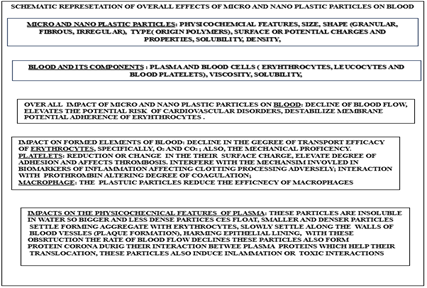
The micro and nano plastic particles have to remain in blood and lymph for some time but this duration fluctuates from time to time. During this duration blood acts as a site of undistinguished bio and metabolic interactions. These interactions are accomplished prior to the blood reaching for filtration to urinary elimination [71]. The blood/fluid circulation cycle is present to maintain blood/fluid stream uniformly in which fluid is distributed to the various body organs and in return collected temporarily and then distributed back to body organ. This cycle of body fluid is perpetual [non-stop and generally unidirectional]. In some animals it can be two directions, these animals have two pace-maker each present at the ends of a tubular heart [72]. Phylogenetically, sea squirts, are closely related to vertebrates. These vertebrates have morphologically a simplest heart. It is in the form of myogenic tubular structure having two-pacemakers. One pace maker at each terminus and this organ is enclosed in pericardium. It is capable to initiate forward and backward movements. These cardiomyocytes are interlinked through ‘gap-junctions. The action potential of cardiomyocytes spreads in the form of electrical impulse generates wave from pace-maker along the tubular heart. This wave pushes the fluid mechanically and sets the rhythmic movements for circulation. The pericardium enclosing heart is made of non-stretchable and tough connective tissue which prevents the inflation caused due in the soft muscles [72].
In human, under normal conditions, it takes about 20 seconds to complete one cycle of blood flow. The circulation is working non-stop; this ensures or provide chances that some of the plastic particles may remain in blood circulation [amount of micro and nano plastic particles that remains in circulation for more duration] while major part of them moves ahead for distribution. In animals, having blood vascular system [closed and open circulatory system], there is a specific duration to complete one cycle of body fluid circulation, but possibility of plastic materials [entered] tends to remain in blood for some time i.e., some part of the total amount of plastic particles may remain in circulation even if the circulation is completed [‘retention time’]. This raises the possibility for availability of time for more interaction between biomolecules present in blood and the plastic particles involving rheological factors. The ‘retention time’ is not fixed for an individual for the external material in blood circulation. This parameter has drawn the attention of some researcher. One can assume about the occurrence of some changes in the interaction between plastic particles and the physic rheological parameters. The primary rheological features i.e., ‘non-Newtonian and shear thinning’ [variable viscosity; it facilitates blood/fluid flow specifically when blood passes through narrow capillaries], ‘thixotropic’- ability to follow time-dependent thinning-viscosity declines over a time] and viscoelastic nature play their roles in maintaining the normal standard for the blood to function as fluid. The ability of blood to act as an elastic biological matter and viscous matter as specific and is maintained its normal behavior. Blood is also able to maintain its specific flow energy level like any other flowing fluid [73].
The characteristics of the administered particles such as size, surface properties/coating, composition and tendency to form protein corona, tend to affect the blood flow. These features of the administered particles regulate the duration in circulation, which may extend up to long duration. These parameters along with the cellular, organic and inorganic components when added to the blood circulation influence the behavior of the fluid nature and also help appropriate functional behavior of blood/fluid [74]. There is a tendency of most of the biosystems to exhibit ‘selective elimination’ of the administered materials other than the normal route. There is a specific system called “reticulohistocyte system [also referred to as ‘reticuloendothelial system’ and ‘mononuclear system’] and it accomplishes this process in vertebrates. In this process liver and spleen also play significant role. This system is made up of specialised cells and tissues which are systematically distributed in blood, lymph nodes, liver, spleen bone marrow, lungs, connective tissue and brain. This system is specialized to pick-up the useful and needed ions, materials and biomolecules and rejects unwanted, pathogen and harmful ones. This aspect is very significant in the pharmacological field. Generally, this system eliminates most of the administered materials, may be called infiltrate, [about 80 to 90%] [74, 76].
It is of common observation that good numbers of nano-sized plastic particles remain flowing along with blood flow while larger i.e., micro and bigger plastic particles show tendency to settle along the walls of blood vessel and even vascular capillaries. These deposits cause resistance to the flow of blood. These also cause damage to the endothelium of the blood vessels, facilitate biofilm or plaque formation and elevate risks of cardiac issues. This condition calls for standardizing clinical detection, quantification and qualification of micro and nano plastic particles depending on the types of plastic particles, specifically, size, size, shape and the type or mixture of polymers of which the plastic particles are made off. The micro and nano plastic particles disrupt the cellular interface, amplify epithelial destruction also [76]. These investigations should involve lower and higher mammals including human being [17].
There are relatively less references are available on the impacts of micro and nano plastic particles on cardiovascular system. The available research indicates structural and functional adverse effects of these plastic particles on heart and the blood [70]. The exposure of human-induced-pluripotent-stem cells to plastic particles having size 40nm and 200nm and concentration 1X10⁹/ ml for 24hr, results in a defective development of atrioventricular heart valves [77]. The micro and nano plastic particles migrate from blood stream and get accumulated in the cardiac tissue in case of rats. Micro and nano plastic particles with size about 5µm and dose of 5 and 50mg/L administered in Wistar rats constantly for three months, these plastic particles migrate from blood stream and get accumulated in the cardiac tissue in case these rats [78, 79, 80], The displacement of such plastic particles is in relation to their size and surface modifications [81]. Bigger sized plastic particles [460nm and 1µm] are likely to interact with the erythrocytes [82].Plastic products made of polystyrene [PS] are suitable and relatively less harmful that is why these products are used in food industries and as packing materials. Polystyrene particles with 500 µg/L and particles of same plastic materials having diameter between 10-100 µm are noncytotoxic and relatively less harmful. It has been observed that plastic particles within 1 µm and 460nm sizes influence interaction between the red blood cells. The degree of adhesion enhances because of the larger area of these polystyrene plastic particles in comparison to other larger sized plastic particles. These polystyrene micro and nano particles utilize weak forces like, van der Waals forces resulting in elevated degree of haemolysis [83]. Erythrocytes up-take these plastic particles during their exposure within 24 hours. Administered micro and nano plastic particles have potential to affect their physical behaviour with respect to sedimentation and aggregation, low-volume, high-density sediment, nature and stability of dispersion [84]. The state of suspension affects the physical behavior of blood; concentrated sediment is more harmful than diluted sedimentation [85].
Interactions between administered [intentionally and environmentally] micro and nano plastic particles and blood cells
The micro and nano plastic particles interact with blood cells in accordance to their size, type and surface properties. Generally, these particles and the blood cells exhibit endocytosis as these particles adhere due to adhesive interaction between them. The ‘cellular-up take’ and ‘permeation’ get facilitated with the help of channel or transporter proteins. Clathrin and caveolae proteins also mediate phagocytosis and micropinocytosis [64, 81, 86, 87, 88]. The up-take of plastic micro and nano particles is easily investigated using fluoresce technique [89, 90]. The cellular up take depends on the physicochemical features of these particles. The mammalian HeLa cells and coelomocytes of Caenorhabditis elegance have shown ‘up-take process’ of latex beads having size less than 200nm. The polystyrene macro and nano plastic particles have been observed in Daphnia [91]. Mostly, ‘up-take process’ for polystyrene plastic particles has been studied and found to be least toxic, but literature reveals that relatively less references are there on the use of other types of plastic polymer’s particles. The modified surface features of these plastic particles also exhibit cellular permeation or up-take; polystyrene particles treated with amidine group readily permeate in alveolar epithelial cells of rat under nonendocytic mechanism [81, 92]. Even plastic polymers having less or approximately 700nm are observed in the blood of digestive tract of volunteers [93]. The technique, thromboelastography is clinically helpful to study the effects of blood soluble and insoluble biomolecules on whole blood. Additionally, this technique is helpful to investigate coagulation phenomenon, fibrinogen and functionality of plate lets [94].
Biochemical and molecular aspects of impacts/interaction of micro and nano plastic particles in blood
Among vertebrates there are specific cytological barriers and microcirculation dynamics. This anatomical and cytophysical set up regulates the entry of most of the nonbiological and biological entities. Thus, such matters undergo a check prior to their entry in body. With reference to micro and nano plastic particles, these do enter in blood circulation. In all probability, one of the major reasons appears to be their omnipresence and the quantity and quality of micro and nano plastic particles in all components of the total environment of the earth. Thus, this prominent aspect of these particles is affecting all members of the biosystems including microbes, plant kingdom, animal kingdom and the fungi. When humans and live-stock are affected adversely this causes economic, social, domestic, industrial loss and result in food adversities. These plastic particles degrade the productivity, elevate financial burden, and acute food and agricultural crises. As mentioned earlier, these particles are the man-made products and derivatives of polymer plastics and commonly utilized in all most all aspects of day-to-day life, quite like nano materials. Their presence has been reported in all most all biosystems and cause pathophysiological adverse impacts in all the cytological, biochemical and molecular aspects. These particles are in granular, fibrous form as well as macro, micro and nano forms and sizes. Their micro and nanoforms play major role in causing disturbance and pathological conditions like cardiovascular disorders. This concept gets support because of their preclinical presence in blood and its components, endothelial cells, atherosclerotic plaque, affect blood pressure and hypertension, to count few cases. Although, these observations are limited and the mechanism involved is not well understood but is alarming to one and all [16]. When micro and nano plastic particles reach the body fluid or blood, they interact with most components of blood such as plasma proteins, blood cells and components of immune homeostasis. These particles formation of protein corona. This protein-corona state may interact with other biomolecules and endure transportation of the unwanted particles. These plastic particles induce denaturation of plasma proteins, hemolysis, decline in the degree of immunity, thrombosis, unwanted blood coagulation, endothelium of vasculature. All these have potential to cause life threatening diseases [95].
Among other derogative effects, there are subsequent immune reactions which play significant role in modulating immune mechanism or functioning. Further, because of increased ROS production, effects on the cell lines, organoid and animal’s systems, there is a disorientation and destruction of macromolecules like DNA, proteins and lipids. All these induce inflammation, oxidative stress and enhance senescence [96]. The chronic and acute exposure of micro and nano plastic particles after internalization, results in increase in oxidative stress. This involves increase in glycolysis through lactate to cope with energy metabolic needs. Additionally, to maintain anabolic requirements glutamic metabolism is utilized. There is dissociation of nutrients as the interaction proceeds between the potential carcinogenic agent called azoxymethane and the ‘HCT-15’ colon cancer cells. This process seems useful when the above change is taking place in cells which struggle to meet the nutritional and metabolic adaptation to cope with ambient environmental stress [97].
These particles are capable to switch on the ‘pro-inflammatory signaling path-ways’, secretion of cytokines, changes in the functionality of immune cells. All these resulting in pathophysiological chronic status and disturbed immune regulations [98]. The recent work on micro and nano plastic particle in this direction indicate that these notorious particles have potential to activate ‘pro-inflammatory signaling pathways, induce cytokines secretion, change the functioning of immune cells. As a result, these plastic particles cause pathophysiological chronic conditions/diseases along with modulation of immune dysregulation [99]. Nasal application of polystyrene nano plastic particles induces release of mitochondrial DNA that bring about pulmonary fibroids and later activate cGAS-STING pathway which in turn intensify the pulmonary inflammation [100].
Interactions between micro and nano plastic particles and plasma proteins is another aspect of interaction between micro and nano plastic particles. Under this impact the conformation and functionality of proteins protein get affected specifically those involved in the transportation and immune response. Formation of protein corona involving micro and nano plastic particles can be counted as one of the causes of disturbances in blood proteomic and obscuring the real physiochemical identity of these particles. This condition is likely to disturb the biodistribution and other interactions. Further, the pollutants adsorbed on the surface of the micro and nano plastic particles are bound to result in the unwanted and adverse interfering entities and ‘the protein corona’ formed in blood/body fluids. One of the prime causes of concern is the chronic exposure of the biosystems to these particles. This condition is likely to induce sustained inflammatory phase which may lead to series of pathological conditions like autoimmune disorders, cardiovascular and neurodegenerative disorders. This phase also influences the remedial and pharmaceutical aspects of the treatment resulting in the decline the overall efficacy of the biosystems [98].
Should one doubt the efficacy of plastic particle to affect immune response of an individual?
The interactions of micro and nano plastic particles vary with respect to their size and their physicochemical features. The smaller particles having 460nm show higher degree of penetration in cell membrane [permeability] as compared to particles with 1 µm size. The nano sized particles have higher degree of interactive forces like van der Waals forces, and result in higher degree of adherence with erythrocytes and causing their hemolysis [101]. Cytologically, the experimental cells, like ‘Human Dermal Fibroblasts, ‘Peripheral Blood Mononuclear Cells’ of human and ‘Human Mast Cells’ act as test samples to study cytological impacts of polystyrene particles [PS]. These cells accumulate plastic particles during the exposure of 24 hours but not in case of lymphocytes. The exposure of these cells to PS particles did not elevate the rate of secretion of interlukins-2 [IL-2] during the experimentation. This indicates that smaller sized PS particles may not induce ‘adaptive immunity secretion’ of IL-2, [an indication of induction of allergic reaction or inflammation due to histamine mediation]. Processes like endocytosis, phagocytosis play important role during up-take of these particles. The up-take of these particles causes release of pro-inflammatory cytokines; this cytokine causes local inflammation but no direct cytotoxic impact. Very fine sized PS particles may not be toxic to many human cells. These particles cause hemolysis when come in direct contact with erythrocytes. The PS particles may not induce or elevate the secretion of histamine production [15].
Blood stream and other body fluids are the site of interactions between plastic particles in the fluid along with the respective cellular components. The body fluid also is a fairly favourable stage for the immune responsive interactions in an individual. These plastic particles may not be present in their pristine form but have many adsorbed elements from the environment like, heavy metals, pesticides, discarded organic and inorganic pollutants. These particles are likely to be toxic and injurious and there are chances that when in body fluid may get associated with some of the biomolecules. The reports of the conjugated impacts suggest that the induction of derogative responses like elevation of oxidative stress, inflammatory response, dysfunction Ing of immune response and system. These conditions become threating due to the damage of DNA [102, 103]. The polystyrene plastic particles when applied to nasal region cause mitochondrial DNA release and activation of cyclic-GMP-AMP synthase-stimulator of interferon genes-signaling cascade. The microplastic with modified surface feature, size, concentration, surface area affects functionality of blood [104]. Further, reports on in vivo and in vitro investigations reveal stimulation of proinflammatory signalling pathways that changes in the production of cytokines and alteration in functioning of primary immune cells [55,106]. The physiological homeostasis also exhibits fluctuations, dysfunctioning of host-pathogen interactions; even mechanism related to prevention of chronic diseases also get disturbed [99, 107]. The investigation relating micro and nano plastic particles show a clear interference in the normal functioning of formed elements of blood and derogative changes in the conformational and functioning aspects like defence, transportation and immune functionalities. The concentration and surface charge of the micro and nano plastic particles interfere with the morphological and functionality of blood, like rate of formation and role of fibrin, efficacy of clotting [105, 108]. The other effects include disturbed haemolytic functions, morphological fluctuations in erythrocytes, formed protein corona on plastic particles, change the identification of geoparticles and cellular up-take. But the persistent and long duration of exposure of micro and nano plastic particles helps to intensified these physiopathological conditions in the recipients. Micro and nano plastic particles cause disturbance the functional aspects of primary monocytes and dendritic cell in human [109]. Conditions like ferroptosis appears because of the induced oxidative stress, overloading of iron. These plastic particles increase the levels of inflammatory markers. The extensive inhalation of these polystyrene plastic particles injures liver and induces fibrosis [110]. The overall impact of micro and nano plastic particles causes dysfunction Ing of immune cells like phagocytic leukocytes, this in turn results in interfering with the immunological functioning of liver, kidney, brain, and blood stream. There is an urgent need to device some strategies to cope with the damage done because of the anthropogenic products and benefit must reach common individuals as they suffer the maximum.
Conclusion
The ongoing discussion reveals that anthropogenic products like plastics and nano materials both have multiutility in current mode of life. These are also sources of huge quantity of wastes and result in adverse physicophysiological disturbance creating environmental issues. These issues have threatened the health and sustenance of life on earth. The plastics waste has spread in ocean, fresh water bodies, glaciers [snow] and soil. These unwanted plastic materials and landfills [debris] are left open, unorganised both qualitatively and quantitatively. At open sites, such waste is exposed to wind, solar radiations and atmospheric humidity. The plastic waste is resistant to withering impact and the micro and nano plastic particles reach in air, soil, water and biosystems resulting in adverse consequences. Their physicochemical interactions and effects on environment are mostly complex and obscure. These particles create not only the physiological imbalance, inflammation, oxidative stress, conformational changes in DNA but also disturb the immune responsiveness and enhancement in the rate of senescence in all organism. Thus, there is a decline in the immune response of organisms to these environmental issues. The physicochemical nature and resistance to withering processes of plastics and their surface properties are the main sources of pollution and essentially need remedial efforts. These efforts should neutralise the toxic after-effects and promote solution for these ecological and humanitarian issues. The current concepts of development of biodegradable and soluble plastics are not potent enough to solve the current pollution scenario. There is a dire need to develop a portable, cost effective, convenient and friendly device to detect these plastic pollutants at the site. The devices should be simple so that a non-technical individual can carry out the preliminary detection. The current techniques are scanty, complicated and costly, moreover, these are available at research/laboratory level. The common modes like heat-treatment and passing electric current can solve and reduce the adverse effects of plastics at small scale but not at mass scale. The current scenario is clear indication to take some concrete steps to remediate and reduce the derogative impacts of the anthropogenic products.
Declarations
Funding
No funding is used for this presentation.
Conflict of interest
Author declares no conflict of interest.
References
- Jahedi F and Neamatollah JHF, (2025). Micro- and nanoplastic toxicity in humans: Exposure pathways, cellular effects, and mitigation strategies, Toxicological reports, 14 (2025):10204.
Publisher | Google Scholor - Santos LHMLM, Insa S, Arxé M, Buttiglieri G, Rodríguez-Mozaz S, Barceló D. Analysis of microplastics in the environment: Identification and quantification of trace levels of common types of plastic polymers using pyrolysis-GC/MS. Methods, 10:102143.
Publisher | Google Scholor - EFSA-CON TAM, (2016). Contaminants in the Food Chain | EFSA.
Publisher | Google Scholor - Liesa G, Julius Hj and Henjakovic M, (2025)., Effects of micro- and nanoplastics on blood cells in vitro and cardiovascular parameters in vivo, considering their presence in the human bloodstream and potential impact on blood pressure, Environmental Research 273(2025):121254.
Publisher | Google Scholor - Athulya TS and J.K. Reshma KJ, (2024). Plastic Pollution: A Global Crisis and the Overlooked Challenge of Low-Value Plastics, Eco. Env. & Cons. 30 (2):(688-693).
Publisher | Google Scholor - Chen Q., Wei X., Xie R., et al., (2024).. Beyond physical particles: A holistic assessment of human health risks from real-world micro-nanoplastic exposure. The Innovation Medicine 2(4):100104.
Publisher | Google Scholor - Giannattasio A, Iulianoa V, Olivab G, Giaquintob D, Capacchionea C, Cuomoc MT,, Hasand SW, Chooe K-H, Korshinf GV, Dami` Barcel´, Vincenzo Belgiornob, Alfonso Grassia, Vincenzo Naddeob, and Antonio Buonerbaa, (2024). Micro(nano)plastics from synthetic oligomers persisting in Mediterranean seawater: Comprehensive NMR analysis, concerns and origins, Environment International, 190: 108839,
Publisher | Google Scholor - Schwabl P, Koppel S, Konigshofer P, Bucsics T, Trauner M, Reiberger T and Liebmann B, (2019). Detection of Various Microplastics in Human Stool: A Prospective Case Series, Annals of Internal Medicine 171(7).
Publisher | Google Scholor - Yates, J., Deeney, M., Muncke, J. Carney Almroth BC, Dignac M-F, Castillo A, Jones W-C, Kadiyala S, Kumar E, Stoett P, Wang M and Farrelly T, (2025)., Plastics matter in the food system. Commun Earth Environ 6:176(2025).
Publisher | Google Scholor - Amato-Lourenço LF, Carvalho-Oliveira R, Júnior GR, Dos Santos Galvão L, Ando RA, Mauad T. (2021). Presence of airborne microplastics in human lung tissue. J Hazard Mater. 416:126124.
Publisher | Google Scholor - Braun T, Ehrlich L, Henrich W, Koeppel S, Lomako I, Philipp Schwabl S and Bettina Liebmann B, (2021). Detection of Microplastic in Human Placenta and Meconium in a Clinical Setting, Pharmaceutics 13(7):921.
Publisher | Google Scholor - Sorci G and Loiseau C, (2022). Should we worry about the accumulation of microplastics in human organs? EBioMedicine, 82:104191.
Publisher | Google Scholor - Ragusaa A, Svelatoa A, Santacroceb C, Catalanob P, Notarstefanoc V, Carnevalic O, Papab F, Rongiolettib MCA, Baioccoa F, Draghia S, D’Amorea E, Rinaldod D, Maria Mattae and Giorginic E, (2021). Plasticenta: First evidence of microplastics in human placenta, Environment International., 146:106274;
Publisher | Google Scholor - Ali N, Jenny K, Marczylo EL, Gant TG, Wright S and Jorge Bernardino de la Serna, (2024). The potential impacts of micro-and-nano plastics on various organ systems in humans, eBioMedicine, 99:104901.
Publisher | Google Scholor - Geppner L, Hellner J and Henjakovic M, (2025). Effects of micro and nanoplastic particles on blood cells in vitro and cardiovascular parameters in vivo, considering their presence in the human blood stream and potential impact on blood pressure, Environmental Research, 273(2025):121254;
Publisher | Google Scholor - Singh M, Mendez NF, Michele Valsecchi M, Guruswamy Kumaraswamy G, Sanat KK, (2025). Materials science underpinning micro and nano plastic particles, Soft Matter, 21(30):6023-6033.
Publisher | Google Scholor - Kantesh Balani, Vivek Verma, Arvind Agarwal, Roger Narayan (2014). Physical, Thermal, and Mechanical Properties of Polymers, John Wiley & Sons, Inc.
Publisher | Google Scholor - Cardarelli, François. (2018). (Materials Handbook: A Concise Desktop Reference. Switzerland: Springer International Publishing, 2018.
Publisher | Google Scholor - CRC, Handbook of Chemistry and Physics, 97th Edition. United Kingdom: CRC Press, 2016-2017.
Publisher | Google Scholor - Howatson AM, Lun PG and Todd, JD, (2009). Engineering Tables and Data. United Kingdom: University of Oxford, Department of Engineering Science, 2009.
Publisher | Google Scholor - Lee C-H and Fang JK-A, (2022). Effects of temperature and particles concentration on aggregation of nano plastic particles in fresh water and sea water, Science of Total Environment, 817:153562.
Publisher | Google Scholor - Seaner D A, (1982). Electrical properties of polymers, Academic Press, New York and London.
Publisher | Google Scholor - Otero T F, (2016)., Conducting polymers, Royal Society of Chemistry, Cambridge 2016,
Publisher | Google Scholor - Hietbrink ST, Materić D, Holzinger R, Groeskamp S and Niemann H, (2025). Nanoplastic concentrations across the North Atlantic, Nature, 643:412–416.
Publisher | Google Scholor - Song, Y.K., Hong, S., Jang, M., Han, G. and Shim, W. (2015). Occurrence and Distribution of Microplastics in the Sea Surface Microlayer in Jinhae Bay, South Korea. Archives of Environmental Contamination and Toxicology, 69:279-287.
Publisher | Google Scholor - Mariano S, Tacconi S, Fidalco M, Rossi M and Dini L, (2021). Micro and nano plastics identification, classic methods and innovative detection techniques, Frontier in Toxicology, (see Nanotoxicology) 3:2021;.
Publisher | Google Scholor - Batel, A., Borchert, F., Reinwald, H., Erdinger, L., and Braunbeck, T. (2018).. Microplastic accumulation patterns and transfer of benzo[a]pyrene to adult zebrafish (Danio rerio) gills and zebrafish embryos. Environ. Pollut. 235:918–930.
Publisher | Google Scholor - Dawson A, Huston W, Kawaguchi S, King C, Cropp R, Wild S, Eisenmann P, Townsend K, Bengtson Nash S. Uptake and Depuration Kinetics Influence Microplastic Bioaccumulation and Toxicity in Antarctic Krill (Euphausiid superba). Environ Sci Technol, 52(5):3195-3201.
Publisher | Google Scholor - Catarino AI, Frutos A and Henery TB, (2019). Use of fluorescent-labelled nanoplastics to demonstrate nanoparticles adsorption is inconclusive without adequate controls; ID: ZDB-PUB-190329-13; the Science of the total environment, 670:915-920.
Publisher | Google Scholor - Schür C, Rist S, Baun A, Mayer P, Hartmann NB and Wagner M, (2019). When fluorescence is not a particle: the tissue translocation of microplastics in Daphnia magna seems an artifact. Environ. Toxicol. Chem. 38:1495–1503.
Publisher | Google Scholor - Cole M, Lindeque P, Fileman E, Halsband C, Goodhead R, Moger J and Galloway TS, (2013). Microplastic ingestion by zooplankton. Environmental science & technology, 47(12):6646-6655;
Publisher | Google Scholor - Bogner A, Jouneau P H, Thollet G, Basset D and Gauthier C, (2007). A history of scanning electron microscopy developments: towards “wet-STEM” imaging. Micron 38:390–401.
Publisher | Google Scholor - Reimer L, (1993). Image Formation in Low-Voltage Scanning Electron Microscopy. Bellingham, WA: SPIE Optical Engineering Press.
Publisher | Google Scholor - Mehon AM, O'Connell B, Healy MG, O'Connor I, Officer R, Nash R, et al. (2017). MPs in sewage sludge: effects of treatment. Environ. Sci. Technol. 51:810–818.
Publisher | Google Scholor - Li J, Liu H and Chen J, (2018b) MPs in freshwater systems: a review on occurrence, environmental effects, and methods for MPs detection. Water Res. 137:362–374.
Publisher | Google Scholor - Shruti VC, Jonathan MP, Rodriguez-Espinosa PF and Rodríguez-González, F, (2019). MPs in freshwater sediments of Atoyac River basin, Puebla City, Mexico. Sci. Total Environ. 654:154–163.
Publisher | Google Scholor - Neto J, Rodrigues FL, Ortega I, Rodrigues L, Lacerda A, Coletto J L, et al., (2020). Ingestion of plastic debris by commercially important marine fish in southeast-south Brazil. Environ. Pollut. 267:115508.
Publisher | Google Scholor - Tiwari M, Rathod TD, Ajmal PY, Bhangare R C and Sahu SK, (2019). Distribution and characterisation of MPs in beach sand from three different Indian coastal environments. Mar. Pollut. Bull. 140:62–273.
Publisher | Google Scholor - Hasnain M, Ali F, b, Ismat Hira I, Zainab R,, Shanableh A and Abideen Z, (2025). Navigating towards a plastic-free future: A holistic review of microplastic accumulation and management for land and environmental sustainability, Environmental Research, 285:122572.
Publisher | Google Scholor - Wagner J, Wang ZM, Ghosal S, Rochman C, Gassel M and Wall S, (2017). Novel method for the extraction and identification of microplastics in ocean trawl and fish gut matrices. Anal. Methods. 9:1479–1490.
Publisher | Google Scholor - Mitrano DM, Beltzung A, Frehland S, Schmiedgruber M, Cingolani A and Schmidt F, (2019). Synthesis of metal-doped nanoplastics and their utility to investigate fate and behaviour in complex environmental systems. Nat. Nanotechnol., 14:362–368.
Publisher | Google Scholor - Zhang D, Liu X, Huang W, Li J, Wang C, Zhang D and Zhang C, (2020)., Microplastic pollution in deep-sea sediments and organisms of the Western Pacific Ocean. Environ Pollution, 259:113948.
Publisher | Google Scholor - Van Cauwenberghe L, Vanreusel A, Mees J and Janssen CR, (2013). Microplastic pollution in deep-sea sediments, Environ. Pollut. 182:495–499;
Publisher | Google Scholor - Murray F and Cowie PR, (2011). Plastic contamination in the decapod crustacean Nephrops norvegicus (Linnaeus, 1758), Mar. Pollut. Bull., 62:1207–1217.
Publisher | Google Scholor - Majewsky M, Bitter H, Eiche E and Horn H, (2016)., Determination of microplastic polyethylene (PE) and polypropylene (PP) in environmental samples using thermal analysis (TGA-DSC). Sci. Total Environ. 568:507–551.
Publisher | Google Scholor - Ramspergera AFRM, Bergamaschib E, Panizzolob M, Fenoglioc I, Barberoc F, Petersd R, et al. (2023). Nano- and microplastics: a comprehensive review on their exposure routes, translocation, and fate in humans, NanoImpact, 29:100441.
Publisher | Google Scholor - Yiren C, Hirano E, Wang H, Kuwayama M, Meijer EW, Huang H and Aida T, (2024). Mechanically strong yet metabolizable supramolecular plastics by desalting upon phase separation. Science, 386:875-881.
Publisher | Google Scholor - Tudor Tarita, (2025). This plastic dissolves in sea-water and leaves behind zero microplastics, Environment. Environmental Issue, June, 2025; dissolves -in seawater leaves behind-zero-microplastics
Publisher | Google Scholor - Peng C, Wang J, Liu X and Wang L, (2022). Differences in the plastisphere of biodegradable and non-biodegradable plastics, Annual Review, Frontiers in Microbiology, 13.
Publisher | Google Scholor - Lahir YK, (2020). Interactions at interface between nanomaterials and biofilm: A General Survey, Advances in Clinical toxicology-med win publishers, (Med Win publishers); 5(3)
Publisher | Google Scholor - Malafeev K, (2025). The Cytotoxicity of Biodegradable Microplastics and Nanoplastics: Current Status and Research Prospects. Microplastics, 4(3):58.
Publisher | Google Scholor - Lahir YK, (2025). Review: Blood as a biological mater and its biophysical behaviour, European Journal of Biomedical and Pharmaceutical Sciences, 2025, 12(9):314-340.
Publisher | Google Scholor - Tokiwa Y, Calabia BP, Ugwu CU and Aiba S, (2009). Biodegradability of Plastics. International Journal of Molecular Sciences. 10(9):3722-3742.
Publisher | Google Scholor - Tokiwa Y. (2005)., Biodegradation of polycarbonates. Biopolymers Online: Biology Chemistry Biotechnology Applications, 9:417–422.
Publisher | Google Scholor - Margaret J and Swings J, (1996). Biodiversity of microorganisms that degrade bacterial and synthetic polyesters. Journal of Industrial Microbiology & Biotechnology 17:463–469.
Publisher | Google Scholor - Tokiwa Y and Suzuki T, (1978). Hydrolysis of polyesters by Rhizopus delemar lipase. Agric. Biol. Chem 42:1071–1072.
Publisher | Google Scholor - Iwata T and Doi Y, (1998). Morphology and enzymatic degradation of poly (l-lactic acid) single crystals. Macromolecules 31:2461–2467.
Publisher | Google Scholor - Tsuji H and Miyauchi S, (2001). Poly(l-lactide) 6. Effects of crystallinity on enzymatic hydrolysis of poly(l-lactide) without free amorphous region. Polym. Degrad. Stab, 71:415–424.
Publisher | Google Scholor - Tokiwa Y and Suzuki T, (1981). Hydrolysis of copolyesters containing aromatic and aliphatic ester blocks by lipase. J. Appl. Polym. Sci, 26:441–448.
Publisher | Google Scholor - Tokiwa Y, Suzuki T and Ando T, 1979) Synthesis of copolyamide-esters and some aspects involved in their hydrolysis by lipase. J. Appl. Polym. Sci, 24.
Publisher | Google Scholor - Lahir YK, (2025). Do Micro- and Nano-Plastic Particles Interact with Nanoparticles/Materials? An overview. European Journal of Biomedical and Pharmaceutical Sciences, 12(12):71–87.
Publisher | Google Scholor - Lahir Y K and Avti P, (2020). Nanomaterials and their interactive behavior with biomolecules, cells and tissues; (Bentham Books) Bentham Science Publishers, Pvt. Ltd.
Publisher | Google Scholor - Corbo C, Molinaro R, Parodi A, Toledano Furman NE, Salvatore F and Tasciotti E, (2016). The impact of nanoparticle protein corona on cytotoxicity, immunotoxicity and target drug delivery. Nanomedicine (Lond). 11(1):81-100.
Publisher | Google Scholor - Hodges GM, Carr EA, Hazzard RA and Carr KE, (1995). Uptake and translocation of microparticles in small intestine. Morphology and quantification of particle distribution. Dig Dis Sci. 40(5):967-975.
Publisher | Google Scholor - Alqahtani S, Alqahtani S, Saquib Q and Mohiddin F (2023). Toxicological impact of microplastics and nanoplastics on humans: understanding the mechanistic aspect of the interaction. Front. Toxicol. 5:1193386.
Publisher | Google Scholor - Lahir Y K, (2024)., Review: Cytohistophysiological Aspects of Blood Organ/Tissue Barriers. Adv Clin Toxicol, 9(3):000316
Publisher | Google Scholor - Betts JG, Young KA, Wise JA, Johnson E, Poe B, Kruse DH, Korol O, Johnson JE, Womble M and De-Saix P, (2022). Anatomy and physiology 2e. OpenStax.
Publisher | Google Scholor - Yang Y, Xie E, Du Z, Peng Z, Han Z, et al. (2023). Detection of Various Microplastics in Patients Undergoing Cardiac Surgery, Environ Sci Technol. 57(30):10911-10918.
Publisher | Google Scholor - Fluids and Transport, (2017). in Anatomy & Physiology, OpenStax CNX. from Anatomy & Physiology, OpenStax CNX.
Publisher | Google Scholor - Hobgood N, (2005). Nick Hobgood N/ Wikimedia Commons, CC BY-SA 3.0, 2005.
Publisher | Google Scholor - Lahir YK, (2025). Do Micro- and Nano-Plastic Particles Interact with Nanoparticles/Materials? An overview. European Journal of Biomedical and Pharmaceutical Sciences, 12(12):71–87.
Publisher | Google Scholor - Maincent P, Thouvenot P, Amicabile C. Hoffman M, Jörg Kreuter J, Patrick Couvreur P and (1992). Lymphatic Targeting of Polymeric Nanoparticles After Intraperitoneal Administration in Rats. Pharm Res 9, 1534–1539(1992).
Publisher | Google Scholor - Lode, J., Fichtner, I., Kreuter, J. et al. (2001). Influence of Surface-Modifying Surfactants on the Pharmacokinetic Behavior of 14C-Poly (Methylmethacrylate) Nanoparticles in Experimental Tumor Models. Pharm Res 18:1613–1619.
Publisher | Google Scholor - Gosselink, I.F., Leonhardt, P., Drittij, M.J. et al. Potential toxicity of micro- and nanoplastics in primary bronchial epithelial cells of patients with chronic obstructive pulmonary disease. Micropl. &Nanopl.
Publisher | Google Scholor - Bojic S, Falco MM, Stojkovic P, Ljujic B, Gazdic Jankovic M, et al. (2020). Platform to study intracellular polystyrene nanoplastic pollution and clinical outcomes. Stem Cells. 38(10):1321-1325.
Publisher | Google Scholor - Liang B, Zhong Y, Huang Y, Lin X, Liu J, Lin L, et al. (2021). Underestimated health risks: polystyrene micro- and nanoplastics jointly induce intestinal barrier dysfunction by ROS-mediated epithelial cell apoptosis. Part Fibre Toxicol. 2021 Jun 7;18(1):20.
Publisher | Google Scholor - Liu Z, Zhuan Q, Zhang L, Meng L, Fu X and Hou Y, (2022). Polystyrene microplastics induced female reproductive toxicity in mice, Journal of hazardous materials, 424:127629.
Publisher | Google Scholor - Li Z, Zhu S, Liu Q, Wei J, Jin Y, Wang X and Zhang L, (2020). Polystyrene microplastics cause cardiac fibrosis by activating Wnt/β-catenin signaling pathway and promoting cardiomyocyte apoptosis in rats. Environmental Pollution, 265:115025.
Publisher | Google Scholor - Walczak AP, Kramer E, Hwndriksen PJM, Tromp P, Helsper JPFG, van der Zande M, Rietjens IMCM and Bouwmeester H, (2015). Translocation of different sized and charged polystyrene nanoparticles in in vitro intestinal cell models of increasing complexity, Nanotoxicology, 9(4):453-461.
Publisher | Google Scholor - Hwang J, Choi D, Han S, Jung SY, Choi J, Hong J. Potential toxicity of polystyrene microplastic particles. Sci Rep. 30:10(1):7391.
Publisher | Google Scholor - Lin Y-S and Haynes CL, (2010). Impacts of mesoporous silica nanoparticle size, pore ordering, and pore integrity on hemolytic activity. J. Am. Chem. Soc. 132:4834–4842.
Publisher | Google Scholor - Gaur P, Raheja Y, Regar RK, Amarnath S, Komal K, Ankita K, Poonam S, Vivek KG, and Janmejai JK, (2025). Tiny Plastics, Massive Consequences: The Environmental and Health Crisis of Micro (Nano) Plastics. Water Air Soil Pollut 236:705.
Publisher | Google Scholor - Thakur S, Agarwal S and Sharma SP, (2023). Pharmaceutical suspension and their instability issues, International Journal of Research and Analytical Reviews (IJRAR), 10 (3):543-553.
Publisher | Google Scholor - Doherty GJ and McMahon HT, (2017). Mechanisms of endocytosis. Annu Rev Biochem. 78:857-902.
Publisher | Google Scholor - Kaksonen M and Roux A, (2017). Mechanisms of clathrin-mediated endocytosis. Nat Rev Mol Cell Biol. 19(5):313-326.
Publisher | Google Scholor - Mani I and Pandey KN, (2019). Emerging concepts of receptor endocytosis and concurrent intracellular signaling: Mechanisms of guanylyl cyclase/natriuretic peptide receptor-A activation and trafficking. Cell Signal; 60:17-30.
Publisher | Google Scholor - Li L, Wan T, Wan M, Liu B, Cheng R and Zhang R, (2015). The effect of the size of fluorescent dextran on its endocytic pathway. Cell Biol Int. 39(5):531-539.
Publisher | Google Scholor - Fazlollahi F, Angelow S, Yacobi NR, Marchelletta R, Yu AS, Hamm-Alvarez SF, Borok Z, Kim KJ and Crandall ED, (2011). Polystyrene nanoparticle trafficking across MDCK-II. Nanomedicine. 7(5):588-594.
Publisher | Google Scholor - Nasser F and Lynch I, (2016). Secreted protein eco-corona mediates uptake and impacts of polystyrene nanoparticles on Daphnia magna. J Proteomics.
Publisher | Google Scholor - Yacobi NR, Demaio L, Xie J, Hamm-Alvarez SF, Borok Z, Kim KJ and Crandall ED, (2008). Polystyrene nanoparticle trafficking across alveolar epithelium. Nanomedicine. 4(2):139-145.
Publisher | Google Scholor - Leslie HA, van Velzen MJM, Brandsma SH, Vethaak AD, Garcia-Vallejo JJ, Lamoree MH, (2022). Discovery and quantification of plastic particle pollution in human blood. Environ Int. 163:107199.
Publisher | Google Scholor - Peng HT, (2010). Thromboelastographic study of biomaterials. J Biomed Mater Res B Appl Biomater. 94(2):469-485.
Publisher | Google Scholor - Rajendran D and Chandrasekaran N, (2023). Journey of micro nano plastics with blood components. RSC Adv. 13(45):31435-31459.
Publisher | Google Scholor - Mahmud F, Sarker DB, Jocelyn JA, Sang QA. (2024). Molecular and Cellular Effects of Microplastics and Nanoplastics: Focus on Inflammation and Senescence. Cells. 13(21):1788.
Publisher | Google Scholor - Bonanomi M, Salmistraro N, Porro D, Pinsino A, Colangelo A M and Gaglio D, (2022). Polystyrene micro and nano-particles induce metabolic rewiring in normal human colon cells: A risk factor for human health. Chemosphere, 303:134947.
Publisher | Google Scholor - Skaba D, Fiegler-Rudol J, Dembicka-Mączka D and Wiench R, (2025). Nanoplastics and Immune Disruption: A Systematic Review of Exposure Routes, Mechanisms, and Health Implications. International Journal of Molecular Sciences, 26(11):5228.
Publisher | Google Scholor - Strzelec M, Detka J, Mieszczak P, Sobocińska MK and Majka M, (2023). Immunomodulation-a general review of the current state-of-the-art and new therapeutic strategies for targeting the immune system. Front Immunol. 14:1127704.
Publisher | Google Scholor - Liu, J., Xu, F., Guo, M., Gao, D and Song, Y. (2024). Nasal instillation of polystyrene nanoplastics induce lung injury via mitochondrial DNA release and activation of the cyclic GMP-AMP synthase-stimulator of interferon genes-signaling cascade. Science of The Total Environment, 948:174674.
Publisher | Google Scholor - Bridgeman L, Cimbalo A, López-Rodríguez D, Pamies D and Frangiamone, M. (2025). Exploring toxicological pathways of microplastics and nanoplastics: Insights from animal and cellular models. Journal of hazardous materials, 137795.
Publisher | Google Scholor - Mahmud F, Sarker DB, Jocelyn JA and Sang QA, (2024). Molecular and Cellular Effects of Microplastics and Nanoplastics: Focus on Inflammation and Senescence. Cells 13:1788.
Publisher | Google Scholor - Christodoulides A, Hall A, Alves NJ. Exploring microplastic impact on whole blood clotting dynamics utilizing thromboelastography. Front Public Health. 2023 11:1215817.
Publisher | Google Scholor - Tran DQ, Stelflug N, Hall A, Nallan Chakravarthula T, Alves NJ. (2022). Microplastic Effects on Thrombin-Fibrinogen Clotting Dynamics Measured via Turbidity and Thromboelastography. Biomolecules. 12(12):1864.
Publisher | Google Scholor - Fusco L, Gazzi A, Giro L, Schefer RB, D'Almeida SM, Cagliani R and Delogu LG, (2025). Nanoplastics: Immune Impact, Detection, and Internalization after Human Blood Exposure by Single‐Cell Mass Cytometry. Advanced Materials, 37(12), 2413413.
Publisher | Google Scholor - Hu M and Palić D, (2020). Micro- and nano-plastics activation of oxidative and inflammatory adverse outcome pathways. Redox Biol. 37:101620.
Publisher | Google Scholor - Gopinath PM, Saranya V, Vijayakumar S, Mythili Meera M, Ruprekha S, Kunal R, Pranay A, Thomas J, Mukherjee A, Chandrasekaran N, (2019). Assessment on interactive prospectives of nanoplastics with plasma proteins and the toxicological impacts of virgin, coronated and environmentally released-nanoplastics. Sci Rep. 20;9(1):8860.
Publisher | Google Scholor - Weber A, Schwiebs A, Solhaug H, Stenvik J, Nilsen AM, Wagner M, Relja B, Radeke HH, (2022). Nanoplastics affect the inflammatory cytokine release by primary human monocytes and dendritic cells. Environ Int. 107173.
Publisher | Google Scholor - Ge Y, Yang S, Zhang T, Gong S, Wan X, Zhu Y, and Liang, G. (2024). Ferroptosis participated in inhaled polystyrene nanoplastics-induced liver injury and fibrosis. Science of The Total Environment, 916:170342.
Publisher | Google Scholor