
Research Article
Pesticide Used, Related to Knowledge and Perception of Farmer Practice on The Negative Impact of Pesticides
1 Oromia Agricultural Bureau, Gindeberet Agricultural Office, Ethiopia.
2 Guder Mamo Mezemir Campus, Ambo University, Ethiopia.
*Corresponding Author: Tadele Shiberu, Guder Mamo Mezemir Campus, Ambo University, Ethiopia.
Citation: Bekele T, Shiberu T. (2025). Pesticide Used, Related to Knowledge and Perception of Farmer Practice on The Negative Impact of Pesticides, Journal of BioMed Research and Reports, BioRes Scientia Publishers. 8(1):1-6. DOI: 10.59657/2837-4681.brs.25.170
Copyright: © 2025 Tadele Shiberu, this is an open-access article distributed under the terms of the Creative Commons Attribution License, which permits unrestricted use, distribution, and reproduction in any medium, provided the original author and source are credited.
Received: May 05, 2025 | Accepted: May 19, 2025 | Published: May 26, 2025
Abstract
Pesticides play a vital role in ensuring food security and economic growth, but their use can cause harmful effects to human health and the environment. A significant number of the respondents were observed in Abuna Gendeberet, nearly 95.83% of farmers knew the pesticide had a negative effect, and only 4.17% of farmers had poor knowledge of pesticides had a negative impact. Whereas, in Gindeberet, nearly 89.86% of farmers knew pesticides harmed human health and the environment, and only 10.14% of farmers had poor knowledge of pesticides. In both districts, farmers normally got pesticide information from the Agricultural extension service providers, followed by NGOs, Friends, and families. In Abuna Gindeberet, routes of exposure to pesticides or pesticides entering the body were pesticide entry in the eye (41.11%), pesticide ingestion (21%), pesticide inhalation (15.55%), and pesticide in the skin (22.22%). Similarly, in the Gindeberet district, the most commonly used routes of exposure to pesticides or pesticides entering the body were the following: pesticides entering the eye (33.33%), pesticides entering the body through ingestion (22.22%), and pesticides entering the body through inhalation (22.22%).
Keywords: farmers knowledge; perception; pesticides; training; toxicity
Introduction
The use of pesticides harms agricultural land, fauna, flora, and overall agricultural and environmental sustainability [1]. Despite these facts, in Ethiopia, there is a lack of stringent controlling mechanisms on the importation of hazardous chemicals; the absence of well-established institutions to provide farmers with the knowledge of pesticide application and safety issues, and the expansion of non-licensed vendors increase the importance of establishing effective guidelines to minimize the negative impact of pesticides on the health of farmers and environmental sustainability [2]. The amount of farm pesticide use has increased rapidly in recent years. Excessive use of pesticides aiming to control major crop plant insects, pests, and diseases, as well as fertilizer and other chemicals, has become one of the major factors that pollute and degrade the water quality. Evidence is sparse for African countries, with some estimates showing that 46% of fatal and non-fatal hospital admissions were about 50% in Ethiopia in the early 1980s [3]. In addition, occupational illness was also common because it is impractical and expensive for farmers in the tropics to use safety equipment 4] Safety instructions are often written in unfamiliar languages, and most farmers in developing countries are illiterate, and the instructions are difficult to follow.
Pesticide use in vegetable growth negatively affects both the surrounding environment and human health and farmer productivity [5]. Numerous studies in Africa have shown misuse and improper handling of pesticides and poor knowledge of pesticides among farmers in general [6, 7]. This lack of awareness of proper pesticide management practices poses a risk to human health and the environment. Ensuring environmental protection and sustainability of pesticide supply and use are fundamental challenges of pesticide administration [8]. Likewise, misuse and poor management of pesticides in Ethiopia are increasing due to the rapid growth of large-scale farms [9]. Even though there is an indication of the occurrence of more suicidal deaths, there is no proper registration and certification of suicidal deaths that is meant for public health purposes in the concerned governmental organizations [10]. However, the pesticides also have negative human health and environmental impacts. Such impacts are especially important in developing countries where a majority of farmers are illiterate and regulations are either underdeveloped or less enforced [11,12]. The present study aimed to investigate pesticide utilization in small-scale farm fields in West Shoa of Oromia, Ethiopia.
Materials and Methods
The study areas were conducted in two districts of Western Shoa, Ethiopia (Abuna Gindeberet and Gindeberet), which are major crop-growing areas. The locations were selected according to the potential area of the crops in each district. three kebeles were selected in each kebele 30 farmers were selected depending on their pesticide use practices. In the study areas, data were collected by assisted, questionnaire-based face-to-face interviews. Three well-trained individuals with previous experience in data collection were employed after training on administering the questionnaires. Data were collected using a structured and pre-tested questionnaire that consisted of closed questions, some of them with open-ended parts: Training, handling, and management of pesticides, and Health effects. Data analysis was conducted using the SPSS Version 23 statistical package.
Results and Discussion
The pesticide used relates knowledge and perception of farmers' practice on handling pesticides. In Abuna Gendeberet's present study, farmers normally got pesticide information from Agricultural extension service providers (28.37%), followed by NGOs (22.37%), Friends and families (17.77%), and Agro dealers (13.27%). Similarly, in the Gindeberet district, farmers got information from the Agricultural extension service (31.27) followed by NGOs (27.64%, nowhere any information (16.72%), and about (13.27 and 8.27%) who stated that they had learned the information by communicating with Agrodelaears, in Abuna Gindeberet, and Gindeberet districts, respectively.
In Abuna Gindeberet, most Pesticide containers have labels when buying from dealers (67.33%) and General household shops repackaged products without nearly labeling the container (22.25%). The farmers with good knowledge or who could read and understand pesticide labels (34.75%) reported that they received information by reading the instructions on the pesticide containers and previous experience. The majority of the farmers with not have good knowledge or could not read and understand pesticide labels on the pesticide containers (58.88%) reported that they had not received information by reading the instructions on the pesticide containers. The farmers had been trained on the use and handling of pesticides nearly (12.22%) and most farmers were non-trained, 87.78%). The train took short hours (78.33%), and days (21.67%). Whereas, in Gendeberet districts, the farmer had trained on the use and handling of pesticides (16.33%), and the farmer had not trained on the use and handling of pesticides (83.67%). The train took short hours (83.57%), and farmers took training a day (16.43%) (Figure 1). These findings disagree with Sapkota et al. [13] also reported that agro-dealers were the primary source of information for pesticide selection, which contrasts with our finding, where the majority of respondents gained information from Agricultural extension providers.
A significant number of the respondents were observed in Abuna Gendeberet, nearly (95.83%) of farmers knew the pesticide had a negative effect, and only (4.17%) of farmers had poor knowledge of pesticides had the negative impact. Routes of exposure to pesticides or pesticides enter the body where pesticide enters in the eye (41.11%), pesticide ingestion (21%), pesticide enters inhalation (15.55%), and pesticide in the skin enter (22.22%). The farmer felt ill immediately after handling pesticides (45.55%) of respondents and (54.44%) of respondents did not feel ill immediately after handling pesticides. The respondents who felt ill immediately after handling pesticide felt Nausea (1.11%), Blurred vision (4.44%), Salvation (4.44%), skin irritation (8.88%), headache (21.33%), respiratory difficulty (3.77%). The pesticide symptoms last on the respondent's hour (11.11%), last on the respondent's days (27.77%), and last on the respondent's weeks (15.55%) (Table 1).
In Gendeberet, nearly 89.86% of farmers knew that pesticides harmed human health and the environment, while only 10.14% had poor knowledge of pesticides. The most commonly used routes of exposure to pesticides, or how pesticides enter the body, included: entering the eye (33.33%), ingestion (22.22%), and inhalation (22.22%). This result is consistent with the work of Ye et al. [14] and Lesmes-Fabian and Binder [15], who reported that inhalation and skin contact are the dominant exposure routes during pesticide spraying. Other studies have indicated that pesticide sprayers can develop impaired respiratory function [16, 17]. Pesticides also enter the body through the skin (22.22%). In total, 44.44% of farmers felt ill immediately after handling pesticides, while 54.55% did not. Among those who felt ill, symptoms included nausea (3.33%), blurred vision (2.22%), Salivation (6.66%), skin irritation (11.11%), headache (25.55%), and respiratory difficulty (1.1%). This result also aligns with the findings of Hernandez et al. [18] and Ye et al. [14], who reported that exposure to several pesticides leads to irritation in the respiratory system. The duration of pesticide symptoms among respondents was: hours (14.44%), days (26.66%), and weeks (12.22%) (Table 1). However, previous studies indicate that sprayers are more exposed to pesticides than other workers on flower farms [19-21].
Table 1: The bad effects, routes of exposure, and impact of pesticides on user Respondents in Selected Districts of West Show Zone, Oromia Regional State, Ethiopia.
| Variables | Districts | ||||
| Abuna Gendeberet (n=90) | Gendeberet (n=90) | ||||
| N | % | N | % | ||
| Do you think pesticides can have any bad effect | Yes | 86.25 | 95.83 | 80.87 | 89.86 |
| No | 4 | 4.17 | 19.13 | 10.14 | |
| How do pesticides enter your body | Eye | 37 | 41.11 | 30 | 33.33 |
| Ingestion | 19 | 21.11 | 20 | 22.22 | |
| Inhalation | 14 | 15.56 | 20 | 22.22 | |
| Skin | 20 | 22.22 | 20 | 22.22 | |
| In last year felt ill after handling pesticide | Yes | 41 | 45.55 | 40 | 44.44 |
| No | 49 | 54.44 | 50 | 55.55 | |
If yes, what symptoms did you suffer?
| No disease | 48 | 53.33 | 45 | 50 |
| Nausea | 1 | 1.11 | 3 | 3.33 | |
| Blurred vision | 4 | 4.44 | 2 | 2.22 | |
| Salivation | 4 | 4.44 | 6 | 6.66 | |
| Skin irritation | 8 | 8.88 | 10 | 11.11 | |
| Headache | 21.33 | 26.66 | 23 | 25.55 | |
| Respiratory difficulty | 3.77 | 1.11 | 1 | 1.11 | |
| No symptoms | 41 | 45.55 | 43 | 47.77 | |
| How long did the pesticide symptoms last on you | Hour | 10 | 11.11 | 12 | 13.33 |
| Day | 25 | 27.77 | 24 | 26.66 | |
| Week | 14 | 15.55 | 11 | 12.22 | |
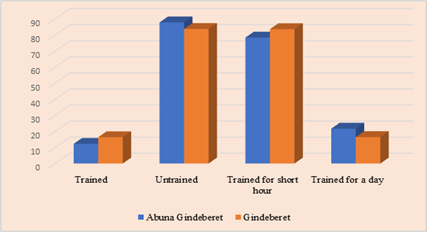
Figure 1: Farmers' knowledge of information regarding pesticide application training.
Table 2: Farmers' knowledge of information regarding pesticide information
| Categories | Variables | Abuna Gindeberet | Gindeberet |
Where do you get pesticide information | NGOs | 22.37 | 27.64 |
| Extension service | 28.37 | 31.27 | |
| Agro dealers | 13.27 | 8.27 | |
| Friends & Family | 17.77 | 12.33 | |
| Reading instruction | 6.68 | 3.77 | |
| Nowhere | 11.27 | 16.72 | |
Do pesticide containers have label | Yes | 67.33 | 59.37 |
| No | 22.25 | 34.52 | |
| Sometimes | 10.42 | 6.11 | |
Can you read & understand instruction on pesticide label | Yes | 34.75 | 29.47 |
| No | 58.88 | 62.54 | |
| sometimes | 6.37 | 7.99 | |
| If not why? | No education | 78.35 | 70.27 |
| Written in English | 21.65 | 29.33 |
Management of pesticides during Pesticide application.
Table 3 shows that the instruments used for applying the pesticide, managing the pesticide, mixing the pesticide, and measuring the dosage vary according to the size of the farm and the amount of pesticide needed. More than eighty percent of the farmers in three districts and more than twelve percent in other districts used knapsack sprayers. In Abuna Gendeberet district, the use for applying the pesticide Knapsack sprayer for applying the pesticide, Knapsack sprayer (83.33%), and Other (16.55%). When the farmer gets a blocked knapsack nozzle to open, they nozzles use their mouth to blow to unblock (41.11%), use a sharp object to (36.66%), or only replace with another nozzle and take it to a technician for repair (22.22%). The farmer always cleans the knapsack (sprayer) after use (74.44%), does not clean it after use sprayer simply puts it after use (11.11%), and cleans it sometimes clean (14.44%). The farmer just like that cleaning knapsack aver were the farmer mixing pesticide in different places, they were mixing in the house (3.33%), outside the house (17.77%), in the field (52.22%), and beside the water resource (26.66%). Table 4 shows the measurement of pesticide dosage anomaly by cup the most one (93.33%) remaining only by the other (6.66%). The farmer mixes several pesticides, mostly for two purposes the most farmers to save time (33.33%) and to get a better effect (44.44%), and doesn’t know (22.22%).
In Gendeberet district, the farmers use Knapsack sprayer for applying the pesticide, Knapsack sprayer (80%) and Other (20%). When the farmer gets a blocked knapsack nozzle to open the nozzles use their mouth to blow to unblock (36.66%), use a sharp object to unblock (34.44%), and only replace with another nozzle, taking it to the technician for repair 28.88%). The farmer always cleans the knapsack (sprayer) after use always (83.33%), does not clean after use sprayer simply put it after use (5.55%) and cleans some sometimes or does not clean at always (11.11%). The farmers where cleaned the knapsack in different places they were in the house (8.88%), outside the house (13.33%), in the field (45.55%), beside the water resource (lake or river) (32.22%). The mean number of households the farmers just like that cleaning knapsack sprayer were the farmer mixing pesticide in different places, they were mixing in the house (5.55%), outside the house (2.22%), in the field (47.77%), and beside the water resource (44.44%). The measurement of pesticide dosage anomaly by cup is the most common one (81.11%) they remain one by the other (18.77%). Mixing several pesticides (72.22%), Not Mixing several pesticides (25.55%), and mixing several pesticides sometimes (13.33%). The farmer for two purposes: mixing several pesticides mostly to save time (32.22%) and to get a better effect (46.66%), and I don’t know (21.11%), (Table 3).
Table 3: Management of pesticides during Pesticide application.
| Variable | Category | N (%) | Districts | |||
| Abuna Gendeberet (n=90) | Gendeberet (n=90) | |||||
| N | % | N | % | |||
| What do you use for applying the pesticide | Knapsack sprayer | 226(83.70%) | 75 | 83.33 | 72 | 80 |
| Other | 44(16.29%) | 15 | 16.66 | 18 | 20 | |
| In case you get a blocked sprayer nozzle | Use mouth to blow to unblocked | 108(40%) | 37 | 41.11 | 33 | 36.66 |
| Use sharp object to unblock | 98(36.29%) | 33 | 36.66 | 31 | 34.44 | |
| Replace nozzle & take to technicians for repair | 64(23.70%) | 20 | 22.22 | 26 | 28.88 | |
| Do you clean knapsack | Yes | 211(78.14%) | 67 | 74.44 | 75 | 83.33 |
| No | 23(8.51%) | 10 | 11.11 | 5 | 5.55 | |
| Sometime | 36(13.33%) | 13 | 14.44 | 1011 | 11.11 | |
| If yes where do you clean it | In house | 14(5.18%) | 3 | 3.33 | 8 | 8.88 |
| Outside the house | 39(14.44%) | 16 | 17.77 | 12 | 13.33 | |
| In the field | 142(52.59%) | 47 | 52.22 | 41 | 45.55 | |
| Beside the water resource | 75(27.77%) | 24 | 26.66 | 29 | 32.22 | |
| Where do you mix your pesticides | In the house | 17(6.29) | 9 | 10 | 5 | 5.55 |
| Outside the house | 9(3.33%) | 4 | 4.44 | 2 | 2.22 | |
| In the field | 148(54.81%) | 47 | 52.22 | 43 | 47.77 | |
| Besides water resource | 96(35.55%) | 30 | 33.33 | 40 | 44.44 | |
| How do you measure the dosage of pesticide | By cup measuring | 238(88.14%) | 84 | 93.33 | 73 | 81.11 |
| Other | 32(11.85%) | 6 | 6.66 | 17 | 18.88 | |
| Do you mix several different pesticides | Yes | 174(64.44%) | 66 | 73.33 | 65 | 72.22 |
| No | 65(24.07%) | 12 | 13.33 | 23 | 25.55 | |
| Sometime | 31(11.48%) | 12 | 13.33 | 12 | 13.33 | |
| If yes why | I don’t know | 55(61.11%) | 20 | 22.22 | 19 | 21.11 |
| To get a better effect of the pesticide | 122(45.18%) | 40 | 44.44 | 42 | 46.66 | |
| To save time | 86(31.85%) | 30 | 33.33 | 29 | 32.22 | |
Conclusion
The results could be concluded that farmers lack knowledge and practical use of pesticides, and safety measurement during pesticide handling, the farmers lacked sufficient understanding of appropriate pesticide handling during application in both districts.
References
- Wilson, C., Tisdell, C., & Swarna Nantha, H. (2001). Why farmers continue to use pesticides despite environmental, health and sustainability costs. Ecological Economics, 39:449–462.
Publisher | Google Scholor - Karunamoorthi, K., Yeshitela, A., & Bekele, M. (2012). Knowledge and practices of farmers with reference to pesticide management: Implications on human health. Archives of Environmental & Occupational Health, 67:109–116.
Publisher | Google Scholor - Gunnell, D., Eddleston, M., Phillips, M. R., & Konradsen, F. (2007). The global distribution of fatal pesticide self-poisoning: Systematic review. BMC Public Health, 7:357.
Publisher | Google Scholor - Karalliedde, L., Senanayake, N., & Murray, V. (2001). The global picture of organophosphate insecticide poisoning. In L. Karalliedde, S. Feldman, J. Henry, & T. Marrs (Eds.), Organophosphates and health.
Publisher | Google Scholor - Mengistie, B. T., Mol, A. P. J., Oosterveer, P., & Simane, B. (2017). Pesticide use practices among smallholder vegetable farmers in Ethiopian Central Rift Valley. Environment, Development and Sustainability, 19(1):301–324.
Publisher | Google Scholor - Adjrah, Y., Karou, D. S., Djossou, L., et al. (2013). Survey of pesticide application on vegetables in the Littoral area of Togo. Annals of Agricultural and Environmental Medicine, 20(4):715–720.
Publisher | Google Scholor - Benjamin, N., Musabyimana, J. P., Karangwa, C., et al. (2019). Pesticide application practices and knowledge among small-scale local rice growers and communities in Rwanda: A cross-sectional study. International Journal of Environmental Research and Public Health, 16:4770.
Publisher | Google Scholor - Negatu, B., Kromhout, H., Mekonnen, Y., & Vermeulen, R. (2016). Use of chemical pesticides in Ethiopia: A cross-sectional comparative study on knowledge, attitude, and practice of farmers and farm workers in three farming systems. Annals of Occupational Hygiene, 60(5):551–566.
Publisher | Google Scholor - Sahle, A. (2013). Environmental life cycle assessment of Ethiopian rose cultivation. Science of the Total Environment, 443:163–171.
Publisher | Google Scholor - Ayele, K. (2014). Suicidal deaths in Addis Ababa: Analysis of its epidemiology and psychosocial conditions (Master’s thesis). Addis Ababa University.
Publisher | Google Scholor - Ecobichon, D. J. (2001). Pesticide use in developing countries. Toxicology, 160:27–33.
Publisher | Google Scholor - Eddleston, M., Buckley, N. A., Eyer, P., & Dawson, A. H. (2002). Oximes in acute organophosphorus pesticide poisoning: A systematic review of clinical trials. QJM: An International Journal of Medicine, 95:275–283.
Publisher | Google Scholor - Sapkota, K. R., Khatiwada, J. R., Devkota, N. R., et al. (2020). Pesticides handling practices among potato growers in Kavrepalanchok, Nepal. Journal of Agriculture and Natural Resources, 3:77–87.
Publisher | Google Scholor - Ye, M., Beach, J., Martin, J. W., & Senthilselvan, A. (2013). Occupational pesticide exposures and respiratory health. International Journal of Environmental Research and Public Health, 10:6442–6471.
Publisher | Google Scholor - Lesmes-Fabian, C., & Binder, C. R. (2013). Pesticide flow analysis to assess human exposure in greenhouse flower production in Colombia. International Journal of Environmental Research and Public Health, 10:1168–1185.
Publisher | Google Scholor - Sanborn, M., Kerr, K. J., Sanin, L. H., et al. (2012). Systematic review of pesticide health effects. Ontario College of Family Physicians.
Publisher | Google Scholor - Hoppin, J. A., Umbach, D. M., London, S. J., et al. (2002). Chemical predictors of wheeze among farmer pesticide applicators in the Agricultural Health Study. American Journal of Respiratory and Critical Care Medicine, 165:683–689.
Publisher | Google Scholor - Hernández, A. F., Casado, I., Pena, G., et al. (2008). Low level of exposure to pesticides leads to lung dysfunction in occupationally exposed subjects. Toxicology, 20:839–849.
Publisher | Google Scholor - Nagami, H., Sakurai, H., & Kashima, Y. (2017). Pesticide exposure and subjective symptoms of cut-flower farmers. Journal of Rural Medicine, 12(1):7–11.
Publisher | Google Scholor - Seesen, M. (2020). Association between organophosphate pesticide exposure and insulin resistance in pesticide sprayers and non-farm workers. International Journal of Environmental Research and Public Health, 17:8140.
Publisher | Google Scholor