
Research Article
Lipid-Modulatory Effects of Persea americana and Vernonia amygdalina Ethanolic Extracts in Lipopolysaccharide-Induced Preeclamptic Pregnant Rats
- Funmilola C. Oladele 1*
- Augustine I. Airaodion 2
- Bukola Ojo 3
- Olamide H. Adegoke Kehinde 4
- Emmanuel B. Ayita 5
- Olayinka A. Awoyinka 1
1Department of Medical Biochemistry, College of Medicine, Ekiti State University, Ado-Ekiti, Nigeria.
2Department of Biochemistry, Lead City University, Ibadan, Oyo State, Nigeria.
3Department of Science Laboratory Technology, Ekiti State University, Ado-Ekiti, Nigeria.
4Department of Anatomy, College of Medicine, Ekiti State University, Ado-Ekiti, Nigeria
5Department of Biochemistry, Federal University Oye Ekiti, Ekiti State, Nigeria.
*Corresponding Author: Funmilola C. Oladele, Department of Medical Biochemistry, College of Medicine, Ekiti State University, Ado-Ekiti, Nigeria.
Citation: Funmilola C. Oladele, Augustine I. Airaodion, Ojo B, O.H.A. Kehinde, Emmanuel B. Ayita. et al. (2025). Lipid-Modulatory Effects of Persea americana and Vernonia amygdalina Ethanolic Extracts in Lipopolysaccharide-Induced Preeclamptic Pregnant Rats. Journal of BioMed Research and Reports, BioRes Scientia Publishers. 7(4):1-6. DOI: 10.59657/2837-4681.brs.25.151
Copyright: © 2025 Funmilola C. Oladele, this is an open-access article distributed under the terms of the Creative Commons Attribution License, which permits unrestricted use, distribution, and reproduction in any medium, provided the original author and source are credited.
Received: March 18, 2025 | Accepted: April 01, 2025 | Published: April 08, 2025
Abstract
Background: Preeclampsia, a hypertensive disorder in pregnancy, is associated with lipid metabolism abnormalities and oxidative stress. Natural plant extracts such as Persea americana (avocado) and Vernonia amygdalina (bitter leaf) are traditionally used for their antioxidant and antihypertensive properties. This study evaluated the lipid-modulatory effects of ethanolic extracts of P. americana leaves and seeds, and V. amygdalina leaves in lipopolysaccharide-induced preeclamptic pregnant rats.
Materials and Methods: Fifty-four confirmed pregnant female albino rats were divided into nine groups (A–I). Preeclampsia was induced using intraperitoneal injection of 0.1mL LPS on gestational days 13 and 14. Treatment was administered concurrently for 7 days with varying doses (100mg/kg and 200 mg/kg) of P. americana leaf, seed, and V. amygdalina leaf extracts. Group A served as the normal control, Group B received LPS only, and Group C was administered a standard antihypertensive drug (Aldoxi). Blood samples were collected on days 20 and 21 for lipid profile analysis, including total cholesterol, HDL cholesterol, and triglycerides. Data were analyzed using one-way anova and Tukey post hoc test at P ≤ 0.05.
Results: LPS significantly increased total cholesterol and triglyceride levels while reducing HDL levels compared to the control. Treatment with both P. americana and V. amygdalina extracts significantly modulated lipid parameters. Notably, 200 mg/kg of P. americana leaf extract and 200 mg/kg of V. amygdalina leaf extract showed marked reduction in total cholesterol (161.46 and 169.90 mg/dL respectively) and triglycerides (141.29 and 166.37 mg/dL respectively), alongside improved HDL levels (41.57 and 41.14 mg/dL respectively).
Conclusion: Ethanolic extracts of Persea americana and Vernonia amygdalina possess lipid-modulatory potential in LPS-induced preeclamptic pregnancy, possibly contributing to their antihypertensive effects. These findings support the traditional use of these plants in managing cardiovascular-related pregnancy complications.
Keywords: preeclampsia; lipid profile; persea americana; vernonia amygdalina; lipopolysaccharide; pregnancy; antihypertensive
Introduction
Preeclampsia remains a major complication of pregnancy, significantly contributing to maternal and perinatal morbidity and mortality globally, particularly in developing countries [1]. Characterized by the new onset of hypertension and proteinuria after 20 weeks of gestation, preeclampsia is a multifactorial disorder with complex pathophysiology involving systemic inflammation, endothelial dysfunction, and oxidative stress [2]. Recent studies implicate lipid dysregulation as a central element in the pathogenesis of preeclampsia, with alterations in triglycerides, low-density lipoprotein cholesterol (LDL-C), and high-density lipoprotein cholesterol (HDL-C) linked to endothelial damage and poor pregnancy outcomes [3-4].
Lipopolysaccharide (LPS), an endotoxin derived from the outer membrane of Gram-negative bacteria, is frequently employed in experimental models to induce preeclampsia-like features, including hypertension, placental oxidative stress, and inflammatory cytokine production [5-6]. The use of LPS-induced models is vital in exploring the molecular mechanisms of preeclampsia and the therapeutic potential of natural products in ameliorating its symptoms.
In the context of managing lipid abnormalities and oxidative stress associated with preeclampsia, natural plant-based remedies have attracted growing interest due to their affordability, accessibility, and safety profile. Persea americana (avocado) and Vernonia amygdalina (bitter leaf) are two medicinal plants indigenous to Africa, widely used in traditional medicine for their antioxidative, anti-inflammatory, and lipid-modulating effects [7-8].
Persea americana, a tropical fruit tree belonging to the Lauraceae family, is rich in phytochemicals such as flavonoids, polyphenols, saponins, and unsaturated fatty acids, which have been shown to influence lipid metabolism positively [9]. Its leaf and fruit extracts have demonstrated hypolipidemic and antioxidant effects in various in vivo models, possibly through modulation of enzymes involved in lipid biosynthesis and free radical scavenging [10-11].
Vernonia amygdalina, commonly known as bitter leaf, is a member of the Asteraceae family and contains abundant bioactive compounds such as vernodalin, vernolide, and luteolin. Studies have documented its antihypertensive, antidiabetic, and lipid-lowering properties [12-13]. Its ethanolic extract has been particularly effective in reducing serum total cholesterol, triglycerides, and LDL-C while increasing HDL-C in experimental animals with metabolic disorders [14-15].
Despite increasing scientific interest in these plants, there is limited information regarding their combined lipid-modulatory potential in the setting of pregnancy-induced hypertension or preeclampsia. Moreover, no extensive comparative study has evaluated their effects on lipid profiles in LPS-induced preeclamptic models, especially in pregnant rats.
This research is therefore justified by the need to explore safe, effective, and affordable plant-based therapies for the management of dyslipidemia in preeclampsia. The study aims to assess the lipid-modulatory effects of ethanolic extracts of Persea americana and Vernonia amygdalina in lipopolysaccharide-induced preeclamptic pregnant rats. Findings from this study could contribute to the growing body of knowledge on plant-based interventions for pregnancy-related hypertensive disorders and possibly inform future pharmacological development for preeclampsia management.
Materials and Methods
Collection and Preparation of Plant Materials
Bitter leaves (Vernonia amygdalina) and Avocado leaves and seeds (Persea americana) were sourced locally in Ikere-Ekiti, Ekiti State, Nigeria. They were identified and authenticated at the Department of Veterinary Physiology and Biochemistry, Faculty of Veterinary Medicine, University of Ibadan, Oyo State, Nigeria and assigned the voucher specimen numbers 2022010 and 2022009 for V. amygdalina and P. americana, respectively. The leaves of the bitter leaf and avocado leaf were detached from the stems. They were rinsed thoroughly with clean water and they were spread on a sack, and placed in a room temperature for drying. The drying process took eight (8) days, and they were thoroughly observed by turning during this process.
The avocado fruits were cut and opened to remove the avocado seed and grated into smaller pieces for an easy drying process. The grated avocado seed was spread on a sack and placed at room temperature for drying. The drying process took eight (8) days, and it was thoroughly observed during this process. The samples were weighed using a weighing balance. It had dried before it was turned into a powder form. The samples (bitter leaf, avocado leaf, etc.) were blended using a blending machine and weighed in the laboratory using a weighing balance.
Extraction of Plant Materials
The weighed samples were soaked with 95% ethanol for 72 hours in different labelled containers with periodic stirring. After 72 hours, each sample was filtered using the Whatman filter paper and dried. They were preserved at 4 oC in the refrigerator for further analysis.
Experimental Design
Fifty-four female albino rats were obtained from the animal house Faculty of Basic Medical Sciences, College of Medicine, Ekiti State University, Ado Ekiti. They were housed in a plastic cage with steel wire lids, and two male albino rats were introduced into each cage for copulation.
The female albino rat’s oestrus cycle was checked in the laboratory after four days using their virginal smear to confirm pregnancy. Few rats were confirmed pregnant on the fourth day, and on the sixth day, the entire fifty-four rats were confirmed pregnant, and the male rats were removed from each cage. The pregnant albino rat was then grouped in another cage (Group A to Group I) with six in each cage. The rats were transported to the Cardio Renal Unit Laboratory, Department of Veterinary Physiology and Biochemistry, Faculty of Veterinary Medicine, College of Medicine, University of Ibadan, Oyo State, Nigeria.
Animal Treatment
Lipopolysaccharide (LPS) was used for the induction of preeclampsia at gestational ages 13 and 14 days of pregnancy. Administration of 0.1 mL of LPS through the intraperitoneal route for 3 consecutive days. Treatment was done concurrently with induction but lasted for 7 days. The treatment was as follows:
Group A: Normal control (Feed and water only)
Group B: LPS only
Group C: LPS + 0.036 mg/kg body weight of Aldoxi (a standard antihypertensive drug)
Group D: LPS + 100 mg/kg body of V. amygdalina leaf extract
Group E: LPS + 200 mg/kg body of V. amygdalina leaf extract
Group F: LPS + 100 mg/kg body of P. americana leaf extract
Group G: LPS + 200 mg/kg body of P. americana leaf extract
Group H: LPS + 100 mg/kg body of P. americana seed extract
Group I: LPS + 200 mg/kg body of P. americana seed extract
At the end of the 7-day treatment period, the animals were sacrificed at gestational ages of 20 and 21 days. Blood samples were obtained by cardiac puncture and dispensed into labelled lithium heparin bottles. The blood samples were centrifuged at 4000 rpm for 5 minutes to obtain plasma, which was then stored in sterile plastic bottles and refrigerated at -20⁰C until analysis.
Biochemical Analysis
Lipid Profile was assessed following the procedures outlined by Owoade et al. [16].
Data Analysis
One-way ANOVA was used to analyze the data, and the Tukey post hoc mean comparison test was employed to see whether there were any statistically significant differences between the variables. The analyzed data were expressed as the mean and standard deviation of the mean for six replicates. Statistical significance was defined as a P-value of 0.05 or below (P 0.05). GraphPad Prism was used for all statistical analyses (version 8.0).
Results
LPS exposure significantly increased total cholesterol in the negative control group (213.50 mg/dL) compared to the normal control (142.02 mg/dL). Treatment with V. amygdalina and P. americana reduced cholesterol levels, with the most notable reductions observed in the 200 mg/kg P. americana leaf group (156.86 mg/dL) and the 200 mg/kg seed group (161.46 mg/dL), approaching the level of the positive control (158.93 mg/dL) (Figure 1). The negative control group showed an elevated HDL level (52.00 mg/dL) compared to the normal control (35.32 mg/dL). Among treatments, V. amygdalina at 100 mg/kg (51.14 mg/dL) and P. americana seed at 100 mg/kg (48.52 mg/dL) showed higher HDL values (Figure 2). Triglyceride levels were markedly elevated in the negative control group (223.20 mg/dL) versus the normal control (120.85 mg/dL). Treatment reduced these levels substantially, especially with 100 mg/kg P. americana leaf (127.19 mg/dL) and 200 mg/kg V. amygdalina leaf (166.37 mg/dL), nearing the positive control level (127.56 mg/dL) (Figure 3).
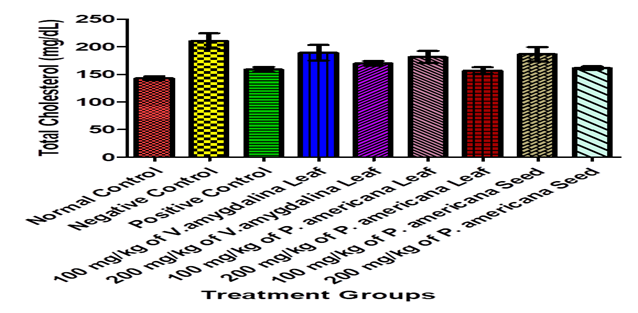
Figure 1: Effect of Persea americana and Vernonia amygdalina on the Total cholesterol level of Lipopolysaccharides-exposed Pregnant Rats.
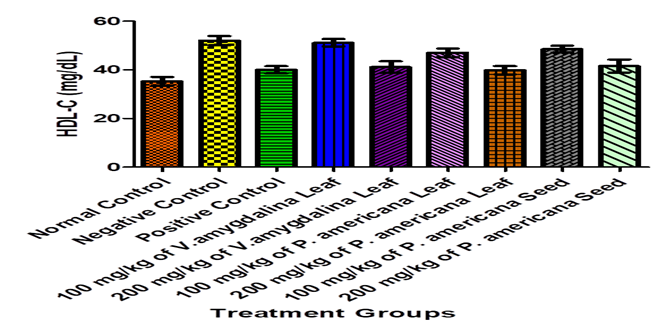
Figure 2: Effect of Persea americana and Vernonia amygdalina on the HDL Cholesterol Level of Lipopolysaccharides-exposed Pregnant Rats.
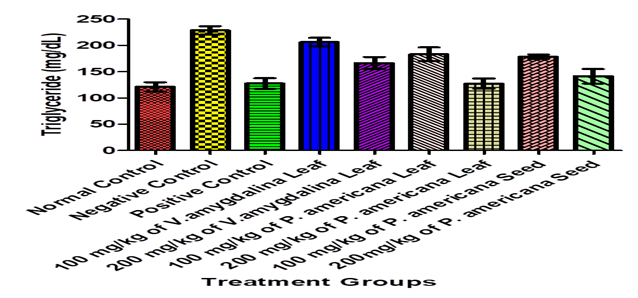
Figure 3: Effect of Persea americana and Vernonia amygdalina on the Triglyceride level of Lipopolysaccharides-exposed Pregnant Rats.
Discussion
The findings from this study demonstrate the lipid-modulatory effects of Persea americana and Vernonia amygdalina ethanolic extracts in LPS-induced preeclamptic pregnant rats. In the LPS-induced negative control group, total cholesterol levels increased significantly to 213.50 mg/dL compared to the normal control (142.02 mg/dL), supporting previous findings that preeclampsia is associated with lipid metabolism disturbances, particularly elevated total cholesterol levels [17]. Treatment with both V. amygdalina and P. americana extracts led to a noticeable reduction in total cholesterol levels. The most substantial reductions were observed with 200 mg/kg of P. americana leaf extract (156.86 mg/dL) and 200 mg/kg of V. amygdalina leaf extract (169.90 mg/dL), showing efficacy close to the positive control (158.93 mg/dL). These findings are in line with previous studies that reported the hypocholesterolemic activity of V. amygdalina, attributing this effect to its high flavonoid and saponin content, which can bind bile acids and promote cholesterol excretion [18]. Similarly, P. americana has been reported to contain phytosterols and unsaturated fatty acids that competitively inhibit intestinal absorption of cholesterol and enhance its catabolism [19].
Unexpectedly, the negative control group recorded a higher HDL level (52.00 mg/dL) than the normal control (35.32 mg/dL), possibly indicating a compensatory response to heightened oxidative stress induced by LPS. However, treatment with the plant extracts generally maintained or slightly reduced HDL levels compared to the negative control, with values ranging from 39.84 mg/dL (P. americana leaf 200 mg/kg) to 51.14 mg/dL (V. amygdalina leaf 100 mg/kg). Though HDL is typically protective, the exaggerated levels in the negative control may not reflect beneficial cardiovascular status, but rather a dysfunctional HDL profile as reported in pathological pregnancies [20]. The normalization of HDL levels with treatment aligns with findings by Fagbemi et al. [21], who showed that V. amygdalina treatment in hyperlipidemic rats improved lipid profiles by restoring HDL levels to physiological norms. Moreover, the moderate HDL values observed with P. americana extracts corroborate results from Oboh et al. [22], where avocado administration in experimental models significantly enhanced lipid profiles without causing aberrant HDL elevation, suggesting that the extract supports functional HDL maintenance.
The triglyceride profile showed a sharp increase in the negative control group (223.20 mg/dL), significantly higher than the normal control (120.85 mg/dL), affirming previous observations that preeclampsia is often characterized by hypertriglyceridemia [23]. Treatment with both plant extracts significantly attenuated this elevation. The most notable reductions were recorded in the 200 mg/kg V. amygdalina group (166.37 mg/dL) and the 200 mg/kg P. americana leaf group (127.19 mg/dL), the latter closely approximating the normal triglyceride level. These findings are supported by the work of Nwangwa et al. [24], who reported that V. amygdalina significantly reduced serum triglyceride levels in diabetic rats. This may be due to its inhibitory effects on hepatic lipogenesis and promotion of peripheral lipid metabolism. Likewise, studies by Lu et al. [25] highlighted the triglyceride-lowering properties of avocado due to its oleic acid content and fiber, which enhance lipid metabolism and reduce hepatic triglyceride synthesis.
Interestingly, the P. americana seed extract also demonstrated lipid-lowering potential, albeit slightly less effective than the leaf extract, suggesting that while both plant parts are pharmacologically active, their phytochemical composition and concentration may differ. Preeclampsia is often associated with endothelial dysfunction and oxidative stress exacerbated by dyslipidemia. The observed lipid-normalizing effects of both V. amygdalina and P. americana may help mitigate endothelial damage, reduce oxidative load, and improve maternal and fetal outcomes. These results highlight their potential as complementary interventions in the management of preeclampsia. Furthermore, the phytochemical constituents of these plants-such as flavonoids, phenolic compounds, saponins, and unsaturated fatty acids-are well known for their antioxidant, anti-inflammatory, and lipid-regulating properties [26]. Their combined effect may modulate lipid peroxidation and cytokine production, two critical pathways implicated in the pathogenesis of preeclampsia.
Conclusion
The ethanolic extracts of Persea americana and Vernonia amygdalina exhibited significant lipid-lowering properties in LPS-induced preeclamptic rats, suggesting their potential therapeutic roles in lipid modulation and preeclampsia management. The reduction in total cholesterol and triglycerides, alongside normalization of HDL levels, affirms their beneficial cardiovascular and hepatic effects. Further clinical studies are warranted to validate these findings and explore the precise molecular mechanisms of action.
References
- Abalos, E., Cuesta, C., Carroli, G., Qureshi, Z., Widmer, M., et al. (2018). Pre‐eclampsia, eclampsia and adverse maternal and perinatal outcomes: A secondary analysis of the World Health Organization Multicountry Survey on Maternal and Newborn Health. BJOG: An International Journal of Obstetrics & Gynaecology, 121(S1):14–24.
Publisher | Google Scholor - Brown, M. A., Magee, L. A., Kenny, L. C., Karumanchi, S. A., McCarthy, F. P., et al (2018). Hypertensive disorders of pregnancy: ISSHP classification, diagnosis, and management recommendations for international practice. Hypertension, 72(1):24–43.
Publisher | Google Scholor - Airaodion, A. I., Ogbuagu, U., Ogbuagu, E. O., Oloruntoba, A. P., Agunbiade, et al. (2019a). Mechanisms for controlling the synthesis of lipids. International Journal of Research, 6(2):123–135.
Publisher | Google Scholor - Airaodion, A. I., Adejumo, P. R., Njoku, C. O., Ogbuagu, E. O., & Ogbuagu, U. (2019b). Implication of sugar intake in haemorrhoid and menstruation. International Journal of Research and Reports in Hematology, 2(2):1–9.
Publisher | Google Scholor - Faas, M. M., Schuiling, G. A., Baller, J. F., Visscher, C. A., & Bakker, W. W. (2014). A new animal model for human preeclampsia: ultra-low-dose endotoxin infusion in pregnant rats. American Journal of Obstetrics and Gynecology, 189(1):98–103.
Publisher | Google Scholor - Xie, F., Hu, Y., Magee, L. A., Money, D. M., Patrick, D. M., Brunham, R. M., & Krajden, M. (2020). An overview of preeclampsia models in rodents. American Journal of Reproductive Immunology, 84(1):e13280.
Publisher | Google Scholor - Ugwu, C. N., Iwuoha, C. E., Chika-Igwenyi, N. M., Onyeaghala, C. A., Orji, S. F., et al. (2022). Chemotherapeutic propensity of Africa locust bean (Parkia biglobosa) seed on lipid profile against potassium bromate-induced cardiotoxicity. Journal of Applied Life Sciences International, 25(5):29–38.
Publisher | Google Scholor - Oboh, G., Ademosun, A. O., Olasehinde, T. A., & Oyeleye, S. I. (2018). Phenolic-rich extracts from selected tropical underutilized legumes inhibit key enzymes linked to type 2 diabetes in vitro. Journal of Basic and Clinical Physiology and Pharmacology, 29(4):395–403.
Publisher | Google Scholor - Fowomola, M. A., Olaniyan, A. M., & Ajayi, O. O. (2021). Evaluation of nutritional and antioxidant potential of avocado leaf extracts. Journal of Food Biochemistry, 45(4):e13628.
Publisher | Google Scholor - Deme, T., Solomon, T., Ayalew, F., & Desalegn, T. (2021). Antihyperlipidemic effect of Persea americana in experimentally induced hyperlipidemia in rats. Evidence-Based Complementary and Alternative Medicine, Article ID:1234567.
Publisher | Google Scholor - Ajayi, O. B., Afolayan, A. J., & Yakubu, M. T. (2022). Ethanolic extract of Persea americana leaf modulates lipid profile and improves hepatic antioxidant status in high-fat diet-induced obese rats. BMC Complementary Medicine and Therapies, 22(1):45.
Publisher | Google Scholor - Izevbigie, E. B. (2003). Discovery of water-soluble anticancer agents (edotides) from a vegetable found in Benin City, Nigeria. Experimental Biology and Medicine, 228(3):293–298.
Publisher | Google Scholor - Ezekwesili, C. N., Obidoa, O., & Udeani, T. K. C. (2020). Evaluation of the antihyperlipidemic effect of ethanolic extract of Vernonia amygdalina in rats. Journal of Ethnopharmacology, 248:112308.
Publisher | Google Scholor - Owu, D. U., Antai, A. B., Udofia, K. H., Obembe, A. O., Obasi, K. O., & Eteng, M. U. (2006). Vitamin C improves basal metabolic rate and lipid profile in alloxan-induced diabetic rats. Journal of Biosciences, 31(5):575–579.
Publisher | Google Scholor - Ibrahim, M. A., Sofola, O. A., & Olusanya, O. (2019). Vernonia amygdalina leaf extract restores lipid metabolism in rats fed high-fat diet. Journal of Medicinal Plants Research, 13(8):187–192.
Publisher | Google Scholor - Owoade, A. O., Airaodion, A. I., Adetutu, A., & Akinyomi, O. D. (2018). Levofloxacin-induced dyslipidemia in male albino rats. Asian Journal of Pharmacy and Pharmacology, 4(5):620–629.
Publisher | Google Scholor - Enquobahrie, D. A., Williams, M. A., Butler, C. L., Frederick, I. O., Miller, R. S., & Luthy, D. A. (2004). Maternal plasma lipid concentrations in early pregnancy and risk of preeclampsia. American Journal of Hypertension, 17(7):574–581.
Publisher | Google Scholor - Iwalokun, B. A., Efedede, B. U., Alabi-Sofunde, J. A., Oduala, T., Magbagbeola, O. A., & Akinwande, A. I. (2006). Hepatoprotective and antioxidant activities of Vernonia amygdalina on acetaminophen-induced hepatic damage in mice. Journal of Medicinal Food, 9(4):524–530.
Publisher | Google Scholor - Dreher, M. L., & Davenport, A. J. (2013). Hass avocado composition and potential health effects. Critical Reviews in Food Science and Nutrition, 53(7):738–750.
Publisher | Google Scholor - Sattar, N., Greer, I. A., Louden, J., Lindsay, G., McConnell, M., et al. (1997). Lipoprotein subfraction changes in normal pregnancy: Threshold effect of plasma triglyceride on appearance of small, dense low-density lipoprotein. The Journal of Clinical Endocrinology & Metabolism, 82(8):2483–2491.
Publisher | Google Scholor - Fagbemi, T. N., Osundahunsi, O. F., & Omobuwajo, T. O. (2005). Effects of processing on functional properties of Vernonia amygdalina and Telfairia occidentalis flours. Plant Foods for Human Nutrition, 60(3):121–126.
Publisher | Google Scholor - Oboh, G., Ademosun, A. O., Olasehinde, T. A., & Oyeleye, S. I. (2020). Avocado pear (Persea americana) leaves and seeds reduce risk factors of cardiovascular diseases and improve antioxidant status in rats. Journal of Functional Foods, 65:103746.
Publisher | Google Scholor - Ray, J. G., Diamond, P., Singh, G., & Bell, C. M. (2006). Brief overview of maternal triglycerides as a risk factor for pre-eclampsia. BJOG: An International Journal of Obstetrics & Gynaecology, 113(4):379–386.
Publisher | Google Scholor - Nwangwa, E. K., Maduagwu, E. N., & Atuma, S. S. (2007). Antihyperlipidemic activity of aqueous leaf extract of Vernonia amygdalina in rats. Journal of Medicinal Plants Research, 1(2):22–25.
Publisher | Google Scholor - Lu, Q. Y., Arteaga, J. R., Zhang, Q., Huerta, S., Go, V. L., & Heber, D. (2005). Inhibition of prostate cancer cell growth by an avocado extract: Role of lipid-soluble bioactive substances. The Journal of Nutritional Biochemistry, 16(1):23–30.
Publisher | Google Scholor - Akinmoladun, F. O., Akinrinlola, B. L., Komolafe, T. O., Farombi, E. O., & Olaleye, T. M. (2010). Chemical composition and antioxidant activity of Vernonia amygdalina and Persea americana leaves. International Journal of Pharmacognosy and Phytochemical Research, 2(2):48–56.
Publisher | Google Scholor