
Research Article
Fifth-generation (5G) Technology, Cybersecurity and the Future of Radiography Practice in Low and Middle-Income Countries
- F.B. Nkubi *
- A. Anas
Department of Medical Radiography, Faculty of Allied Health Science, College of Medical Sciences, University of Maiduguri, Nigeria.
*Corresponding Author: F.B. Nkubi, Department of Medical Radiography, Faculty of Allied Health Science, College of Medical Sciences, University of Maiduguri, Nigeria.
Citation: Nkubi F.B., Anas A. (2026). Fifth-generation (5G) Technology, Cybersecurity and the Future of Radiography Practice in Low and Middle-Income Countries. Scientific Research and Reports, BioRes Scientia Publishers. 4(1):1-5. DOI: 10.59657/2996-8550.brs.26.040
Copyright: © 2026 F.B. Nkubi, this is an open-access article distributed under the terms of the Creative Commons Attribution License, which permits unrestricted use, distribution, and reproduction in any medium, provided the original author and source are credited.
Received: January 14, 2025 | Accepted: February 17, 2026 | Published: March 02, 2026
Abstract
Introduction: As the medical imaging profession continues to expand its scope by offering more diagnostic, prognostic, and therapeutic procedures in healthcare through digital technology, the advent of fifth-generation technology (5G) presents new opportunities for enhanced connectivity via cyberspace. However, this technology also introduces unique challenges, similar to other advancements. Our increasing reliance on the internet exposes us to cyberattacks. Consequently, it is crucial to reconsider the future of radiography practice in light of current and emerging technological trends and threats.
Objective: This paper explores the opportunities and challenges of 5G technology in medical imaging, emphasizing the need for cybersecurity in this field. It examines cyberattacks, defensive techniques, and methods to mitigate their impact, and suggests strategies for protecting data and privacy in medical imaging.
Methods: A literature review was conducted using Google, Google Scholar, journal articles, radiography and radiology websites, and the Information and Telecommunication Union (ITU) website. Search terms included 5G, cyberattacks, cybersecurity, vulnerability, radiography, radiology, and medical imaging. Only literature from the past ten years was included.
Results: The literature highlights several benefits of 5G technology, such as its applications in telepresence and teleconferencing, which are valuable for teleradiography. However, there are significant concerns, such as the possibility of cyber attackers altering the radiation dose during a computed tomography scan or launching ransomware attacks that block access to patient data until a ransom is paid in Bitcoin. As cyber warfare evolves, radiology servers worldwide have become increasingly vulnerable to cyberattacks, posing serious threats to medical imaging practices.
Conclusion: The numerous potentials of 5G technology could revolutionize radiography practice, especially in low and middle-income countries. However, cybersecurity threats are a significant reality. Therefore, there is a pressing need for digital literacy and robust regulatory infrastructure to safeguard this field.
Keywords: cyber-attacks, cyber-warfare, vulnerability, ransomware, medical imaging
Introduction
Modern medicine is heavily reliant on information technology (IT) (Eeichelberg, Kleber, and Kammare, 2020). Since the introduction of hospital information systems (HIS) around 1970, there have been significant advancements, including digital imaging modalities like computed tomography (CT) and magnetic resonance imaging (MRI) in the 1970s and 1980s, Picture Archiving and Communication Systems (PACS) and softcopy reading in the 1980s and 1990s, and the electronic sharing of clinical information across regions, nations, and globally today (Eeichelberg, Kleber, and Kammare, 2020).
These technologies require a global wireless standard to function effectively, leading to the development and advancement of wireless standards from 1G to 5G technology. The goal of 5G technology is to connect everything and everyone virtually, transforming the world into a cohesive global society (Thales, 2021). Compared to its predecessors, 5G technology offers much faster connectivity and accessibility, providing patients with unprecedented access to their health information and technologies.
However, the implementation of these technologies in the medical imaging profession is fraught with challenges. This article addresses the opportunities and obstacles presented by 5G technology in medical imaging and proposes solutions to mitigate these challenges.
What is 5g Technology
The fifth-generation wireless cellular network, known as the 5G network, is the latest global wireless technology that surpasses previous cellular networks (Nicol, 2019; Qualcomm, 2021). The 5G mobile network is not only a successor to its predecessors (4G, 3G, and 2G) but also the beginning of a new era of communication. Beyond speed enhancements (Nicol, 2019; Telecomlead, 2020), 5G is expected to create a massive Internet of Medical Things (IoMT) ecosystem, a subset of the Internet of Things (IoT), where networks can meet the communication needs of billions of connected medical devices while balancing speed, latency, and cost (Qualcomm, 2021; Telecomlead, 2020; Thales, 2021).
5G wireless technology aims to provide higher multi-Gbps peak data speeds—5G has a theoretical peak speed of 20 Gbps, compared to 4G's peak speed of 1 Gbps (Akhtar et al., 2020)—ultra-low latency, increased reliability, massive network capacity, greater availability, and a more consistent medical imaging experience for more users (Qualcomm, 2021; Telecomlead, 2020; Thales, 2021). According to the NCC, 5G networks are projected to have over 1.7 billion subscribers by 2025.
How Will 5g Influence Health Care?
The fifth-generation (5G) network will revolutionized healthcare by enabling high-speed data transfer, reduced latency, and expanded network coverage. This advancement has created new opportunities for healthcare practitioners to provide better care to patients (Hong et al., 2023). The healthcare trend towards a distributed, patient-centric approach, driven by technological advancements in communication, has led to the use of 4G and other sophisticated technologies for smart healthcare. However, the limitations of fourth-generation healthcare systems require machine-to-machine (M2M) or device-to-device (D2D) connectivity. The 5G communication infrastructure addresses these needs with its ultra-low latency, high availability, dependability, and security features (Akhtar et al., 2020; Hong et al., 2023).
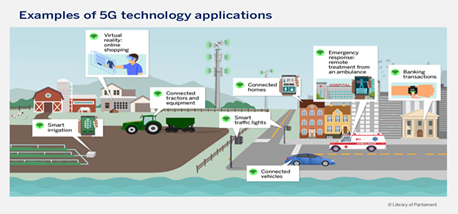
Figure 1: Examples of 5G technology applications
Source: Library of Parliament
Application In Medical Imaging
PACS and DICOM
PACS (Picture Archiving and Communication System) and DICOM (Digital Imaging and Communications in Medicine) are two standards that enable the storage, transmission, and display of medical images (Eeichelberg, Kleber, and Kammare, 2020). PACS and DICOM rely on high-speed and reliable network connections to ensure the quality and efficiency of image-based diagnosis and treatment. The implementation of 5G technology would enable faster image transfer and access, reducing waiting times for patients and clinicians. Additionally, 5G would better support higher resolution and more complex image formats, such as 3D and 4D imaging, improving the accuracy and precision of diagnosis and treatment, thereby decreasing disease morbidity and mortality rates.
Tele radiography and AI
The capacity to obtain high-quality healthcare is a fundamental human right, and pathology and laboratory medicine (PALM) diagnosis and diagnostic imaging (DI)/medical imaging or radiography form the foundation of such treatment. More than half of the world's population, the vast majority of whom live in low- and middle-income countries (LMICs), lack access to basic medical care (Harika, 2021).
Primary, secondary, and tertiary healthcare are provided by local, state, and federal governments, respectively, and constitute the pattern of healthcare delivery in LMICs (Lancet, 2021), particularly in Nigeria. Due to a lack of medical staff and infrastructure, many patients in Nigeria bypass primary healthcare and self-refer to higher levels of care (Lancet, 2021). Medical imaging, which has evolved as a critical tool in contemporary medicine and frequently offers the only in vivo means of analyzing disease and the human body, is almost nonexistent in primary healthcare (Lancet, 2021). Many secondary and tertiary healthcare facilities in LMICs lack the operational and physical infrastructure required to provide medical imaging services. For example, Susu (2022) conducted a study in Northern Nigeria and discovered only 24 MRI machines in the whole region, seven of which could not be used due to technical or physical limitations.
Furthermore, there is a labor shortage. For instance, the ratio of radiologists is less than five per million people, particularly in Nigeria, where it is less than 0.9 per million people. The number of radiographers, which should be at least 50,000, is just 2,500, or 5% of the total (Lancet, 2021). 5G can facilitate remote image interpretation and consultation, enabling telemedicine and teleradiology services across different locations and devices. It can also enable real-time image processing and analysis, using artificial intelligence and machine learning to assist clinicians in decision-making and diagnosis. For example, 5G would enable more experienced radiographers practicing in high-income countries to perform live interventional procedures on patients, retrieve images, and instantly send information across geographic borders, compressing time and space. If a radiographer is stationed in another area of the world and needs a second opinion, they can send a medical image or patient parameters to another radiographer and seek that person's assessment of the medical condition. This allows the radiography profession to close existing disparities due to distance, income, or social class, while also supporting radiographers in gaining access to much-needed knowledge. As a result, the talent pool will expand, and low-income countries with inadequate medical imaging infrastructure will benefit from highly responsive medical imaging.
Patient Privacy
5G can support more secure and reliable image transmission and storage, using encryption and authentication techniques to protect patient privacy and data integrity.
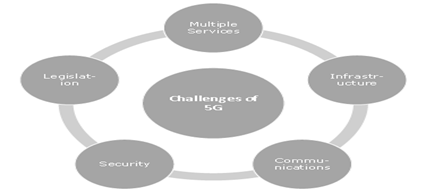
Figure 2: Challenges of 5G
Cybersecurity
Concerns about privacy and security arise from the exchange of patient health information among medical staff, facilities, and healthcare providers, as well as cross-border data transfer methods such as PACS and DICOM (Eeichelberg, Kleber, and Kammare, 2020). It is the professional responsibility of the medical profession to safeguard the confidentiality of a patient's personal health information (Pritts, 2008) unless the patient grants consent to release the information or there is another approved legal reason (Barkey, 2020; Nwobi, 2021). This obligation stems from the Hippocratic Oath, which mandates medical practitioners to maintain secrecy (Varkey, 2020). Confidentiality is one of the pillars of medical practice (Nwobi, 2021) and is also legally protected as privileged communication between individuals in a professional relationship (American Medical Association, 2023).
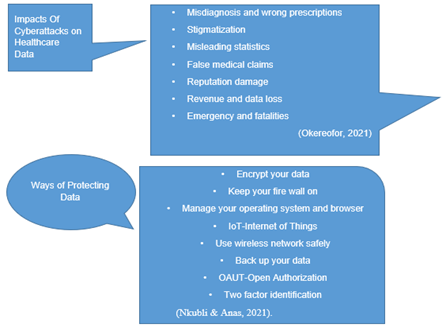
Internal and external cyberattacks on healthcare facilities have severely compromised confidentiality (Chopra, 2020; Riggi, 2023). Healthcare organizations are particularly vulnerable to and targeted by cyberattacks because they hold extensive data with high monetary and intelligence value to cyber thieves and nation-state actors (Okereofor, 2021).
Given the rapidly evolving cyber threat landscape (Riggi, 2023), a glaring vulnerability of radiology servers in low- and middle-income countries (LMICs), particularly in Nigeria, has been revealed. This has raised concerns among radiation health workers about the possibility of cyber attackers altering the radiation dose of patients during computed tomography scans or blocking patient data until a bitcoin ransom is paid (Nkubli & Anas, 2021).
The Future of Radiography in Low and Middle-Income Countries
The future of radiography practice in low- and middle-income countries (LMICs) is likely to be shaped by the emergence of 5G technology and the accompanying cybersecurity challenges. 5G is expected to enable faster and more reliable transmission of medical images and facilitate remote diagnosis and telemedicine. However, it also poses potential risks to the confidentiality, integrity, and availability of radiological data, especially in LMICs where cybersecurity infrastructure and awareness may be lacking. Therefore, radiographers in LMICs must adopt appropriate measures to protect their data and systems from cyber threats, such as encryption, authentication, backup, and recovery.
Additionally, radiographers in LMICs need to stay informed about the latest developments and standards in 5G and cybersecurity. Participation in training and education programs is essential to enhance their skills and competencies in this area. By doing so, they can better safeguard patient data and ensure the continued advancement of radiography practice in their regions.
Conclusion
The future of radiography practice in low- and middle-income countries (LMICs) amid 5G and cyber security is challenging but promising. On one hand, 5G technology can enable faster and more reliable transmission of radiological images, as well as remote consultation and diagnosis. This can improve the quality and accessibility of radiography services in LMICs, especially in rural and underserved areas. On the other hand, 5G also poses new risks and threats to the cyber security of medical imaging systems, such as data breaches, ransomware attacks, and malicious interference. Therefore, LMICs need to invest in adequate cyber security measures and policies to protect their radiography data and infrastructure from potential cyber-attacks. Moreover, LMICs need to enhance their human resources and capacity building in radiography, as well as foster collaboration and coordination among stakeholders, to ensure the effective and ethical use of 5G technology in radiography practice.
Recommendations
To ensure a safe and effective radiography practice in the 5G era, LMICs should consider the following recommendations:
- Developing and implementing national and regional policies and standards for cybersecurity in radiography, in alignment with international guidelines and best practices.
- Investing in cybersecurity infrastructure, training, and awareness for radiography professionals, institutions, and stakeholders, as well as establishing mechanisms for reporting and responding to cyber incidents.
- Promoting collaboration and coordination among LMICs and with high-income countries, as well as with relevant organizations and agencies, to share information, resources, and expertise on cybersecurity issues and solutions in radiography.
- Encouraging innovation and research on cybersecurity solutions tailored to the specific needs and contexts of LMICs, as well as evaluating their impact and effectiveness on radiography practice and outcomes.
References
- Akhtar MW, Hassan SA, Ghafar R, JungH, Garg S, Hossain MS (2020) The shift to 6G communications: vision and requirements. Hum. Cent. Comput. Inf. Sci. 10:53
Publisher | Google Scholor - American Medical Association. (2023). Privacy in Health Care.
Publisher | Google Scholor - The Lancet Global Health. (2021). Availability of essential diagnostics in ten low-income and middle-income countries: Results from national health facility surveys. The Lancet Global Health, 9:e1553–e1560.
Publisher | Google Scholor - Barkey, V. (2020). Principles of clinical ethics and their application to practice. Medical Principles and Practice, 30(1):17–28.
Publisher | Google Scholor - Chopra, D. (2020). The importance of cybersecurity in this era of radiology. Diagnostic Imaging.
Publisher | Google Scholor - Davies, V. (2021). The history of cybersecurity. Cyber Magazine.
Publisher | Google Scholor - Eichelberg, M., Kelber, K., & Kammere, M. (2020). Cybersecurity challenges for PACS and medical imaging. Academic Radiology, 27(8):1126–1139.
Publisher | Google Scholor - Harika, Y., Devanshi, S., Shahin, S., Susan, H., & Lee, F. S. (2021).
Publisher | Google Scholor - Hong, Y., Abir, S. M. A., Abuibaid, M., & Huang, J. (2023). Harnessing 5G networks for health care: Challenges and potential applications.
Publisher | Google Scholor - The Lancet Commission. (2021). The Lancet Commission on diagnostics: Transforming access to diagnostics. The Lancet, 398:1997–2050.
Publisher | Google Scholor - Nicol, T. L. (2019). Enabling opportunities: 5G, the internet of things, and communities of color. Brookings Institution.
Publisher | Google Scholor - Nigerian Communication Commission. (2020). Deployment of Fifth Generation (5G) mobile technology in Nigeria.
Publisher | Google Scholor - Nwobi, I. (2022). Professional ethics lecture note. Department of Medical Radiography, University of Maiduguri.
Publisher | Google Scholor - Okereafor, K. (2021). Strengthening cybersecurity in healthcare: A post-COVID review. Keynote at the Manegma 2021 Conference on Resilience, Innovation and Reinvention, India.
Publisher | Google Scholor - Pritts, J. (2008). The importance and value of protecting the privacy of health information: Roles of HIPAA Privacy Rule and the Common Rule in health research. Institute of Medicine.
Publisher | Google Scholor - Qualcomm. (2021). 5G is driving economic growth, resiliency, and sustainability in a post-COVID economy.
Publisher | Google Scholor - Riggi, J. (2023). The importance of cybersecurity in protecting patient safety. Center for Health Innovation.
Publisher | Google Scholor - Telecomlead. (2020). Top 7 challenges faced during 5G network deployment.
Publisher | Google Scholor - Thales. (2021). 5G technologies and networks (speed, use cases, rollout).
Publisher | Google Scholor - Varkey, B. (2020). Principles of clinical ethics and their application to practice. Medical Principles and Practice, 30(1):17–28.
Publisher | Google Scholor