
Case Report
Effect of Fenugreek Water Extract on Nocturnal Enuresis: A Case Report
- Rizwana Shahid *
Associate Professor Community Medicine, Rawalpindi Medical University, Rawalpindi, Pakistan.
*Corresponding Author: Rizwana Shahid, Associate Professor Community Medicine, Rawalpindi Medical University, Rawalpindi, Pakistan.
Citation: Shahid R. (2026). Effect of Fenugreek Water Extract on Nocturnal Enuresis: A Case Report, International Journal of Biomedical and Clinical Research, BioRes Scientia Publishers. 7(5):1-4. DOI: 10.59657/2997-6103.brs.26.164
Copyright: © 2026 Rizwana Shahid, this is an open-access article distributed under the terms of the Creative Commons Attribution License, which permits unrestricted use, distribution, and reproduction in any medium, provided the original author and source are credited.
Received: October 14, 2026 | Accepted: November 05, 2026 | Published: November 17, 2026
Abstract
Background: Nocturnal enuresis is a commonly prevails among children characterized by involuntary urination during sleep beyond the age of expected bladder control. Fenugreek (Trigonella foenum-graecum) is a conveniently available herb known for its hypoglycemic effects. Hence, objective of the study is to determine the effects of fenugreek water extract on nocturnal enuresis in a pediatric case.
Materials and Methods: A quasi-experimental pre-test post-test case study was conducted on a 10½-year-old girl with complaint of nocturnal enuresis occurring on alternate days. Fenugreek water extract was prepared by soaking 4.5 g of fenugreek seeds overnight and administered daily for 14 weeks. Fasting blood glucose and HbA1c levels were analyzed before and after the intervention, and bed-wetting frequency was observed.
Results: intervention led to cessation of nocturnal enuresis. HbA1c levels dropped from 5.8% to 5.7%, while fasting blood glucose remained unchanged (98 mg/dl). The cessation in bed-wetting accorded with improved glycemic control.
Conclusion: Fenugreek water extract was associated with resolution of nocturnal enuresis, possibly through enhanced glycemic regulation.
Keywords: nocturnal enuresis; fenugreek water extract; HbA1c levels; fasting blood glucose
Introduction
Nocturnal enuresis is one of the commonest problems in Pediatrics [1]. Nocturnal enuresis generally termed as bedwetting is involuntary urination among those individuals who according to the age are likely to have developed nighttime bladder control. This means bedwetting beyond the age when urinary continence is perceived to have attained in childhood [2]. It is a multifactorial disorder that encompasses nocturnal polyuria and diminished bladder capacity [3]. This condition seems to influence millions of school-going children across the globe that drastically impacts the psychological and developmental growth of the children [4].
Traditional methods used for managing nocturnal enuresis across the years were behavioral change strategies like moisture alarms and bladder training. Pharmacological intervention like use of desmopressin has also been reported as it lessens bed wetting frequency by reducing urine production [5]. However, relapse has been noted in multiple cases on cessation of treatment [3]. A study carried out among 8 to 11 years old American children elucidated increased bed wetting among boys than those of girls [6]. This problem among children was found to be associated with increased daytime sleepiness due to excessive sleep disruption at night [7].
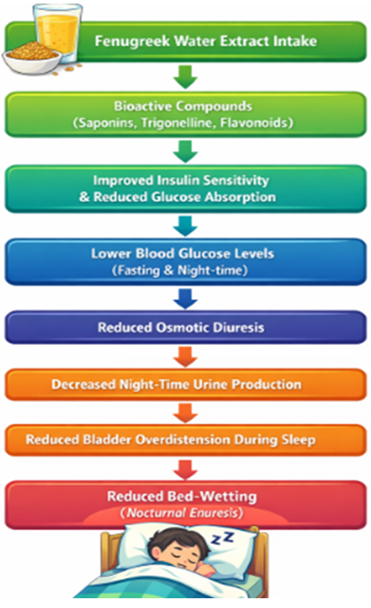
Nocturnal enuresis has been determined as the second commonest disorder after allergic problems among children [8]. Fenugreek seeds and water extracts contain saponins, alkaloids (e.g., trigonelline), flavonoids and certain amino acids which have anti-inflammatory and diuretic properties. They are expected to affect smooth muscle function in the urinary tract [9]. Their regular use was also seemed to restore hormonal balance by elevating inhibitory neurotransmitters like GABA and dopamine along with suppression of serum cortisol levels [10].
Various herbs, ayurvedic treatment and home remedies have been used to manage nocturnal enuresis among 6-14 years old children and adolescents worldwide [11]. A national study revealed mitigation in nocturnal enuresis among 5-14 years old patients with evening fluid restriction and micturition before and after sleep12. A prospective study was also done among 6-15 years old nocturnal enuresis cases of Fauji Foundation Hospital Rawalpindi to delineate its relationship with spina bifida occulta [13]. According to the recent literature, bed wetting can be one of the primitive manifestations of diabetes among children [14]. The present case study therefore is intended to determine the effect of fenugreek water extract on bed wetting frequency. This study will not only provide valuable information to the readers but will also enable the parents to deal with nocturnal enuresis of their children by managing the underlying etiology.
Methodology
A quasi-experimental pre-test post-test study was done for a period of 14 weeks and 5 days from 1st November 2025 to 11th February 2026 on 10 and a half years old girl who was experiencing bed wetting on alternate days. This was practiced daily. Fenugreek water extract was prepared by soaking 4.5 grams of fenugreek seeds overnight in a glass of water. The glass was covered and kept at room temperature in the kitchen overnight for 8-10 hours. The water was taken early in the morning before breakfast around 6:15 am. This water neither caused allergic symptoms nor any gastrointestinal side effect. Fasting blood glucose and HbA1c testing were done in the mid of October 2025 before intervention and in February 2026 after intervention.
Fasting Blood Sugar (FBS): Measures blood sugar levels in blood after an overnight fast that includes fasting for at least 8 hours. Normally FBS is ≤ 99 mg/dL, FBS 100-125 mg/dL signals prediabetes while FBS ≥ 126 mg / dL is indicative of diabetes [15].
HbA1C: It indicates the blood sugar control over the past 3 months. Its values are interpreted as follows [16]:
| Normal blood glucose | Prediabetes | Diabetes |
| Below 5.7% | 5.5 & - 6.4% | 6.5% or higher on 2 separate tests |
As this household intervention was only on a single case so there was no need to register this trial. The effect of fenugreek water extract on HbA1c levels and bed wetting frequency was exhibited by plotting a scatter diagram.
Framework
Results
A 10.5 years old girl with history of nocturnal enuresis on alternate days was subjected to some laboratory investigations before and after fenugreek water extract intake as shown below in Table 1.
Table 1: Results of Lab investigations pre & post intervention.
| Date of Lab Testing | Findings | Fasting Blood Glucose | HbA1c Levels | HbA1c Interpretation |
| October 11, 2025 | Pre-intervention | 98 mg / dl | 5.8 % | Prediabetic |
| February 13, 2026 | Post intervention | 98 mg / dl | 5.7 % | Prediabetic |
Association of bed wetting with HbA1c levels is depicted below in Figure 1.
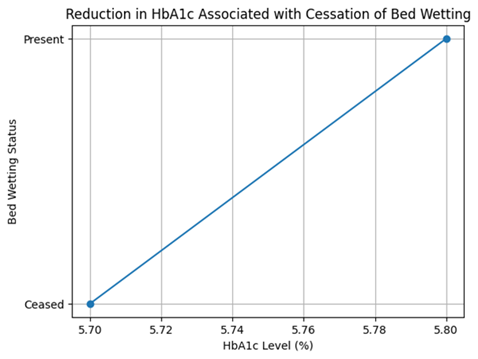
Figure 1: Association of Bed wetting status with HbA1c.
Discussion
Intake of fenugreek water extract has led to bed wetting cessation by reducing blood sugar level. This illustrates an innovative juncture between an herbal remedy and metabolic physiology of human beings. Nocturnal enuresis is a physiological phenomenon in children till 5 years of age but it is considered abnormal in adults and adolescents [17]. Excessive urination at night (nocturnal polyuria) is defined as passing more than 33% of 24 hours of urine volume while asleep and is associated with distressed circadian urine production patterns [18]. Fenugreek seeds and water extracts have been widely studied for controlling blood glucose levels. It has also been proved useful in remarkably improving insulin resistance particularly among type-II diabetic cases [19]. A meta-analysis of clinical trials by Neelakantan N et al revealed drastic reduction in post-prandial 2 hours glucose levels among those who consumed fenugreek seeds [20]. Usage of fenugreek water extract is beneficial for people of all ages.
The present case study elucidates that the girl with nocturnal enuresis was prediabetic. it seems as bed wetting was attributed to raised blood glucose levels as reduction of HbA1c from 5.8% to 5.7% as evident from Figure 1 and Table 1. Experimental studies explicated that bioactive constituents present in fenugreek seed like soluble fiber, saponins, and 4-hydroxyisoleucine, substantially enhance glucose homeostasis and hence stabilize metabolic functions of the body that influence daily fluid balance and energetic demand [21]. According to a study by Mithani S et al, nocturnal enuresis among the school going children of Karachi was 9.1% and almost same statistics have been reported in European people and children of Korea and Taiwan. Though nocturnal enuresis is of critical concern for both parents and children, but few parents pursue medical treatment for this problem [22]. A multi-center study among 5-15 years old Pakistani children concluded that nocturnal enuresis should meticulously be managed to get rid of further morbidities and mental distress [23]. So, the home remedy of fenugreek water extract is needed to avoid ensuing negative effects like loss of self-esteem and confidence. Apart from sleep disturbances, the child also bears the fear of being reprimanded by the guardians. These effects directly or indirectly ruin the personality of the child. As it is a case study, so its external validity cannot be ascertained. Fenugreek water extract acts like a miracle to get rid of grave consequences.
Conclusion & Recommendations
Fenugreek water extract benefited in cessations or substantial reduction of nocturnal enuresis by reducing the blood glucose levels. There should be routine metabolic screening of the children presenting with nocturnal enuresis. Larger controlled clinical trials can be helpful in establishing causality. Healthcare providers should be trained to holistically guide for metabolic assessment, dietary modification and behavioral interventions for managing nocturnal enuresis. Parents should be made aware of this home remedy along with its mechanism of action for managing the bed wetting issue of their children.
Declarations
Conflicts of Interest
The authors declared no conflict of interest.
Source of Funding
The author(s) received no financial support for the research, authorship and or publication of this article.
References
- Wen, J. G., Wang, Q. W., Chen, Y., Wen, J. J., Liu, K. (2006). An Epidemiological Study of Primary Nocturnal Enuresis in Chinese Children and Adolescents. European Urology, 49(6):1107-1113.
Publisher | Google Scholor - Daley SF, Rincon MG, Leslie SW. (2024). Enuresis. StatPearls Publishing.
Publisher | Google Scholor - Culbert, T. P., Banez, G. A. (2008). Wetting The Bed: Integrative Approaches to Nocturnal Enuresis. Explore: The Journal of Science and Healing, 4(3):215-220.
Publisher | Google Scholor - Sarici, H., Telli, O., Ozgur, B. C., Demirbas, A., Ozgur, S., et al. (2016). Prevalence of Nocturnal Enuresis and Its Influence on Quality of Life in School-Aged Children. Journal of Pediatric Urology, 12(3):159-e1.
Publisher | Google Scholor - Hahn, D., Stewart, F., Raman, G. (2025). Desmopressin for Nocturnal Enuresis in Children. Cochrane Database of Systematic Reviews, (7).
Publisher | Google Scholor - Shreeram, M. S., He, M. S. J. P., Brothers, B. S., Merikangas, P. D. K. R. (2009). Prevalence of Enuresis and Its Association with Attention-Deficit/Hyperactivity Disorder Among US Children: Results from A Nationally Representative Study. Journal of the American Academy of Child & Adolescent Psychiatry, 48(1):35-41.
Publisher | Google Scholor - Cohen-Zrubavel, V., Kushnir, B., Kushnir, J., Sadeh, A. (2011). Sleep and Sleepiness in Children with Nocturnal Enuresis. Sleep, 34(2):191-194.
Publisher | Google Scholor - Gür, E., Turhan, P., Can, G., Akkus, S., Sever, L., et al. (2004). Enuresis: Prevalence, Risk Factors and Urinary Pathology Among School Children in Istanbul, Turkey. Pediatrics International, 46(1):58-63.
Publisher | Google Scholor - Joseph M. (2023). Fenugreek Seeds and Their Potential Benefits for Kidney Diseases. Internal Journal of Urology and Nephrology, 11(03):1-2.
Publisher | Google Scholor - Lee, H., Kim, H., Suh, H. J., Choi, H. S. (2025). Standardized Fenugreek Seed Extract Alleviates Menopausal Sleep Disturbances via GABAA, Melatonin, and Adenosine Receptors in Ovariectomized (OVX) Rodents. Food & Function, 16(23):9174-9190.
Publisher | Google Scholor - Sardhara RP. Bed wetting: Causes, Remedies and Ayurvedic treatments.
Publisher | Google Scholor - Shah SSH, Aalia B, Raza A, Najeeb S, Anis-ur-Rehman. (2021). An outcome of conservative management of primary nocturnal enuresis in children. J Ayub Med Coll Abbottabad, 33(1):71-74.
Publisher | Google Scholor - Masood A, Khan IZ, Zahid MM, Farouk K, Ullah K, et al. (2023). The Relationship Between Nocturnal Enuresis and Spina Bifida Occulta. A Prospective Study at The Department of Urology and Kidney Transplantation, Foundation University Medical College / Fauji Foundation Hospital, Rawalpindi. Biological and Clinical Sciences Research Journal, 4(1):380.
Publisher | Google Scholor - Payne W. (2022). Can bed-wetting be a sign of diabetes?
Publisher | Google Scholor - WHO. Diabetes.
Publisher | Google Scholor - CDC. Diabetes Testing.
Publisher | Google Scholor - Sakamoto K, Blavias GB. (2001). Adult-Onset Nocturnal Enuresis. J Urol, 165(6-1):1914-1917.
Publisher | Google Scholor - Chang TL, Kuo HC. (2024). Nocturia, Nocturnal Polyuria, And Nocturnal Enuresis in Adults: What We Know and What We Do Not Know. Tzu Chi Med J, 36(4):370-376.
Publisher | Google Scholor - Gupta A, Gupta R, Lal B. (2001). Effect of Trigonella Foenum-Graecum (Fenugreek) Seeds on Glycaemic Control and Insulin Resistance in Type 2 Diabetes Mellitus: A Double-Blind Placebo-Controlled Study. J Assoc Physicians India, 49:1057-1061.
Publisher | Google Scholor - Neelakantan N, Narayanan M, de Souza RJ, van Dam RM. (2014). Effect of Fenugreek (Trigonella Foenum-Graecum L.) Intake on Glycemia: A Meta-Analysis of Clinical Trials. Nutr J. 13:7.
Publisher | Google Scholor - Sarker DK, Ray P, Dutta AK, Rouf R, Uddin SJ. (2024). Antidiabetic Potential of Fenugreek (Trigonella Foenum-Graecum): A Magic Herb for Diabetes Mellitus. Food Sci Nutr. 12(10):7108-7136.
Publisher | Google Scholor - Mithani S, Zaidi Z. (2005). Bed Wetting in School Children of Karachi. J Pak Med Assoc. 55(1):2-5.
Publisher | Google Scholor - Shah S, Jafri RZ, Mobin K, Mirza R, Nanji KSA, et al. (2018). Frequency and Features of Nocturnal Enuresis in Pakistani Children Aged 5 to 16 Years Based on ICCS Criteria: A Multi-Center Cross-Sectional Study from Karachi, Pakistan. BMC Family Practice, 19(1):198.
Publisher | Google Scholor