
Case Report
Case Report: A 50-Year-Old Male with Milky Urine
- Shabbir Moizali Walijee *
Tanga Regional Referral Hospital, Tanga, Tanzania.
*Corresponding Author: Shabbir Moizali Walijee, Tanga Regional Referral Hospital, Tanga, Tanzania.
Citation: Shabbir M. Walijee. (2026). Case Report: A 50-Year-Old Male with Milky Urine, Clinical Case Reports and Studies, BioRes Scientia Publishers. 13(1):1-3. DOI: 10.59657/2837-2565.brs.26.334
Copyright: © 2026 Shabbir Moizali Walijee, this is an open-access article distributed under the terms of the Creative Commons Attribution License, which permits unrestricted use, distribution, and reproduction in any medium, provided the original author and source are credited.
Received: June 15, 2026 | Accepted: July 15, 2026 | Published: July 27, 2026
Abstract
A 50-year-old male presented with a unique case of milky urine that clots within a few minutes of micturition. All laboratory investigations, including radiological studies, were normal. The patient resides in the coastal region of Tanga, which is not typically associated with Wuchereria bancrofti, a common cause of chyluria [1]. Despite a negative test for filarial antigen, the patient was treated with a high dose of albendazole and showed significant improvement [2]. This case highlights the diagnostic challenges and management of chyluria with an atypical presentation.
Keywords: chyluria; albendazole; milky urine; idiopathic chyluria; filariasis; non-parasitic chyluria
Introduction
Chyluria, the presence of lymphatic fluid in urine, is a rare condition often associated with parasitic infections, particularly Wuchereria bancrofti [1]. However, non-parasitic causes, though less common, must also be considered [3]. This case report discusses the diagnostic challenges faced when a patient presents with milky urine, despite normal investigation results and an absence of common risk factors.
Case Presentation
A 50-year-old male peasant was admitted to our hospital with a primary complaint of passing milky urine that clots after a few minutes. The condition had been present for the past three weeks before he came to Tanga Regional Hospital, where he had previously been treated at smaller health centers without resolution of his symptoms. The patient reported no other symptoms, such as fever, weight loss, or dysuria. His medical history was unremarkable, with no previous episodes of similar symptoms, and there was no positive family history of the same condition. He resides in the coastal region of Tanga, which is not a known endemic area for filariasis.
Clinical Examination
- Vital signs: Stable, within normal limits.
- Physical examination: No abnormalities detected. Abdomen soft and non-tender, no palpable masses.
- Genitourinary examination: Normal, with no signs of infection or obstruction.
- Urinalysis: Presence of chylomicrons and fat globules, negative for infection and hematuria.
Laboratory Investigations
- Complete blood count (CBC): Normal.
- Kidney function tests: Normal.
- Lipid profile: Within normal range.
- Filarial antigen test: Negative.
- HIV test: Negative.
Radiological Investigations
- Ultrasonography of the abdomen and pelvis: Normal, no evidence of lymphatic obstruction or renal pathology.
- CT scan of the abdomen and pelvis: No abnormalities detected.
- Lymphangiography: Normal lymphatic system, no evidence of lymphatic leakage.
Differential Diagnosis
Given the patient’s presentation and the results of initial investigations, several differential diagnoses were considered:
- Chyluria: While typically associated with Wuchereria bancrofti, non-parasitic causes include trauma, malignancies, or congenital anomalies [4].
- Nephrotic Syndrome: Characterized by heavy proteinuria and lipiduria, but typically presents with additional systemic symptoms such as edema and hypoalbuminemia [5].
- Lymphatic Obstruction: Secondary to malignancies or surgical complications, usually detectable through imaging studies [6].
Despite the comprehensive evaluation, the common etiological factors for chyluria were ruled out. The absence of parasitic infection, confirmed by negative filarial antigen tests, and the normal imaging studies made it challenging to pinpoint a specific cause.
Treatment and Outcome
Given the patient's presentation and the absence of identifiable causes, an empirical treatment approach was taken. Despite the negative filarial antigen test, the patient was treated with a high dose of albendazole (400 mg twice daily for four weeks). Albendazole has been shown to be effective in managing chyluria, even in cases with negative filarial antigen results (2). The patient showed significant improvement with the disappearance of milky urine and resolution of clotting.
Patient's Perspective The patient expressed significant distress over his unusual condition, particularly due to the visual appearance of the milky urine and the clotting, which caused him considerable anxiety. He reported feeling isolated as he had not encountered anyone with similar symptoms, leading to a sense of uncertainty and fear about his health. After beginning treatment with albendazole and noticing an improvement, he felt immense relief and gratitude towards the medical team for their persistence in diagnosing and treating his condition despite initial challenges.
Consent Written informed consent was obtained from the patient for the publication of this case report and any accompanying images. The patient was assured that personal identifiers would not be used, and all information would remain confidential.
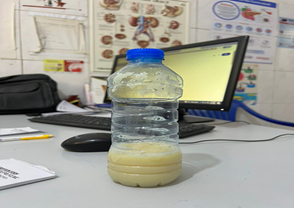
Figure: 50 Years-old Male with Milky Urine
Discussion
Chyluria is predominantly seen in tropical and subtropical regions, especially in areas where lymphatic filariasis is endemic. The coastal region of Tanga, where the patient resides, is not typically associated with Wuchereria bancrofti, further complicating the diagnostic process (7). Non-parasitic chyluria can result from trauma, tumors, or congenital lymphatic malformations, but these conditions are usually evident in imaging studies [8].
The presence of chylomicrons and fat globules in urine, as seen in this patient, confirms chyluria. However, the lack of any detectable underlying pathology suggests a rare or idiopathic form of the condition [9]. Idiopathic chyluria is an exclusion diagnosis made when no identifiable cause is found despite thorough investigation [10].
Additionally, dietary factors were considered. A diet high in fats could theoretically lead to transient chyluria, but such cases are rare and usually associated with a specific dietary intake pattern, which was not reported by the patient [11].
Furthermore, nephrotic syndrome was considered due to its association with lipiduria. However, the patient lacked other hallmark features of the syndrome, such as hypoalbuminemia and edema, making this diagnosis unlikely [12].
The use of albendazole in this case, despite a negative filarial antigen test, proved beneficial. Albendazole has been reported to be effective in treating chyluria by reducing lymphatic inflammation and facilitating the closure of lymphatic-urinary fistulas [2].
Conclusion
This case highlights the diagnostic challenges in patients presenting with chyluria without identifiable risk factors or underlying conditions. The absence of common etiological factors and normal investigative results suggests a rare idiopathic form of chyluria. The empirical treatment with high-dose albendazole, despite negative filarial antigen results, was effective in resolving the patient's symptoms. Further research and advanced diagnostic techniques may be necessary to uncover the etiology in such atypical presentations. Clinicians should consider a broad differential diagnosis and remain vigilant for potential underlying causes, even when initial investigations are inconclusive.
Declarations
Conflict of interest
Authors have no conflict of interest to declare
Funding
No fund was required in this case study
References
- Goel, T. C., Bajaj, S., & Pal, D. K. (2015). Chyluria. Urologic Clinics of North America, 42(2):291–298.
Publisher | Google Scholor - Kumar, S., Shakya, A., & Singh, S. K. (2019). Efficacy of high-dose albendazole in the treatment of chyluria: A prospective study. Tropical Medicine & International Health, 24(8):918–922.
Publisher | Google Scholor - Sahai, A., Singh, V., Agarwal, M. M., & Kumar, R. (2017). Chyluria—A literature review. International Journal of Surgery, 41:219–223.
Publisher | Google Scholor - Patnaik, S. S., Dubey, A., & Raju, K. V. (2018). Management of chyluria: An overview. Urology, 114:1–7.
Publisher | Google Scholor - Rovin, B. H., Adler, S. G., Barratt, J., Bridoux, F., Burdge, K. A., Chan, T. M., et al. (2021). Executive summary of the KDIGO 2021 guideline for the management of glomerular diseases. Kidney International, 100(4):753–779.
Publisher | Google Scholor - Sharma, P., & Mandal, A. K. (2019). Current management of chyluria. Indian Journal of Urology, 35(2):152.
Publisher | Google Scholor - Simonsen, P. E., Magesa, S. M., & Meyrowitsch, D. W. (1995). Bancroftian filariasis: The pattern of microfilaraemia and clinical manifestations in three endemic communities of northeastern Tanzania. Annals of Tropical Medicine and Parasitology, 89(3):319–328.
Publisher | Google Scholor - Narayan, M. A., Rathnakar, S. K., & Ramesh, S. (2016). Chyluria: Review of the literature. Journal of Clinical and Diagnostic Research, 10(1).
Publisher | Google Scholor - Huang, L., Guo, H., & Gu, J. (2018). Chyluria: A comprehensive review of the literature. Canadian Urological Association Journal, 12(5).
Publisher | Google Scholor - Kang, L., Zhang, J., Wang, J., & Yang, L. (2020). Chyluria: Current therapeutic options and future perspectives. Journal of Clinical Medicine, 9(7):2155.
Publisher | Google Scholor - Yoshida, T., Honda, M., & Watanabe, Y. (2017). Chyluria secondary to dietary factors: A rare case report. Japanese Journal of Nephrology, 59(3):246–250.
Publisher | Google Scholor - Korbet, S. M., & Whittier, W. L. (2018). Management of adult minimal change disease. Clinical Journal of the American Society of Nephrology, 13(3):443–447.
Publisher | Google Scholor