

Review Article
B-Cell Regulation in Allergic Rhinitis: Important Facts and Emerging Perspectives
1 Genetics Department, Bhagwan Mahavir Medical Research centre, Hyderabad, Telangana, India.
2 ENT and Allergy Department, Mahavir Hospital and Research Centre, Hyderabad, Telangana, India.
*Corresponding Author: Kaiser Jamil, Genetics Department, Bhagwan Mahavir Medical Research centre, Hyderabad, Telangana, India.
Citation: Jamil K., Gade S. (2026). B-Cell Regulation in Allergic Rhinitis: Important Facts and Emerging Perspectives, Clinical Case Reports and Studies, BioRes Scientia Publishers. 13(1):1-4. DOI: 10.59657/2837-2565.brs.26.340
Copyright: © 2026 Kaiser Jamil, this is an open-access article distributed under the terms of the Creative Commons Attribution License, which permits unrestricted use, distribution, and reproduction in any medium, provided the original author and source are credited.
Received: July 17, 2026 | Accepted: July 31, 2026 | Published: August 07, 2026
Abstract
B cells have emerged as indispensable regulators of allergic rhinitis rather than passive producers of IgE antibodies. Their multifaceted roles in antigen presentation, cytokine production, immune tolerance, memory formation, and interaction with other immune cells make them central determinants of disease pathogenesis. Continued research into B-cell biology is expected to revolutionize the diagnosis, prevention, and treatment of allergic rhinitis, paving the way toward personalized immunotherapy and precision allergy medicine. As our understanding deepens, B-cell-targeted interventions may ultimately transform the management of allergic diseases, offering long-lasting relief to millions of affected individuals worldwide.
Keywords: allergic rhinitis; B cells; regulatory B cells; ige; immune tolerance; memory B cells; BAFF; cytokines; precision medicine; immunotherapy
Introduction
Allergic rhinitis (AR) is one of the most prevalent chronic inflammatory disorders worldwide, affecting nearly 20–30% of the global population. Traditionally, allergic rhinitis has been regarded as a T helper 2 (Th2)-mediated disease, where cytokines such as interleukin (IL)-4, IL-5, and IL-13 orchestrate eosinophilic inflammation and immunoglobulin E (IgE) production. However, growing evidence has shifted this paradigm by highlighting the pivotal role of B lymphocytes, not merely as antibody-producing cells but as sophisticated regulators of immune homeostasis.[1]. Understanding B-cell regulation offers new insights into disease mechanisms and opens promising avenues for targeted immunotherapy [2].
Role of B-Cells in allergies
B cells are central players in adaptive immunity. Upon exposure to aeroallergens such as pollen, dust mites, molds, or animal dander, allergen-specific B cells undergo activation through interactions with antigen-presenting cells and T follicular helper (Tfh) cells. These interactions stimulate class-switch recom-bination, leading predominantly to IgE production. IgE antibodies bind with high affinity to FcεRI receptors on mast cells and basophils, priming these effector cells for immediate hypersensitivity reactions upon subsequent allergen exposure [3,4].
In Figure 1. (below) we present the proposed model illustrating the role of B-cell regulation in allergic rhinitis. Aeroallergens activate nasal epithelial cells, leading to the release of alarmins (TSLP, IL-25, and IL-33), which stimulate dendritic cells and promote T follicular helper (Tfh)-mediated B-cell activation. Activated B cells undergo IgE class switching and differentiate into plasma cells and memory B cells, driving allergic inflammation through mast cell and basophil activation. In contrast, regulatory B cells (Bregs) produce IL-10, TGF-β, and IL-35, promoting regulatory T-cell responses and immune tolerance. Emerging therapeutic approaches target B-cell signaling pathways, IgE production, memory B-cell persistence, and enhancement of regulatory B-cell function.
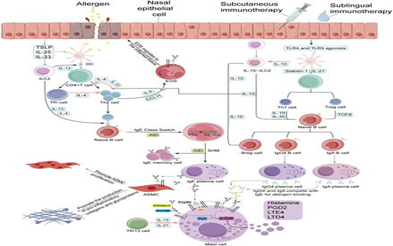
Figure: AI assisted -Showing "B-Cell Regulation in Allergic Rhinitis: From Allergen Sensitization to Immune Tolerance"
(Used vector graphics for publication-quality resolution).
Recent studies have demonstrated that B-cell activity extends well beyond antibody secretion. B cells function as potent antigen-presenting cells capable of activating naïve CD4⁺ T cells and amplifying Th2 immune responses. Furthermore, activated B cells produce cytokines including IL-4, IL-6, IL-10, and transforming growth factor-beta (TGF-β), thereby influencing immune polarization and maintaining a delicate balance between inflammation and immune tolerance [5].
Functions of B-cells and pathogenesis
One of the most intriguing developments in allergy research is the recognition of regulatory B cells (Bregs). Unlike conventional effector B cells, Bregs exert immunosuppressive functions primarily through the secretion of IL-10, IL-35, and TGF-β. These cytokines suppress excessive Th2 responses, promote the expansion of regulatory T cells (Tregs), inhibit inflammatory cytokine production, and help restore immune tolerance toward harmless environmental allergens. Several clinical studies have reported reduced numbers or impaired function of Bregs in patients with persistent allergic rhinitis, suggesting that defective B-cell regulation contributes significantly to disease chronicity.
Table 1: Core B-Cell Roles in AR Pathophysiology
| Function | Mechanism | Key Reference |
| IgE class switching | Local and systemic B cells undergo IL-4/IL-13-driven class switch recombination to IgE upon allergen exposure; germinal center reactions in nasal-associated lymphoid tissue and draining lymph nodes drive affinity maturation [1]. | Wu & Zarrin, [6] |
| Local mucosal IgE production | AR nasal mucosa harbors resident B cells capable of local class switching and IgE synthesis independent of systemic responses — a distinct pathway from classical splenic/lymph node IgE production [2,3]. | Kariyawasam & James; Grimsholm et al.[7] |
| T-B cell crosstalk | CD23 (low-affinity IgE receptor) expressed on switched memory B cells bridges interaction with T follicular helper cells, amplifying IgE responses in AR patients [4]. | Yao et al., [8] |
| B lineage cell/IgE interplay | B lineage cells and total/specific IgE correlate with AR and CRSwNP severity; omalizumab (anti-IgE) reduces free IgE and downstream B-cell-driven inflammation, supporting the IgE axis as a therapeutic target [5].5 | Bai & Tan, [9]. |
AR pathogenesis reflects an imbalance between pathogenic IgE-producing B cells (driven by CD23⁺ memory B cell-Tfh crosstalk and local mucosal class switching) and IL-10-producing regulatory B cells that normally enforce allergen tolerance.
Equally important is the role of memory B cells. Following allergen sensitization, allergen-specific memory B cells persist for prolonged periods, enabling rapid IgE production during repeated allergen exposure. This long-lived immunological memory explains why allergic rhinitis often persists for years despite seasonal variations in allergen exposure. Targeting memory B-cell survival pathways may therefore represent an effective strategy for achieving sustained disease remission.
Signalling pathways and Immunological regulation
Advances in molecular immunology have also identified multiple signaling pathways regulating B-cell activation. Molecules such as CD40-CD40L, BAFF (B-cell activating factor), APRIL (A Proliferation-Inducing Ligand), B-cell receptor (BCR) signaling, phosphoinositide 3-kinase (PI3K), Bruton tyrosine kinase (BTK), and NF-κB pathways collectively govern B-cell proliferation, differentiation, survival, and antibody production. Dysregulation of these pathways contributes to excessive IgE synthesis and persistent allergic inflammation, making them attractive therapeutic targets [10,11].
New areas of Research and emerging technologies
Another exciting area of investigation is the interaction between B cells and epithelial-derived alarmins including thymic stromal lymphopoietin (TSLP), IL-25, and IL-33. These cytokines initiate and amplify type-2 immune responses by promoting B-cell activation and IgE class switching. Simultaneously, innate lymphoid cells (ILC2s) and dendritic cells create an inflammatory microenvironment that further enhances B-cell-mediated allergic responses. This complex cellular cross-talk illustrates that allergic rhinitis is a highly coordinated immune disorder rather than a simple IgE-mediated disease.
Emerging technologies such as single-cell RNA sequencing, high-dimensional flow cytometry, spatial transcriptomics, and multi-omics approaches are transforming our understanding of B-cell heterogeneity in allergic diseases [12]. These techniques have identified distinct B-cell subsets with specialized immunological functions, offering opportunities for precision medicine and biomarker discovery. Personalized profiling of B-cell phenotypes may soon help predict disease severity, treatment response, and long-term prognosis [13,14].
Current therapeutic strategies also reflect the increasing importance of B-cell biology. Allergen-specific immunotherapy (AIT), considered the only disease-modifying treatment for allergic rhinitis, induces immune tolerance partly by enhancing regulatory B-cell populations and promoting the production of allergen-specific IgG4 antibodies that compete with IgE for allergen binding. Similarly, biologic agents targeting IgE, such as anti-IgE monoclonal antibodies, have demonstrated clinical efficacy in reducing allergic inflammation. Future therapies may selectively modulate B-cell signaling pathways, regulatory B-cell expansion, or memory B-cell persistence to achieve more durable disease control with fewer adverse effects [15,16].
Translational implications
From a translational perspective, understanding B-cell regulation has important implications for developing novel diagnostic biomarkers. Circulating allergen-specific B-cell frequencies, regulatory B-cell signatures, cytokine profiles, and B-cell receptor repertoire analyses may complement conventional measurements of serum IgE and eosinophil counts, providing a more comprehensive assessment of disease activity and therapeutic response.
Declarations
Acknowledgements
Authors are thankful to the Chairman of Mahavir Hospital and Research Centre and Research Director of Bhagwan Mahavir Medical Research Centre for the encouragement;
Ethical approval
There are no human participants in this article and informed consent is not required.
Declaration of conflicting interests
The authors declared no potential conflicts of interest with respect to the research, authorship, and/or publication of this article. Declaration of the use of AI tools for preparing this editorial
References
- Fan, K., Jin, L., & Yu, S. (2022). Roles of regulatory B cells in the pathogenesis of allergic rhinitis. Allergologia et Immunopathologia, 50(5):7–15.
Publisher | Google Scholor - Jansen, K., Cevhertas, L., Ma, S., Satitsuksanoa, P., Akdis, M., & van de Veen, W. (2021). Regulatory B cells, A to Z. Allergy, 76(9):2699–2715.
Publisher | Google Scholor - Wade-Vallance, A. K., & Allen, C. D. C. (2021). Intrinsic and extrinsic regulation of IgE B cell responses. Current Opinion in Immunology, 72: 221–229.
Publisher | Google Scholor - Allen, C. D. C. (2022). Features of B cell responses relevant to allergic disease. The Journal of Immunology, 208(2):257–266.
Publisher | Google Scholor - Ma, S., Satitsuksanoa, P., Jansen, K., Cevhertas, L., van de Veen, W., & Akdis, M. (2021). B regulatory cells in allergy. Immunological Reviews, 299:10–30.
Publisher | Google Scholor - Wu, L. C., & Zarrin, A. A. (2014). The production and regulation of IgE by the immune system. Nature Reviews Immunology, 14(4):247–259.
Publisher | Google Scholor - Kariyawasam, H., & James, L. (2021). B cells and upper airway disease: Allergic rhinitis and chronic rhinosinusitis with nasal polyps evaluated. Expert Review of Clinical Immunology, 17:445–459.
Publisher | Google Scholor - Yao, Y., Wang, N., Chen, C.-L., Pan, L., Wang, Z.-C., et al. (2020). CD23 expression on switched memory B cells bridges T–B cell interaction in allergic rhinitis. Allergy, 75:2599–2612.
Publisher | Google Scholor - Bai, J., & Tan, B. (2023). B lineage cells and IgE in allergic rhinitis and CRSwNP and the role of omalizumab treatment. American Journal of Rhinology & Allergy, 37:182–192.
Publisher | Google Scholor - Shen, Y., Zhang, N., Yang, Y., Hong, S., & Bachert, C. (2022). Local immunoglobulin E in nasal polyps: Role and modulation. Frontiers in Immunology, 13:961503.
Publisher | Google Scholor - Kliem, C. V., & Schaub, B. (2024). The role of regulatory B cells in immune regulation and childhood allergic asthma. Molecular and Cellular Pediatrics, 11, Article 1.
Publisher | Google Scholor - Wang, H., Tu, J., Zhang, J., Wang, W., Yuan, Z., Li, C., & Wang, Y. (2025). Integrated multi-omics profiling reveals shared mechanistic pathways in asthma–allergic rhinitis comorbidity: A hybrid machine learning framework leveraging Mendelian randomization for precision diagnostics. The World Allergy Organization Journal, 18:101120.
Publisher | Google Scholor - Jamil, K., Gade, S., Asimuddin, M., Fatima, B., Irfana, Neelima, S., Reddy, E., & Sultana, S. (2024). Unravelling the significance of etiology in allergic rhinitis: Leveraging artificial intelligence (AI) to analyze clinical profiles for suitable interventions in South Indian patients. Advances in Clinical Toxicology, 9(2):1–9.
Publisher | Google Scholor - Jamil, K., Asim Uddin, M., & Gade, S. (2023). Leveraging artificial intelligence for targeted response in allergic rhinitis. British Journal of Healthcare and Medical Research, 10(3):281–283.
Publisher | Google Scholor - Jamil, K., Fatima, B., Irfana, Gade, S., Reddy, E., & Mohiuddin, M. (2025). Clinical characterization and therapeutic evaluation of allergic rhinitis. Journal of Advanced Medicine, 1(1):Article e32.
Publisher | Google Scholor - Jamil, K., & Gade, S. (2023). Do genes play a role in allergic rhinitis? Advances in Clinical Toxicology, 8(2).
Publisher | Google Scholor