

Case Report
Amoxicillin-Induced Stevens-Johnson Syndrome: A Pharmacovigilance Case Report
1 Student, Phase III Part II, Christian Medical College & Hospital, Ludhiana.
2 Assistant Professor, Christian Medical College & Hospital, Ludhiana.
3 Professor & Head, Christian Medical College & Hospital, Ludhiana.
*Corresponding Author: Girish Joseph, Assistant Professor, Department of Pharmacology, Christian Medical College & Hospital, Ludhiana.
Citation: Tarique S., Bhatti N., Joseph G., Serena E. John, Dinesh K. Badyal. (2026). Amoxicillin-Induced Stevens–Johnson Syndrome: A Pharmacovigilance Case Report, Clinical Case Reports and Studies, BioRes Scientia Publishers. 13(2):1-5. DOI: 10.59657/2837-2565.brs.26.336
Copyright: © 2026 Girish Joseph, this is an open-access article distributed under the terms of the Creative Commons Attribution License, which permits unrestricted use, distribution, and reproduction in any medium, provided the original author and source are credited.
Received: June 25, 2026 | Accepted: July 09, 2026 | Published: August 18, 2026
Abstract
Background: Stevens–Johnson syndrome (SJS) is a rare but potentially life-threatening severe cutaneous adverse reaction characterized by epidermal necrosis and mucocutaneous involvement. Antibiotics, particularly β-lactam agents, are among the most frequently implicated drugs.
Case Summary: A 68-year-old male developed generalized erythematous pruritic eruptions with oral and ocular involvement one week after self-medicating with oral amoxicillin for tooth pain. Progressive cutaneous and mucosal lesions necessitated hospitalization. Dermatological evaluation confirmed Stevens–Johnson syndrome. The suspected drug was withdrawn, and the patient was managed with systemic corticosteroids, antihistamines, topical therapy, and supportive care, resulting in gradual clinical improvement.
Assessments: Causality assessment using the Naranjo ADR Probability Scale yielded a score of 7 (Probable ADR). Severity assessment using the Modified Hartwig and Siegel Scale classified the reaction as Level 4 (Moderate). The Schumock and Thornton Scale categorized the reaction as Probably Preventable.
Conclusion: This case highlights amoxicillin as a probable trigger for Stevens–Johnson syndrome and emphasizes the importance of early recognition, prompt drug withdrawal, appropriate supportive management, and pharmacovigilance reporting.
Keywords: stevens–johnson syndrome; amoxicillin; severe cutaneous adverse reaction; pharmacovigilance; adverse drug reaction; antibiotic stewardship
Introduction
Adverse drug reactions (ADRs) remain a significant cause of morbidity and mortality worldwide and represent an important challenge to patient safety. The World Health Organization (WHO) defines an ADR as “a response to a drug which is noxious and unintended and which occurs at doses normally used in humans for prophylaxis, diagnosis, therapy of disease, or modification of physiological function.” ADRs contribute substantially to healthcare costs, prolonged hospitalization, and diminished quality of life. Among hospitalized patients, ADRs account for approximately 0.3–7% of admissions and are recognized as one of the leading causes of preventable healthcare-related harm [1, 2].
Severe Cutaneous Adverse Reactions (SCARs) constitute a rare but potentially life-threatening group of ADRs that include Stevens–Johnson syndrome (SJS), Toxic Epidermal Necrolysis (TEN), Drug Reaction with Eosinophilia and Systemic Symptoms (DRESS), and Acute Generalized Exanthemata’s Pustulosis (AGEP). Among these, Stevens–Johnson syndrome is characterized by extensive epidermal necrosis, mucocutaneous involvement, and significant systemic complications. Depending on the extent of skin detachment, associated organ involvement, patient age, and comorbidities, mortality rates may range from 10% to 50% [3, 4].
Stevens–Johnson syndrome was first described by Stevens and Johnson in 1922 in two pediatric patients presenting with fever, severe mucosal inflammation, and widespread skin eruptions. Clinically, SJS typically begins with prodromal symptoms such as fever, malaise, and upper respiratory tract symptoms, followed by the appearance of erythematous or purpuric macules that progress to atypical target lesions, blistering, and epidermal detachment. Mucosal involvement commonly affects the oral cavity, eyes, and genital regions, resulting in significant morbidity and long-term sequelae [3, 5].
The pathogenesis of SJS is believed to be an immune-mediated delayed hypersensitivity reaction in which drug-specific cytotoxic T lymphocytes play a central role. Activated T cells release inflammatory mediators including granulysin, perforin, granzyme B, and Fas ligand, leading to widespread keratinocyte apoptosis and epidermal necrosis. Genetic susceptibility, drug metabolism, and immune dysregulation contribute to disease development, although the precise mechanisms remain incompletely understood [6].
Numerous medications have been implicated in the development of SJS, with antimicrobials, antiepileptic drugs, nonsteroidal anti-inflammatory drugs, and allopurinol accounting for the majority of reported cases. Antibiotics remain one of the most frequently implicated drug classes worldwide. Amoxicillin, a widely prescribed aminopenicillin antibiotic, exerts its antibacterial activity through inhibition of bacterial cell wall synthesis by binding to penicillin-binding proteins (PBPs). Although generally considered safe and well tolerated, amoxicillin has been associated with rare but serious hypersensitivity reactions, including Stevens–Johnson syndrome [7, 8].
The widespread availability of antibiotics and the practice of self-medication increase the risk of inappropriate drug use and potentially preventable adverse reactions. Pharmacovigilance reporting of severe cutaneous adverse reactions is essential for identifying safety signals, strengthening post-marketing surveillance, and promoting rational antibiotic use. We report a case of amoxicillin-induced Stevens–Johnson syndrome in a 68-year-old male, highlighting the importance of early recognition, prompt withdrawal of the offending drug, and timely pharmacovigilance reporting.
Case Presentation
This case was collected as part of the Pharma-covigilance elective under the Department of Pharmacology, Christian Medical College, Ludhiana, which functions as an Adverse Drug Reaction (ADR) Monitoring Centre under the Pharmacovigilance Programme of India (PvPI). The case was assigned the Worldwide Unique Number (WUN): IN-IPC-301229585.
A 68-year-old male presented to the Dermatology outpatient department with complaints of generalized itchy, reddish skin eruptions that developed following self-medication with oral amoxicillin 500 mg for tooth pain. The patient reported taking the medication without prior medical consultation.
Approximately one week after initiation of amoxicillin therapy, the patient developed erythematous pruritic rashes over the face. The lesions progressively spread to involve the chest, trunk, bilateral upper and lower limbs, and subsequently the entire body. Along with cutaneous involvement, the patient developed painful oral mucosal lesions resulting in discomfort and difficulty in oral intake. Ocular involvement was also noted, with the development of ectropion and associated eye discomfort.
The patient reported a previous history of rash following drug intake; however, he was unable to recall the specific medication responsible for the earlier reaction. There was no documented history of Stevens–Johnson syndrome, chronic dermatological illness, autoimmune disease, or recent infection.
Due to the progressive nature of the lesions and worsening mucocutaneous involvement, the patient sought medical attention and was subsequently admitted to the Department of Dermatology for further evaluation and management. Dermatological examination revealed widespread erythematous cutaneous eruptions involving the face, trunk, and extremities, along with significant oral mucosal involvement. Ophthalmology consultation confirmed ocular involvement with ectropion.
Based on the characteristic mucocutaneous manifestations, temporal association with amoxicillin exposure, and exclusion of alternative causes, a clinical diagnosis of Stevens–Johnson syndrome (SJS) was established.
Following admission, the suspected offending drug was immediately discontinued. The patient was managed with systemic corticosteroids, antihistamines, antibiotics, and supportive therapy. Topical corticosteroid preparations and emollients were applied to affected skin areas. Supportive care included oral antiseptic mouthwashes and antifungal preparations for mucosal lesions. Ocular management consisted of lubricating eye drops and topical antibiotic preparations under ophthalmological supervision.
The patient was closely monitored throughout hospitalization. With continued treatment and supportive care, gradual improvement in cutaneous and mucosal lesions was observed, accompanied by stabilization of his overall clinical condition. The patient was subsequently discharged on tapering doses of oral corticosteroids along with supportive medications and was advised regular follow-up. The adverse drug reaction was reported to the Pharmacovigilance Programme of India (PvPI) for pharmacovigilance monitoring. Written informed consent was taken from the patient prior to publication of this case report. The Clinical manifestations at presentation are shown in Figure 1.
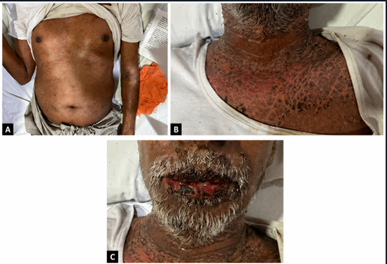
Figure 1: Clinical presentation of amoxicillin-induced Stevens–Johnson syndrome.
(A) Generalized erythematous and maculopapular eruptions involving the trunk and upper extremities at presentation.
(B) Extensive erythematous and hyperpigmented lesions with areas of crusting and epidermal involvement over the neck and upper chest.
(C) Mucosal involvement characterized by hemorrhagic crusting, erosions, and ulceration of the lips, consistent with Stevens–Johnson syndrome.
Outcome
The patient demonstrated gradual clinical improvement following withdrawal of the suspected offending drug and initiation of appropriate medical management. Cutaneous lesions showed progressive resolution with reduction in erythema, pruritus, and skin involvement. Oral mucosal lesions improved, resulting in better oral intake and symptomatic relief. Ocular symptoms also stabilized with ophthalmo-logical management.
No new lesions developed during hospitalization, and no major systemic complications were observed. The patient remained hemodynamically stable throughout the course of treatment. Following significant clinical improvement, he was discharged on tapering doses of oral corticosteroids along with supportive medica-tions and advised regular follow-up for monitoring of potential late sequelae. Drug rechallenge was not performed due to ethical considerations and the potentially life-threatening nature of Stevens–Johnson syndrome.
Causality, severity, assessment
Causality, severity, and preventability assessments were performed using established pharmacovigilance tools. The Naranjo ADR Probability Scale yielded a score of +7, indicating a probable causal association between amoxicillin and Stevens–Johnson syndrome. Severity assessment using the Modified Hartwig and Siegel Scale classified the reaction as Level 4 (moderate) because hospitalization and active medical intervention were required. The Schumock and Thornton Preventability Scale categorized the reaction as probably preventable, considering the history of self-medication and availability of safer therapeutic alternatives [9,10,11]. A detailed summary of the ADR assessment is provided in Table 1.
Table 1
| Assessment Tool | Key Findings | Result | Interpretation |
| Naranjo ADR Probability Scale | Temporal relationship, improvement after drug withdrawal, absence of alternative causes | Score = 7 | Probable ADR |
| Modified Hartwig and Siegel Severity Scale | Hospitalization, drug withdrawal, active treatment required | Level 4 | Moderate ADR |
| Schumock and Thornton Preventability Scale | Self-medication, availability of alternative treatment options | Yes | Probably Preventable ADR |
Discussion
Stevens–Johnson syndrome (SJS) is a rare but potentially life-threatening severe cutaneous adverse reaction characterized by extensive epidermal necrosis and involvement of one or more mucosal surfaces. It is most commonly triggered by medications and less frequently by infections. Despite its low incidence, SJS is associated with significant morbidity and mortality due to complications such as fluid loss, secondary infections, ocular damage, and multiorgan involvement. Antibiotics, antiepileptic drugs, nonsteroidal anti-inflammatory drugs, and allopurinol remain among the most frequently implicated medications. [6,12] In the present case, the temporal association between amoxicillin exposure and symptom onset, coupled with clinical improvement following drug withdrawal, strongly supports amoxicillin as the probable causative agent.
The pathogenesis of Stevens–Johnson syndrome is believed to involve a delayed, T-cell-mediated hypersensitivity reaction. Following drug exposure, reactive drug metabolites or drug-protein complexes act as antigens and trigger activation of cytotoxic CD8+ T lymphocytes and natural killer (NK) cells. These activated immune cells release inflammatory mediators including granulysin, perforin, granzyme B, tumor necrosis factor-α, and Fas ligand, resulting in widespread keratinocyte apoptosis and epidermal necrosis. [4] Amoxicillin, a β-lactam antibiotic, may function as a hapten by binding to host proteins and generating immunogenic complexes capable of eliciting an immune response in susceptible individuals. The resulting immune activation leads to extensive destruction of epidermal cells and separation of the epidermis from the dermis. Previous reports have documented amoxicillin and amoxicillin-clavulanic acid as uncommon but recognized causes of Stevens–Johnson syndrome [3,12,13].
The clinical manifestations observed in the present patient, including diffuse erythematous eruptions, oral mucosal lesions, and ocular involvement, are consistent with the underlying immunopathological mechanisms of SJS. Ocular and oral mucosal involvement are among the most common extracutaneous manifestations and contribute substantially to patient morbidity. [12,13]. Early lesions involving the oral cavity are often overlooked by patients, potentially delaying diagnosis and treatment. [12] Early identification and immediate withdrawal of the offending drug remain the cornerstone of management. In addition to discontinuation of the causative agent, treatment focuses on supportive care, prevention of secondary infections, wound management, fluid and electrolyte balance, pain control, and management of ocular complications [4,5]. In the present case, prompt discontinuation of amoxicillin combined with systemic corticosteroids, supportive therapy, and multidisciplinary management contributed to clinical recovery and prevented further disease progression.
This case also highlights the importance of antibiotic stewardship. The patient self-medicated with amoxicillin without medical consultation, emphasizing the risks associated with unsupervised antibiotic use. Antibiotics remain among the most frequently implicated drug classes in SJS/TEN, and inappropriate use represents a potentially modifiable risk factor. [8] A detailed drug allergy history and careful assessment before prescribing antibiotics are essential to reducing preventable severe cutaneous adverse reactions [14]. From a pharmacovigilance perspective, reporting rare but serious ADRs such as SJS is critical for strengthening post-marketing drug safety surveillance. Individual case reports contribute to signal detection, improve awareness among healthcare professionals, and facilitate the development of safer prescribing practices. Continuous education of healthcare professionals regarding early recognition and reporting of ADRs remains essential for improving patient safety and minimizing preventable harm [4,5].
Limitations
This report has several limitations inherent to single-patient observations. As an isolated case, the findings cannot be generalized to larger populations, and the true incidence or risk of amoxicillin induced Stevens-Johnson syndrome cannot be established. The diagnosis was primarily based on clinical features and temporal association with drug exposure, without histopathological confirmation, which may limit diagnostic certainty. Additionally, limited long-term follow up restricted the evaluation of recurrence or delayed sequelae. Furthermore, reliance on spontaneous pharmacovigilance reporting may underestimate the true burden of rare adverse drug reactions.
Conclusion
Stevens-Johnson syndrome is a rare but potentially life-threatening adverse drug reaction most commonly associated with medications. This case highlights amoxicillin as a probable trigger for SJS, as supported by the Naranjo causality assessment. Early recognition of symptoms, prompt withdrawal of the offending drug, and timely supportive management played a crucial role in improving the patient’s clinical outcome. Reporting such cases to pharmacovigilance systems is essential to enhance awareness among healthcare professionals and contribute to the early identification and prevention of severe cutaneous adverse drug reactions.
References
- Marshal, M., Aggarwal, S., Joseph, G., Bhatti, N., & Badyal, D. K. (2026). Nimesulide-associated generalized bullous fixed drug eruption: A rare pharmacovigilance case report. Cureus, 18(1):e101371.
Publisher | Google Scholor - Verma, M., Joseph, G., Bhatti, N., Maggon, K., Abhilasha, P., & Badyal, D. K. (2025). Atypical antipsychotic-induced rabbit syndrome: A rare adverse drug reaction. National Journal of Pharmacology and Therapeutics, 3:144–146.
Publisher | Google Scholor - Zaidi, M., Zaidi, S. K., Bhutto, M., & Umer, M. Y. (2017). Amoxycillin and clavulanic acid induced Stevens–Johnson syndrome: A case report. EXCLI Journal, 16, 748–751.
Publisher | Google Scholor - Joseph, G., Bhatti, N., Badyal, D. K., & Kaur, P. (2025). Stevens–Johnson syndrome: An adverse drug reaction with various drugs. Indian Journal of Physiology and Pharmacology, 69:277–280.
Publisher | Google Scholor - Kommu, S., Carter, C., & Whitfield, P. (2024). Adverse drug reactions. In StatPearls. StatPearls Publishing.
Publisher | Google Scholor - Patel, T. K., Barvaliya, M. J., Sharma, D., & Tripathi, C. (2013). A systematic review of the drug-induced Stevens–Johnson syndrome and toxic epidermal necrolysis in the Indian population. Indian Journal of Dermatology, Venereology and Leprology, 79(3):389–398.
Publisher | Google Scholor - Franz, C., Handa, D., Joseph, G., Bhatti, N., & Badyal, D. K. (2026). Amoxicillin-clavulanate-induced pityriasis rosea: A pharmacovigilance case report. Cureus, 18(1):e102309.
Publisher | Google Scholor - Verma, K. K., Mathew, M. A., Hawkins, T., Waltersheid, B., Goldstein, D. R., Kapur, S., et al. (2026). Racial disparities in severe cutaneous adverse reactions: A report of two cases on preventable Stevens–Johnson syndrome/toxic epidermal necrolysis prescription errors through medication stewardship. Cureus, 18(1).
Publisher | Google Scholor - Naranjo, C. A., Busto, U., Sellers, E. M., Sandor, P., Ruiz, I., Roberts, E. A., et al. (1981). A method for estimating the probability of adverse drug reactions. Clinical Pharmacology & Therapeutics, 30(2):239–245.
Publisher | Google Scholor - Hartwig, S. C., Siegel, J., & Schneider, P. J. (1992). Preventability and severity assessment in reporting adverse drug reactions. American Journal of Hospital Pharmacy, 49(9):2229–2232.
Publisher | Google Scholor - Pirmohamed, M., James, S., Meakin, S., Green, C., Scott, A. K., Walley, T. J., et al. (2004). Adverse drug reactions as cause of admission to hospital: Prospective analysis of 18,820 patients. BMJ, 329:15–19.
Publisher | Google Scholor - Unnisa, Z., Fareedullah, M., Jabeen, S., & Naseem, A. (2021). Amoxycillin-clavulanic acid induced Stevens–Johnson syndrome: A pediatric case report. Journal of Young Pharmacists, 13(1):80–81.
Publisher | Google Scholor - Srinivasan, S., Karthikeyan, E., Sivaneswari, S., Kalpana, E., Manogaran, E., & Karthickeyan, K. (2019). Clinical condition and medication therapy of amoxicillin-induced Stevens–Johnson syndrome: A case report. Aging Medicine, 2(4):227–229.
Publisher | Google Scholor - Sameed, M., Nwaiser, C., Bhandari, P., & Schmalzle, S. A. (2019). Meropenem-induced Stevens–Johnson syndrome/toxic epidermal necrolysis in a patient with known type IV penicillin hypersensitivity. BMJ Case Reports, 12(8):e230144.
Publisher | Google Scholor