
Research Article
Risky Sexual Behavior and Associated Factors Among Female Working in Pool Houses Jimma Town, Southwest Ethiopia: Institutional Based Cross-Sectional Study
- Yonas Befikadu
- Muluemebet Abera
- Tujuba Diribsa
- Hiwot Aynalem *
Faculty of Public Health, Department of Population and Family Health, Jimma University Institute of Health, Jimma University, Jimma, Ethiopia.
*Corresponding Author: Hiwot Aynalem, Faculty of Public Health, Department of Population and Family Health, Jimma University Institute of Health, Jimma University, Jimma, Ethiopia.
Citation: Befikadu Y, Abera M, Diribsa T, Aynalem H. (2026). Risky Sexual Behavior and Associated Factors Among Female Working in Pool Houses Jimma Town, Southwest Ethiopia: Institutional Based Cross-Sectional Study, Journal of Women Health Care and Gynecology, BioRes Scientia Publishers. 6(1):1-10. DOI: 10.59657/2993-0871.brs.26.104
Copyright: © 2026 Hiwot Aynalem, this is an open-access article distributed under the terms of the Creative Commons Attribution License, which permits unrestricted use, distribution, and reproduction in any medium, provided the original author and source are credited.
Received: December 26, 2025 | Accepted: February 06, 2026 | Published: February 12, 2026
Abstract
Background: Female workings in pool houses are a pervasive public health problem that remains hidden and mostly under-reported. Although the risk arises from the combination of gendered vulnerabilities, workplace environment is susceptible to risky sexual behaviors. Which may outcome in serious health problems such as unwanted pregnancy, abortion and sexually transmitted infection including HIV. However, evidence on the prevalence of risky sexual behavior and associated factors is scarce, particularly in the study setting.
Objective: The objectives of this study was to determine magnitude of risky sexual behavior and associated factors among female working in pool houses Jimma town, South west, Ethiopia, 2023.
Methods: Institutional-based cross-sectional survey was conducted from June1-30/ 2023 on a sample of 372 female working in pool houses who were living in Jimma town. A simple random sampling used to select participants. To collect data, a pretested semi-structured interview administered questionnaire was used. Data was collected using semi- structured and pre tested interviewer- administered questionnaires, which was translated to Amharic and Afan Oromo languages. The data was checked, entered in to Epi data version 3.1 exported to SPSS V25 to perform analysis. Those independent variable with p-value <0.25 at bivariate analysis were eligible for multivariable analysis to control potential confounding factors, after adjusting the effect on outcome variable. Those variable with p-value <0.05 with 95%CI was be considered as significantly associated with risky sexual behavior.
Results: Among 372 respondents this study found that overall magnitude of risky sexual behavior among female working in pool houses was 74.7%, 95%CI(70.0,79.1), Early sexual debut (sex before age of 18years was 60.2%,95%CI(55.0- 65.2),Sex without condom or inconsistent use of condom 65.3%, 95% CI (60.0-69.9),Had multiple sexual partner was 44.9%, 95%CI(39.8-50.1),Had sex under influence of substance use was 40.3%,95% CI (35.3-45.5).Attended elementary Education level (AOR) 8.6; 95% CI (2.0, 8.9)], had sex to get job or wage (AOR); 3.4; 95%CI (2.0, 7.1)],fear to buy condom (AOR);4.5;95%CI (2.4, 10.9)] were the associated factors with risky sexual behavior.
Conclusion: The magnitude of risky sexual behavior among female working in pool house Jimma town was high. Had attended elementary education level, had sex to get job or wage, and feel social discomfort to buy condom were factors associated with risky sexual behavior. This finding suggests special attention and intervention needed on Risky sexual behavior prevention and promotion program specially, on condom utilization, reduction of substance use and reproductive health consequences.
Keywords: Ethiopia; female working in pool houses; jimma; risky sexual behavior
Introduction
Risky sexual behavior is the activity that wills growths the probability that an individual engaging in sexual activity will be diseased with sexually transmitted infection and wide-open to unwanted pregnancy, abortion, other reproductive health problems and psychosocial problems. RSB is foremost public health problem in the world and in our country. RSB includes having sex with multiple sexual partners and not using condom or inconsistence use of condom and sexual intercourse under the influence of substances use and early sexual debut [1]. Female working in pool houses is someone who engaged in pool playing houses movement as waiter and cashier for exchange of money or products. They are working in rented, hotel based, bar based, game zone pool houses. Poverty, lack of other job opportunity may have contributed in rise of demand for females working in pool houses.
Epidemiologists have identified female workers in hospitality business as one of the high-risk groups for STD infections and its, transmission. Foremost bacterial and viral STDs are expected to affect 125 million people worldwide each year.
When worker abused, vulnerable or assaulted while work it poses an explicit implicit threat to his/her to safety, wellbeing or health. However, the magnitude and understanding of the problem and its factors associated have receive little attention in middle- and low-income countries, including Ethiopia [2].
In, Ethiopia youth people age from (15-24) comprise large categories of population group around 35% working in burayou town [5]. Different studies consider risky sexual behavior only multiple sexual partner and unprotected sex while it includes sex with commercial sex workers and early initiation of sexual practice. Thus, this study was mainly intended to determine magnitude of risky sexual behavior and associated factors by considering risky sexual behavior. The study provides valuable insights into the prevalence, causes, and consequences.
Methods and Materials
Study Area and Period
The study was conducted in Jimma town, from June 1-30/2023. Jimma town is the capital and administrative center of the Zone and is located 352 km south‒west of Addis Ababa. The town has a total population of 224,000, of whom males account for 112,896 females 111,104 according to the 2023GC.Jimma zone health bureau population projection report. There are 1387 pool houses were registered in the town. From total of pool houses registered 192 are pool houses with bar, 271 pool houses are with hotels, 723 pool houses are in rented pool houses also 201 pool houses are found in game zones, 1056 females and 331 males registered as pool houses workers in the office.
Study Design
Institutional - based cross- sectional study design was conducted among women working in the Pool house.
Population
The study population included all randomly selected females working in selected facilities using the census and those over 18 years of age. All females working in pool house in Jimma were the source population. To reduce selection bias and excessive inflation of the magnitude of RBS, females who had been working in nightclubs and commercial sex workers were excluded.
Study Unit
Female Individual working in the selected Pool houses.
Sample Size Determination
The sample size was calculated by using EPI Info version 7.2.5.0 by considering different assumptions., the sample size was determined by assuming a 50%, prevalence of risky sexual practice on construction site daily laborers in Bahirdar city [6] (P = 24.2.%), a 95% confidence interval, a 5% margin of error, and a 10% non-response rate 310.
Sampling Technique and Procedures
Simple random sampling technique was used for this research. Then, from the total seventeen kebeles of Jimma town 50% of, the kebeles was selected by lottery method. They, were nine in number that are, Awetu Mendara, Bosa kito, Bosa addis ketama, Mantina, Hermata Mantina, Bacho Bore, Mandara Kochi, Ginjo and Ginjo guduru kebeles. Then depending on calculated sample size sampling unit and study unit number was proportionally allocated for selected each kebeles. Those pool houses that may, have more than one female pool house workers only one worker was get chance of participating in this study as respondents by lottery methods.
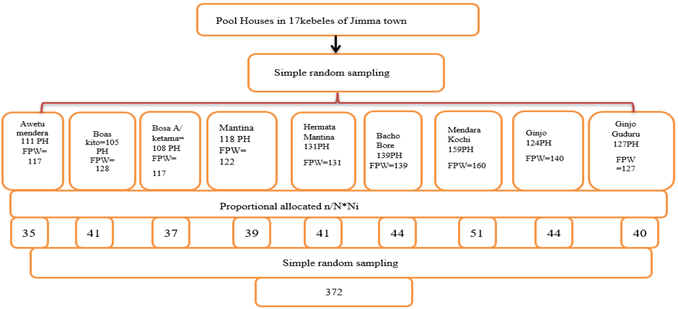
Figure 1: Simple random sampling procedure for the study of risky sexual behavior and associated factors among female working in pool houses Jimma town south west Ethiopia 2023.
Variables
Pool Houses: is a house that can be rented or the owner house and rooms in hotels, bars, and game zones with pool tables and place where pool is played especially by young people and have female pool house workers served as waitress or cashier.
Female Working in Pool Houses: young females who are serving in pool playing houses activities as waitress or cashier for greater than three month and above in pool playing houses.
Risky Sexual Behavior (RSB): Experienced at least one or more of the following condition, female individuals who had sexual debut before age of 18 years, had more than one sexual partner in the last 12-month, those report sex without condom or inconsistent use of condom and had sex under influence of substance use [6].
Coffee Houses: is a house where prepared drinking coffees was sale especially according to Ethiopians traditional coffee ceremony and have a seating place where people are rest and drink prepared coffee.
Sexual Reproductive Health (SRH): According to WHO reproductive health strategy endorsed by the world health assembly in 2004 and guided by international agreed human right principles specific five core aspects of sexual reproductive health (SRH) “,improving antenatal prenatal, post-natal ,postpartum and new born care ;providing high quality services for family planning ,including infertility service ;eliminating unsafe abortion ;combating sexually transmitted infection including HIV, reproductive tract infection, cervical cancer and other gynecological morbidities ;and promoting sexual health” [9].
Social Media User: is any person who can have a device like mobile phone, computers and other types of electronics equipment and use internet access and different application on device like Facebook, TikTok, WhatsApp, IMO, Instagram, Telegrams etc. To send or receive and observe different messages in various ways like; written, photograph, pictures, audio or video [9-11].
Data Collection Tool, Personnel, and Procedure
The data had collected using Semi-structured pre tested Interviewer -administered questionnaires was developed using WHO reproductive health guideline [12] and other related literatures [4-9,12].Four female BSc nurses have abilities to speak other languages like (dawuro, kefa) in addition to afaan oromo and Amharic languages was conduct the data collection due to the sensitivity issue of the study title and two supervisor was supervise the overall process of data collection after three days training on data collection technique. Data was checked for completeness, accuracy, clarity and consistency before entered to software. Proper coding and categorization of data was maintained for the quality of the data to be analyzed.
Data Quality Management
To ensure data quality, emphasis was given to designing the data collection instruments, which were then translated to the Afaan Oromo and Amharic languages by language experts, after which they were translated to English by another person to check consistency. Before the actual data collection, a pretest was conducted on 5% of the sample in Asendabo town, and the feedback was incorporated accordingly. The data collectors and supervisors were trained for one day on the objective of the study, the data collection tool, the approach to the interviewees, and the ethical and safety aspects of conducting violence research. At the end of each day, the questionnaires were reviewed and cross-checked and corrective measures were taken.
Data Analysis Procedures
After data clean -up and cross check was done, entered in to Epi data version 3.1 and then data was exported to SPSS version25.Descriptive statistics was computed for categorical variables while frequency and percentages were used to present the analysis result. Logistic regression was employed to identify variables that have an association with risky sexual behavior variable with p-value less than 0.25 in bivariable binary logistic regression were entered into a multi-logistic regression model for controlling confounding effect. The association between covariates and outcome variable was ascertained based on an AOR with 95% CI and p-value. A p-value less than 0.05 was considered statistically significant. Finally model goodness of fit and independent predictor multicollinearity was checked with Hosmer and Lemeshow test was 0.350 and variance inflation factor (VIF) was 1.12 respectively. Finally, the result of the study was presented in tables and graphs clearly as much as possible.
Declarations
Ethical Consideration
Ethical clearance and approval were obtained from the Institutional Review Board of Jimma University, Institute of Health (Ref.No:JUIH/IRB/454/23). All of the study participants were informed about the purpose of the study, their right to refuse, and their confidentiality, and written informed consent was obtained before the interview. For minors less than 18, written informed consent from their parent/legal guardian and written assent from the children were obtained to participate. Confidentiality of information and privacy of participants were assured for all the information provided, to preserve the confidentiality that the data will not be exposed to the third party except the principal investigator [13].
Results
Socio-Demographic Characteristics
A total of 372 respondents participated in the study; the response rate was 100%. Three hundred sixteen (84.9%) of the respondents were in the age group between 20-24years with mean age of 21.4 (SD ±1.85). Concerning the educational status 244 (65.6%) of them attended elementary school (Table1).
Table 1: Socio-demographic factors of female working in pool houses Jimma Town, South west Ethiopia, June 2023(n=372).
| Variables | Frequency |
| Age of Respondents | |
| 15-19years | 56 (15.1%) |
| 20-24years | 316 (84.9%) |
| Relationship Status | |
| Married | 37 (9.9%) |
| Single | 74 (19.9%) |
| Divorced | 18 (4.8%) |
| Others *** | 243(65.3%) |
| Educational Status | |
| Elementary | 244 (65.6%) |
| High school and above | 128 (34.4%) |
| Place of Work | |
| Bar and restaurant withpool house | 93 (25.0%) |
| Hotel with pool house | 94 (25.3%) |
Others *** In relationship, Widowed
Behavioral Related Factors
All total of study participants had reported having a history of previous sexual intercourse. Two hundred forty- three (65.3%) respondents were currently using alcohol and 168(45.2%) of them were currently chew chat and 297 (79.8%) of them were use social media also 149(40.1%) of them were watched pornography (Table 2).
Table 2: Behavioral related factors of female working in pool houses Jimma Town, South west Ethiopia, June 2023 (n=372).
| Variables | Frequency |
| Have You Ever Had Sex | |
| Yes | 372 (100%) |
| No | 0(0%) |
| Currently Use Alcohol | |
| Yes | 243(65.3%) |
| No | 129(34.4%) |
| Currently Chewing Chat | |
| Yes | 168(45.2%) |
| No | 204(54.8%) |
| Currently Smoking Cigarettes | |
| Yes | 57(15.3%) |
| No | 315(84.7%) |
| Use of Media | |
| Yes | 297(79.8%) |
| No | 75(20.2%) |
| Which Type of Media | |
| Television | 37(11.0%) |
| Social media | 261(72.2%) |
| Radio | 37(11.0%) |
| Watching Pornographic Movies | |
| Yes | 149(40.1%) |
| No | 223(59.9%) |
Reproductive Health Service-Related Factors
Majority,335 (90.1%) of participants responded that they are getting SRH services at least one of the components like FP services and 260 (77. 6%) of them were preferred private health facilities to get the service and 261 (72.2%) of them preferred to get SRH service during night time, among them 50.2% preferred to getting the service during night time due to the reason of confidentiality issue and 186 (55.5%) used oral contraceptive methods followed by injectable method 149 (44.5%) currently. Only 37(11.0%) of them got service in public hospital and19(5.7%) of them in public health centers. All of the study participants were having information about VCT among them 261(70.2%) got VCT (Voluntary counseling and testing) service information from media. and 112(30.1%) of respondents were not satisfied by the service provided in the facilities from them 33.0% due to inadequate service provision and 67.0% due to the reason of service provision duration.
Magnitude of Risky Sexual Behavior
This study found that overall magnitude of RSB among female working in pool houses Jimma was 74.7%, 95% CI (70.0, 79.1) ,Sexual debut before age of eighteen 60.2%, 95% CI (55.0-65.2),Sex without condom or inconsistent use of condom 65.3%, 95% CI (60.0-69.9), Had multiple sexual partner 44.9%, 95% CI (39.8-50.1) and Had sex under influence of substance use 40.3%, 95% CI (35.3-45.5) [Figure 2].
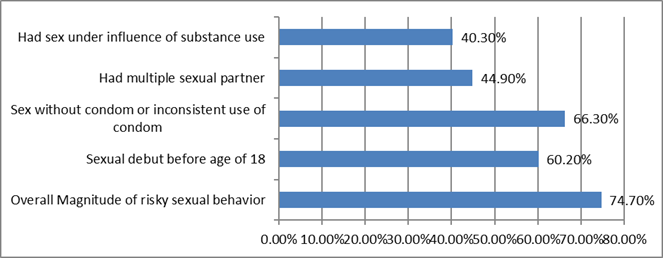
Figure 2: Magnitude risky sexual behavior among female working in pool houses Jimma town south west, Ethiopia June 2023.
Factors Associated with Risky Sexual Behavior
Bivariate analysis was done among dependent variable risky sexual behavior, and independent variables elementary educational level, average monthly income, drinking alcohol, cigarettes smoking, sex to get job or wage, and fear to buy condom were variables which had association at p less than 0.25 with current risky sexual behavior. However, peer pressure, use of social media, watching pornography, work place and chewing chat were not association at bivariate analysis. All the variables having significant association at p less than 0.25 were included in the multivariable logistic regression model (Table 3).
The odds of having risky sexual behavior among respondents who had elementary level of education were 8.6 times higher than that of female who had secondary and above educational level (AOR); 8.6; 95% CI (2.0, 8.9)]. Those females working in pool houses who were reported had sex to get job or wage were 3.4 times more likely to be engaged to RSB than those females reported not had sex to get job or wage. (AOR); 3.4; 95%CI (2.0, 7.1)]. Those females working in pool houses who had feel fear to buy condom were 4.5 times higher odds of RSB than the females who had reported not feel embarrassed to buy condom (AOR); 4.5; 95%CI (2.4, 10.9)]. Average monthly income, currently drinking alcohol and currently smoking cigarettes were not statistically significant association with risky sexual behavior after controlling confounders.
Table 3: Factors associated with risky sexual behavior among female working in pool houses Jimma town, south west Ethiopia June 2023 (n=372).
| Variables | Risky Sexual Behavior | COR (95% CI) | AOR (95% CI) | P-Value | |
| Yes | No | ||||
| Educational Level | |||||
| Elementary | 223 (91.8%) | 20 (8.2%) | 15.0 (8.5, 26.7) | 8.6 (2.0, 8.9) | 0.04 |
| High school and above | 55 (42.6%) | 74 (57.4%) | 1.0 | 1.0 | |
| Average Monthly Income | |||||
| less than 2000 | 147 (72.1%) | 57 (27.9%) | 0.72(0.46,1.2) | .996 | |
| ≥2000 | 131 (78.0%) | 37 (22.0%) | 1.0 | 1.0 | |
| Currently Drink alcohol | |||||
| Yes | 223 (66.7%) | 37(14.2%) | 6.3. (3.8, 10.4) | .996 | |
| No | 55 (76.2%) | 57 (50.9%) | 1.0 | 1.0 | |
| Currently Smoke Cigarette | |||||
| Yes | 38 (78.0%) | 19 (33.3%) | 0.62 (0.34, 1.2) | 1.4 (0.65, 2.9) | 0.02 |
| No | 240 (54.9%) | 75 (23.8%) | 1.0 | 1.0 | |
| Had Sex to GetJob or Wage | |||||
| Yes | 204(84.0%) | 39 (16.0%) | 3.9 (2.4, 6.4) | 3.4 (2.0, 7.1) | less than 0.001 |
| No | 74(57.4%) | 55 (42.6%) | 1.0 | 1.0 | |
| Fear to buyCondom | |||||
| Yes | 166(81.0%) | 39(19.0%) | 2.9 (1.7, 4.9) | 4. 5 (2.4, 10.9) | less than 0.001 |
| No | 56(60.2%) | 37(39.8%) | 1.0 | ||
Discussion
This study found that overall magnitude of RSB was 74.7%, 95% CI (70.0, 79.1) .The finding was matched with study conducted in burayu town which shows the result that overall magnitude of RSB among female internal migrant working in the town was (72.1% ) [10] and higher than study done among daily laborers Arjo didessa sugar factory Jimma arjo Ethiopia, which was (57%) of overall magnitude of RSB [14], and lower than study done on RSB among Aksum university students shire campus, shire town ,Tigray, Ethiopia (83.5%) overall prevalence of RSB[15]. A little higher than different study done in Africa university students which were show the results of prevalence of RSB was, (63.9%), in Botswana, and (63%) in Nigeria [4].
The disparity might be because of the difference in the focused population groups of the previous studies were different. The high magnitude of RSB among female working in pool houses might be due to the working setting where a majority of youths play pool and also pool playing houses were settled in hotels and bars this might be contribute to high exposure of sexual risky behaviors. In this study 60.2% (95%; CI;55.0,60.2) of study participants had sexual debut before age 18 years. This result was higher than result found among female internal migrant working in Burayu town Ethiopia which was (34.5% ),also higher than study done among under graduate students of university of Gondor (44.0%) [4] and more or less in line with study done in Zambia among largest group of school girls which were (65%) [16] and lower than early sexual initiation among female youth in Liberia which was (71.70%) [17].
The high prevalence of early sexual debut before age of eighteen years in this study might be explained by poverty, unemployment, peer pressure, lack of comprehensive knowledge on the impact of early sexual initiation, substance use and exposure to pornography materials. About, 44.9% (95%; CI;39.8,50.1) of the participants had multiple sexual partner during the last twelve month .This finding was comparable to the study finding among daily laborers Arjo-didessa sugar factory Ethiopia, which was (41.7%) [14] and also slightly lower than study done among under graduate students of university of Gondor north west Ethiopia which were (48.5%) had multiple sexual partner [7], and higher than study done among young female internal migrant working in Burayu town which were (23.97%) had multiple sexual partner ,the finding of having multiple sexual partner among female working in pool houses were might be higher due to the reason that study participants had lack of getting other job opportunity and their working place were settled in hotels and bars this may facilitate that exposure to multiple sexual partner.
The finding 65.3%;( 95% ;CI;60.0,69.9) of study participants had sex without condom or inconsistent use of condom in recent sexual intercourse during the last twelve months .This finding was in line with study done among female internal migrants working in Burayu town which was (64.4%) [10] and also consistent with study finding among Axum university shire campus shire town Tigray Ethiopia which was (64.4%) had inconsistent use condom [18] and higher than study finding among daily laborers Arjo-didessa sugar factory Ethiopia, which was (41.4%) of them had sex without condom or inconsistent use of condom in recent sexual intercourse during the last twelve month [14] and lower than finding on RSB among student of Mizan aman college of health science which was (86.9%) had inconsistent use of condom [19] and lower than study finding on pattern and predictors of sexual behavior among adolescents in Ibadan, southwest ,Nigeria which was (67.7%) women had inconsistent use of condom [20].
This high proportion of sex without condom or inconsistent use of condom in recent sexual intercourse during the last twelve months in the finding of this study might be due to the existence of transactional sex among study participants and sex without condom in order to get job or wage among this study groups of females working in pool houses. Our study found that 40.3% (95%; CI;35.3,45.5) of the study participants had sex under the influence of substance use during last twelve month .The finding was more or less in line with study done on RSB among youth secondary and preparatory school of haramaya East Ethiopia (44.6%) of them use substance [21] and this finding was lower than study finding among female youth in Tiss-abay Amhara region, Ethiopia, which was (68.8%) had sex under the influence of substance use [22] and higher than study finding done among female internal migrants working in Burayu town which was (29.6%) [10]. The reason might be due to the nature of substances that altering the rational decision-making capacity and increasing risk leads to having sexual risky behavior. The odds risky sexual behavior among female working in pool houses those who had elementary level education were 8.6 times higher than that of female who had secondary and above educational level (AOR); 8.6; 95% CI (2.0, 8.9)].
This result was more or less consistent with different study finding on prevalence and associated factors of early sexual initiation among female youth in sub-saharan Africa, [23] and also consistent with study finding on association educational attainment and RSB among Ghanaian female youth [24].
Likeness, might be due study participants are female youths who were attained lower educational level on the studies. Those females working in pool houses who were reported had sex to get job or wage were 3.4 times more likely to be engaged to RSB than female reported not had sex to get job or wage (AOR) 3.4; 95%CI (2.0, 7.1). This finding was more or less consistent with study finding on transactional sex and associated factors among female students of Adama science and technology university oromia, Ethiopia [24] and study finding on magnitude of RSB among high school adolescents in Ethiopia [25]. The consistency of this finding was might be due to participants on these studies had economic problems. Those females working in pool houses who had feel fear to buy condom were 4.5 times higher odds of Risky sexual behavior than the females who had not feel embarrassed to buy condom [adjusted odds ratio (AOR); 4.5; 95%CI (2.4, 10.9)]. The finding was consistent with study conducted in Burayu town on risky sexual behavior among female internal migrant working in the town [10].
Conclusions
Considerable proportion of female working in pool houses were engaged in risky sexual behavior including early sexual debut (sex before age of eighteen years), not using condom or inconsistent use of condom, had multiple sexual partners, had sex under the influence of substance use. The overall magnitude of risky sexual behavior among female working in pool houses was high. Attending elementary educational level, had sex to get job or wage, and fear to buy condom were identified as predisposing factors for the existence of current risky sexual behavior. Risky sexual behavior and associated consequences lead to increased risk of STI/HIV transmission, unintended pregnancy and abortion, poor reproductive health and general health of female working in pool houses and community.
This finding suggests special attention and intervention needed on risky sexual behavior prevention and promotion program specially, on condom utilization, reduction of substance use and reproductive health concerns through peer education, life skill training provision and other supportive activity and access in terms of increasing availability and accessibility SRH service and ongoing and continuous counseling on safe sex behavior including correct and constant use of condom. Considerable proportion of female working in pool houses were engaged in risky sexual behavior including early sexual debut not using condom or inconsistent use of condom, had multiple sexual partners, had sex under the influence of substance use. The overall magnitude of risky sexual behavior among female working in pool houses was high. Attending elementary educational level, had sex to get job or wage, and fear to buy condom were identified as predisposing factors for the existence of current risky sexual behavior. Risky sexual behavior and associated consequences lead to increased risk of STI/HIV transmission, unintended pregnancy and abortion, poor reproductive health and general health of female working in pool houses and community. Should give special attention in Risky sexual behavior prevention and promotion program me on female working among pool houses and in general female working in hospitality industries. Access in terms of increasing availability and accessibility of contraceptive methods of their choice, ongoing and continuous counseling on safe sex including correct and continuous use of condom, use of dual contraceptive methods and expected to provide routine health education and youth friendly service for female working in pool houses and other hospitality industries. Concerning bodies and involve in the intervention of RSB, substance used to reduce risky sexual behavior through peer education, life skill training provision and other supportive activity.
Limitations
The study had included only female working in pool houses in Jimma town which means the sample population was limited to one town the investigator could not assert that it is representative of female working in pool houses in Ethiopia. In addition, it is cross-sectional in nature and may not explain temporal relationship between the outcome variable and some explanatory variables. Finally, this study was limited its reliance on self-reported data because it is a sensitive topic; however, we tried our best to get unbiased responses, in other hand there is a limitation of references due to lack of previous study which were specifically focused on the study groups of females working in pool houses.
Abbreviations
AIDS: Acquired Immunodeficiency Syndrome; CSA: Central Statistical Agency; RSB: Risky Sexual BEHAVIOR; NGO: Nongovernmental Organization; FPW: Female Pool House Workers; WHO: World Health Organization
Declarations
Data Sharing Statement
The dataset for the current study is available from the corresponding authors upon reasonable request.
Ethics Approval and Consent to Participate
All study methods were performed in accordance with the ethical principles of the Declaration of Helsinki [26]. Ethical clearance was obtained from the institutional review board (Ref.No:JUIH/IRB/454/23) of the institute of health, Jimma University. An official letter of permission was obtained from Jimma town Health office. The purpose of the study was explained to each study participant before written informed consent was obtained from each participant aged 18 years and older. For those under 18 years, written informed consent was obtained from their parent/legal guardian and written assent from the children were obtained after describing the purpose and benefits of the study. The interviews were performed in private and secure places, usually in a room or other space without the employer present. Confidentiality of the responses.
Acknowledgments
We express our genuine thanks to all individuals who contributed to the study respondents, the data collectors, and Jimma University.
Competing Interests
The authors declare that they have no competing interests.
Author Contributions
All the authors played a significant role in the work reported, whether in the conception, study design, execution, attainment of data, analysis, and interpretation, or in all the areas in which the article was drafted, revised, or critically reviewed, gave final approval of the version to be published, agreed on the journal to which the article has been submitted, and agreed to be accountable for all parts of the paper.
Funding
The research work was funded by Jimma University. The funders had no role in the study design, data collection, analysis, decision to publish, or preparation of the manuscript.
Availability of Data and Materials
All data generated or analyzed during this study are included in this manuscript.
Disclosure
The authors declare no competing interests in this work.
Consent for Publication
Not applicable.
References
- Muche, A. A., Kassa, G. M., Berhe, A. K., Fekadu, G. A. (2017). Prevalence and Determinants of Risky Sexual Practice in Ethiopia: Systematic Review and Meta-Analysis. Reproductive Health, 14(1):113.
Publisher | Google Scholor - Worke, M. D., Demelash, H., Meseret, L., Bezie, M., Abebe, F. (2022). Factors Associated with Sexual Violence Among Waitresses Working in Bahir Dar City, Ethiopia: A Mixed-Method Study. BMC Women's Health, 22(1):209.
Publisher | Google Scholor - Thepthien, B. O., Celyn. (2022). Risky Sexual Behavior and Associated Factors Among Sexually-Experienced Adolescents in Bangkok, Thailand: Findings from A School Web-Based Survey. Reproductive Health, 19(1), 127.
Publisher | Google Scholor - Tekletsadik, E. A., Ayisa, A. A., Mekonen, E. G., Workneh, B. S., Ali, M. S. (2022). Determinants of Risky Sexual Behaviour Among Undergraduate Students at The University of Gondar, Northwest Ethiopia. Epidemiology & Infection, 150:e2.
Publisher | Google Scholor - Lungu, A., Chella, C., Zambwe, M., Chipimo, P. J. (2022). Pooled Estimate of Risky Sexual Behavior Among College and University Students in Sub-Saharan Africa: A Meta-Analysis. MedRXiv, 2022-05.
Publisher | Google Scholor - Mitiku, K. W., Yenesew, M. A., Bantie, G. M., Aynie, A. A. (2020). Magnitude of Risky Sexual Practice and Associated Factors Among Big Construction Site Daily Laborers in Bahir Dar City, Amhara Region, Ethiopia. PloS one, 15(10):e0241220.
Publisher | Google Scholor - Tekletsadik, E. A., Ayisa, A. A., Mekonen, E. G., Workneh, B. S., Ali, M. S. (2022). Determinants of Risky Sexual Behaviour Among Undergraduate Students at The University of Gondar, Northwest Ethiopia. Epidemiology & Infection, 150:e2.
Publisher | Google Scholor - Woldeamanue, B. T. (2020). Risky Sexual Behavior and Associated Factors Among High School Adolescents in North Shewa Zone, Oromia Region, Ethiopia. PAMJ-One Health, 2(18).
Publisher | Google Scholor - Africa WHO. (2020). Sexual and Reproductive Health Fact Sheet, World Health Organization.
Publisher | Google Scholor - Baru, A., Adeoye, I. A., Adekunle, A. O. (2020). Risky Sexual Behavior and Associated Factors Among Sexually-Active Unmarried Young Female Internal Migrants Working in Burayu Town, Ethiopia. PloS One, 15(10):e0240695.
Publisher | Google Scholor - Landry, M., Turner, M., Vyas, A., Wood, S. (2017). Social Media and Sexual Behavior Among Adolescents: Is There a Link? JMIR Public Health and Surveillance, 3(2):e7149.
Publisher | Google Scholor - Cleland J, Ingham R, Stone N. (2001). Asking Young People About Sexual and Reproductive Behaviours: Illustrative Core Instruments, World Health Organization.
Publisher | Google Scholor - World Health Organization. (2016). Ethical And Safety Recommendations for Intervention Research on Violence Against Women: Building on Lessons from The WHO Publication Putting Women First: Ethical and Safety Recommendations for Research on Domestic Violence Against Women.
Publisher | Google Scholor - Gemechu, A. G., Assefa Ayana, L., Waqtole, Z. D., Tola, E. K., Beyene, M. D. (2021). Risky Sexual Behavior and Its Associated Factors Among Daily Laborers in Arjo-Didessa Sugar Factory, Jimma Arjo, Southwest Ethiopia: An Institution-Based Cross-Sectional Study. SAGE Open Medicine, 9:2050312121994358.
Publisher | Google Scholor - Kebede, A., Molla, B., Gerensea, H. (2018). Assessment of Risky Sexual Behavior and Practice Among Aksum University Students, Shire Campus, Shire Town, Tigray, Ethiopia, 2017. BMC Research Notes, 11(1):88.
Publisher | Google Scholor - Abdu, A. S., Tesfaye, M. H., FeKecha, H. B. (2017). Assessment of Risky Sexual Behaviour and Associated Factors Among Jimma University of Kitto Furdisa Campus Students, Jimma Town, Oromia Region, South West of Ethiopia, 2015. Prim Health Care, 7(268):2167-1079.
Publisher | Google Scholor - Hailegebreal, S., Gilano, G., Seboka, B. T., Sidelil, H., Awol, S. M., et al. (2022). Prevalence and Associated Factors of Early Sexual Initiation Among Female Youth in East Africa: Further Analysis of Recent Demographic and Health Survey. BMC Women's Health, 22(1):304.
Publisher | Google Scholor - Kebede, A., Molla, B., Gerensea, H. (2018). Assessment of Risky Sexual Behavior and Practice Among Aksum University Students, Shire Campus, Shire Town, Tigray, Ethiopia, 2017. BMC Research Notes, 11(1):88.
Publisher | Google Scholor - Yarinbab, T. E., Tawi, N. Y., Darkiab, I., Debele, F., Ambo, W. A. (2018). Risky Sexual Behaviors and Associated Factors Among Students of Mizan Aman College of Health Science, Southwest Ethiopia: Cross-Sectional Study. JOJ Nursing & Health Care, 8(3):805-812.
Publisher | Google Scholor - Olorunsola, A. M., Muyibi, S. A., Irabor, A. E., Adetunji, A. A., Ismail, W. O., et al. (2021). Pattern and Predictors of Sexual Behaviour Among Adolescents in Ibadan, South West, Nigeria. Arch Community Med Public Health, 7(2):175-81.
Publisher | Google Scholor - Shore, H., Shunu, A. (2017). Risky Sexual Behavior and Associated Factors Among Youth in Haramaya Secondary and Preparatory School, East Ethiopia, 2015. Journal of Public Health and Epidemiology, 9(4):84-91.
Publisher | Google Scholor - Tadesse, G., Yakob, B. (2015). Risky Sexual Behaviors Among Female Youth in Tiss Abay, A Semi-Urban Area of The Amhara Region, Ethiopia. PloS One, 10(3):e0119050.
Publisher | Google Scholor - Ferede, T. A., Muluneh, A. G., Wagnew, A., Walle, A. D. (2023). Prevalence and Associated Factors of Early Sexual Initiation Among Youth Female in Sub-Saharan Africa: A Multilevel Analysis of Recent Demographic and Health Surveys. BMC Women's Health, 23(1):147.
Publisher | Google Scholor - Jackson, F., Haile, Z. T. (2023). Association Between Educational Attainment and Risky Sexual Behaviour Among Ghanaian Female Youth. African Health Sciences, 23(1):301-308.
Publisher | Google Scholor - Daka, D., Shaweno, D. (2014). Magnitude of Risky Sexual Behavior Among High School Adolescents in Ethiopia: A Cross-Sectional Study. J Public Health Epidemiol, 6(7):211-215.
Publisher | Google Scholor - Cantín, M. (2014). World Medical Association Declaration of Helsinki: Ethical Principles for Medical Research Involving Human Subjects. Reviewing The Latest Version. International Journal of Medical and Surgical Sciences (IJMSS), 1(4):339-346.
Publisher | Google Scholor