

Case Report
Boston's Semi-Scleral Contact Lens as a Management Option in Keratoconus-A case study
1M. OPTOM Student, Sushant University.
2Assistant Professor, Sri Sankaradeva Nethralaya Senior Consultant Optometrist, Ocularist.
3Assistant Professor Department of Optometry, University of Science &Technology, Meghalaya.
*Corresponding Author: Haziel Rynjah, Assistant Professor Department of Optometry, University of Science &Technology, Meghalaya.
Citation: Zaman I, Kishor K. Choudhury, Rynjah H. (2025). Boston's Semi-Scleral Contact Lens as a management option in Keratoconus-A case study. Addiction Research and Behavioural Therapies, BioRes Scientia Publishers. 4(1):1-3. DOI: 10.59657/2837-8032.brs.25.039
Copyright: © 2025 Haziel Rynjah, this is an open-access article distributed under the terms of the Creative Commons Attribution License, which permits unrestricted use, distribution, and reproduction in any medium, provided the original author and source are credited.
Received: March 14, 2025 | Accepted: May 09, 2025 | Published: May 16, 2025
Abstract
Objectives: To analyze the effect of the Boston semi-scleral contact lens in the management of moderate keratoconus.
Methods: A 22-year-old subject with keratoconus was advised to undergo contact lens fitting. Initially, a diagnostic trial set of Rose K2 lenses was used, but due to a low-riding fit, a second fitting was done with Boston Semi-Scleral contact lenses. Once the trial lenses were considered optimal, a final lens was ordered with necessary adjustments to power, edge lift, and diameter. The patient was educated on proper insertion and removal techniques. The subsequent visit assessed visual acuity, lens comfort, and handling. A follow-up visit was scheduled for 3 months or on an as-needed basis.
Results: For the right eye (OD), visual acuity improved from 0.48 logMAR to 0 logMAR. The patient reported significant satisfaction with both comfort and vision quality after wearing the semi-scleral contact lenses.
Conclusion: Boston semi-scleral contact lenses provide good visual acuity and comfort in patients with moderate keratoconus.
Keywords: semi-scleral contact lens; keratoconus; visual acuity; cornea; tear film
Introduction
Keratoconus (KC) is a progressive, non-inflammatory disorder of the cornea, leading to thinning and conical protrusion that can result in significant visual impairment1. Early detection and proper management are crucial to preserve visual function2. Contact lenses are often used to improve vision and comfort for patients with mild to moderate keratoconus, especially when glasses or soft lenses are not effective due to the irregular astigmatism associated with the disease3. The Boston semi-scleral contact lens provides an advanced option for patients with moderate keratoconus, offering both visual and comfort benefits4. This case report demonstrates the successful use of Boston semi-scleral contact lenses in managing a case of moderate keratoconus.
Case Presentation
Patient Profile
A 22-year-old male from Guwahati presented with a chief complaint of progressive blurring of vision over the past 2 years. His symptoms were accompanied by eye irritation, glare, halos around lights, and difficulty with extended wear of Rose K2 contact lenses. His vision fluctuated, with occasional clear days followed by episodes of intense discomfort and dryness. He sought a more stable and comfortable option for vision correction.
Medical History
The patient was diagnosed with keratoconus at the age of 18. His condition progressively worsened, affecting his daily activities such as reading, working on a computer, and driving. There was a family history of keratoconus in his father, who worked as a graphic designer.
Clinical Examination
Right Eye (OD):
Visual Acuity: 0.78 logMAR
Glass prescription: 3.50 D; best corrected power: -5.00/-3.50*130, improving visual acuity to 0.48 logMAR.
Slit-lamp examination revealed irregular corneas with corneal thinning and protrusion, characteristic of keratoconus. No scarring was observed. Tear film evaluation showed moderate dry eye symptoms due to previous use of contact lenses.
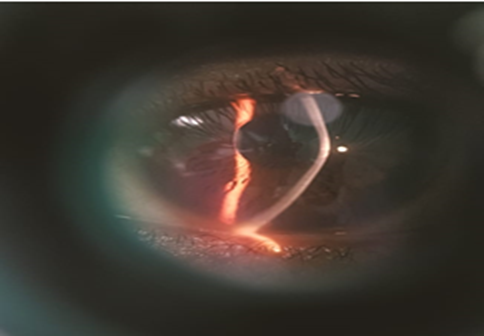
Figure 1: Keratoconus in patient Right Eye
Source: Image capture Vivo V 50 with 50MP camera
Management Plan
The decision was made to fit the patient with semi-scleral contact lenses. These lenses are designed to rest on the sclera, creating a smooth, even surface over the cornea to improve visual acuity and comfort. The key benefits of semi-scleral lenses for keratoconus management include:
Improved Vision: By creating a stable optical surface, scleral lenses help to reduce distortion caused by the irregular cornea.
Comfort: The lenses create a tear reservoir, minimizing discomfort and dryness.
Corneal Protection: The lenses act as a barrier, protecting the corneal surface from further irritation.
Lens Fitting Process
Initial Lens Fitting: A series of trial lenses with varying diameters and curvatures were used to determine the most comfortable fit.
Lens Evaluation: Fluorescein dye was applied to assess the fit and tear reservoir, ensuring the lens created a proper seal without excessive corneal contact.
Patient Education: The patient was educated on proper lens insertion, removal, and care. He was also advised to use preservative-free lubricating drops throughout the day.
Final Lens Parameters for Right Eye:
Base Curve: 7.10
Sagittal Height: 447
Power: -6.50 back vertex power
Diameter: 14.50 mm
Material: High oxygen permeability Boston material
Lens Type: Clear tint lens

Figure 2: After fitting with semi sclera lens in patient Right Eye with keratoconus showing tear reservoir.
Source: Image capture by Vivo V 50 with 50MP camera
Follow-Up and Outcomes
Initial Follow-Up (1 Week Post-Fitting)
The patient adapted well to the lenses. Visual acuity improved significantly, with best-corrected visual acuity reaching 0.18 logMAR in the right eye, a substantial improvement from baseline. The patient reported stable vision throughout the day, with no discomfort or dryness, thanks to the use of lubricating eye drops. No corneal abrasions or irritation were observed.
Three-Month Follow-Up
The patient continued to experience excellent vision and comfort with the scleral lenses. He reported wearing the lenses comfortably for 10-12 hours per day. There was a significant improvement in his quality of life, especially in professional and social settings, with more stable vision and reduced discomfort.
Six-Month Follow-Up
The patient remained satisfied with the lenses, and his visual acuity remained stable. He continued to wear the lenses daily without issues. He was advised to return for routine follow-up examinations.
Long-Term Follow-Up (1 Year Post-Fitting)
The patient's visual acuity remained stable at 0.18 logMAR in the right eye. No progression of keratoconus was observed, and the patient continued to wear the semi-scleral lenses comfortably.
Discussion
Keratoconus manifests in varying degrees of severity, and for mild to moderate cases, the primary challenge is providing stable visual acuity and comfort5. Semi-scleral lenses offer an effective solution for such patients by creating a smooth optical surface over the irregular cornea, significantly improving vision6. In this case, semi-scleral lenses provided superior comfort compared to the previously used Rose K2 lenses, which exhibited a low-riding fit. The tear reservoir between the lens and the cornea further alleviated dryness and irritation, improving the patient's overall experience7. Regular follow-ups are important to monitor disease progression and adjust the lens fit as needed.
Conclusion
This case demonstrates the successful management of moderate keratoconus with Boston semi-scleral contact lenses. The lenses provided excellent visual acuity and comfort, offering a superior alternative to traditional contact lenses and glasses. Regular follow-up is essential to monitor disease progression and ensure long-term success in maintaining both vision quality and corneal health.
References
- Romero-Jiménez, M., & Flores-Rodríguez, P. (2013). Utility of a semi-scleral contact lens design in the management of the irregular cornea. Contact Lens and Anterior Eye, 36(3):146-150.
Publisher | Google Scholor - Kumar, M., Shetty, R., Dutta, D., Rao, H. L., Jayadev, C., & Atchison, D. A. (2019). Effects of a semi-scleral contact lens on refraction and higher order aberrations. Contact Lens and Anterior Eye, 42(6):670-674.
Publisher | Google Scholor - Vreugdenhil, W., Geerards, A. J., & Vervae, C. J. (1998). A new rigid gas-permeable semi-scleral contact lens for treatment of corneal surface disorders. Contact Lens and Anterior Eye, 21(3):85-88.
Publisher | Google Scholor - Schein, O. D., Rosenthal, P., & Ducharme, C. (1990). A gas-permeable scleral contact lens for visual rehabilitation. American journal of ophthalmology, 109(3):318-322.
Publisher | Google Scholor - Sengor, T., Kurna, S. A., Aki, S., & Özkurt, Y. (2011). High Dk piggyback contact lens system for contact lens-intolerant keratoconus patients. Clinical Ophthalmology, 331-335.
Publisher | Google Scholor - Carrasquillo, K. G., Lipson, M. J., Ezekiel, D. J., Johns, L. K., Barnett, M., & Johns, L. K. (2017). Scleral Lens Complications and Problem Solving. Ophthalmology: Current and Future Developments. Bentham Science Publishers, 303-345.
Publisher | Google Scholor - Pflugfelder, S. C. (2011). Tear dysfunction and the cornea: LXVIII Edward Jackson memorial lecture. American journal of ophthalmology, 152(6):900-909.
Publisher | Google Scholor